Quick Navigation
- What Exactly Is a Button Lift and Why Is It Tricky for Snowboarders?
- Your Pre-Lift Checklist: Setup is Everything
- The Step-by-Step: How to Ride a Button Lift on a Snowboard Successfully
- What to Do When Things Go Wrong (Because They Will)
- Button Lift vs. Other Lifts: A Snowboarder's Perspective
- Advanced Tips and Common Questions
- Final Thoughts: Embracing the Button Lift
Let's be honest. The first time you see a button lift (or a T-bar, platter lift, poma lift—they're all in the same family), as a snowboarder, a wave of mild panic can hit. Two skiers glide on, get pulled up effortlessly, and you're left wondering how your single plank is supposed to manage that. I've been there. I've face-planted at the loading zone, I've been the guy who causes the lift to stop because my board slid out, and I've had that walk of shame back down after a spectacular failure. It's a rite of passage, but it doesn't have to be a painful one.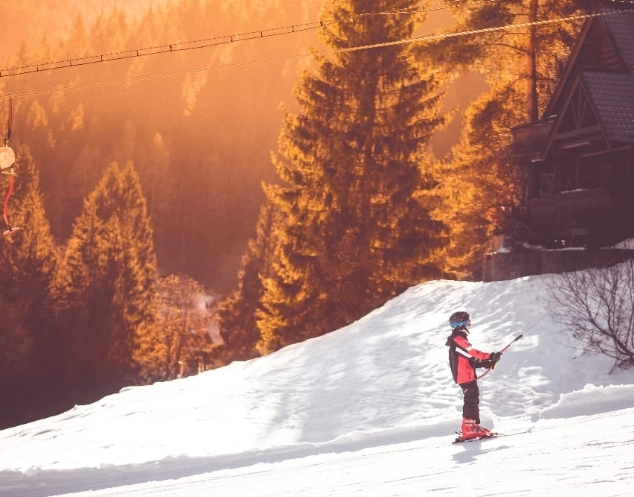
Learning how to ride a button lift on a snowboard is a skill that unlocks so much terrain, especially in Europe where these lifts are everywhere on beginner and intermediate slopes. This guide isn't just a dry list of steps. It's the collective wisdom from countless trips up (and a few embarrassing trips down), broken down so you can master it quickly and ride with confidence.
What Exactly Is a Button Lift and Why Is It Tricky for Snowboarders?
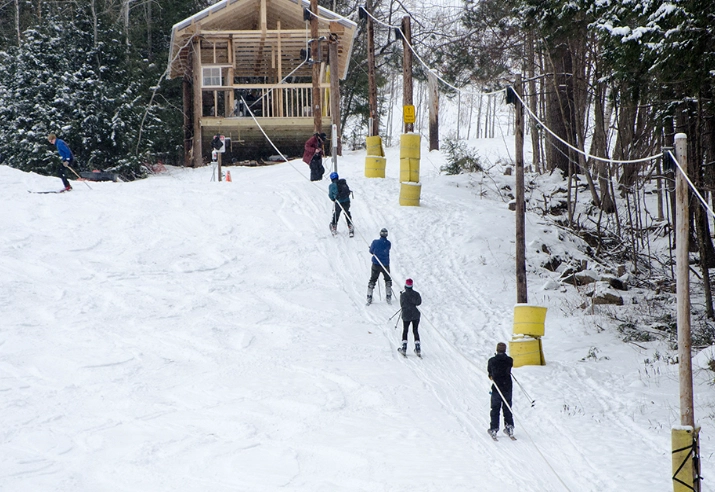
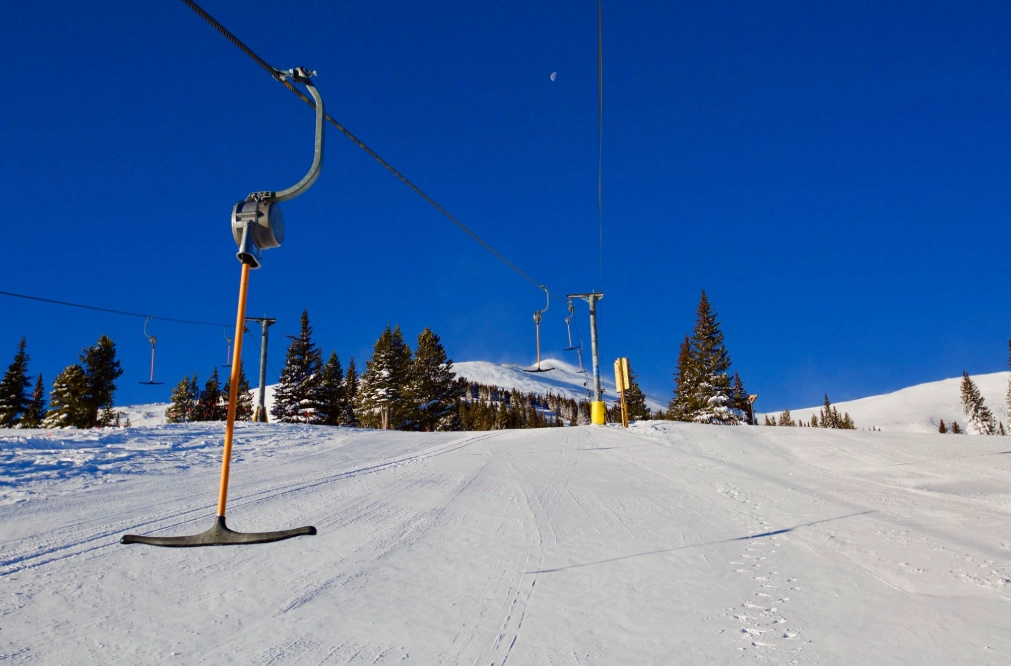
Before we dive into the how, let's understand the what. A button lift is a surface lift. A cable runs continuously overhead, and dangling from it are poles with a disc or "button" at the end (the T-bar has a, well, T-shaped bar). You place this disc between your legs, and it pulls you up the hill while you stand on your snowboard.
The core challenge for snowboarders is biomechanical. Skiers have two independent points of contact facing forward. The pull from the lift is centered between their skis, aligned with their direction of travel. It's inherently stable. We, on the other hand, are sideways. The pull wants to twist our upper body forward while our feet are locked in a lateral stance. This creates a twisting force that can easily throw you off balance if you fight it.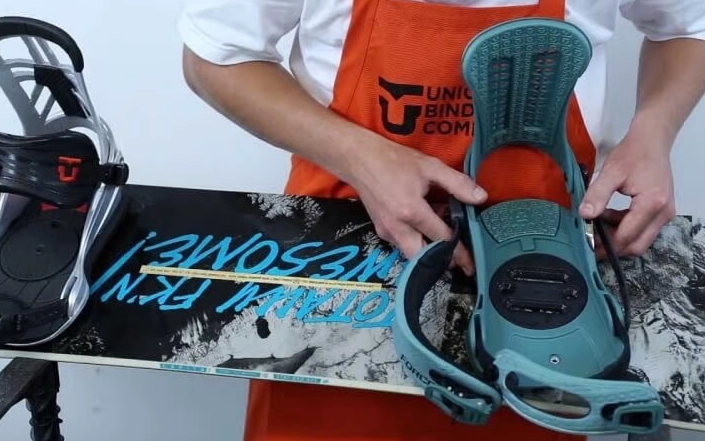
That's the first mental shift: don't fight the pull. Work with it.
Your Pre-Lift Checklist: Setup is Everything
Most failures happen before the lift even starts moving. Here’s what to do in the waiting area.
Stance and Binding Check
You want a balanced, neutral stance. If you're regular (left foot forward), you'll be riding up with your left foot in front. Goofy (right foot forward) means right foot leads. Make sure your bindings are snug—not tourniquet-tight, but you shouldn't have slop. This isn't the time for super loose park rat settings.
A common debate: should you loosen your back binding? Some instructors swear by it, allowing you to scoot your back foot slightly forward on the board for a more ski-like posture. Personally, I've tried both and find keeping it strapped in works fine once you get the technique. If you're really struggling, it's a trick worth experimenting with. The Professional Ski Instructors of America (PSIA) and the American Association of Snowboard Instructors (AASI) have teaching materials that sometimes recommend this adjustment for absolute beginners.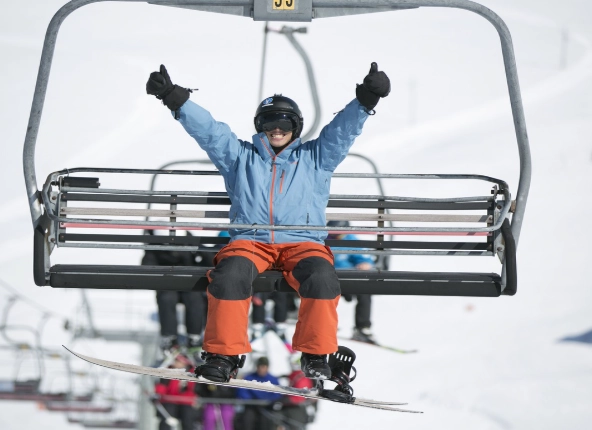
Mental Prep and Lane Choice
Watch a few people go. See where they stand. Notice the rhythm. If you can, pair up with a skier. It's easier because they provide a counter-balance and the lift operator is used to that pairing. If you're going solo, that's totally fine—just pick a lane and stick to it.
The Step-by-Step: How to Ride a Button Lift on a Snowboard Successfully
Here’s the moment-by-moment breakdown. Read this, then visualize it.
1. The Loading Zone: The Make-or-Break Moment
As you shuffle forward in line, have your board pointing straight up the fall line—directly up the hill. Not sideways. Look over your shoulder (your front shoulder) for the approaching disc.
Grab the pole with your front hand.
Don't grab the disc itself. Grab the pole just above it. Your grip is just for guidance, not for hanging on for dear life.
Place the disc firmly behind your front knee.
This is the golden rule. NOT between your legs centered on your body. Place that button or T-bar so it's pressing against the back of your front thigh, right behind the knee. This is the single most important tip for learning how to ride a button lift on a snowboard. It aligns the pulling force more directly with your front leg, reducing the twist.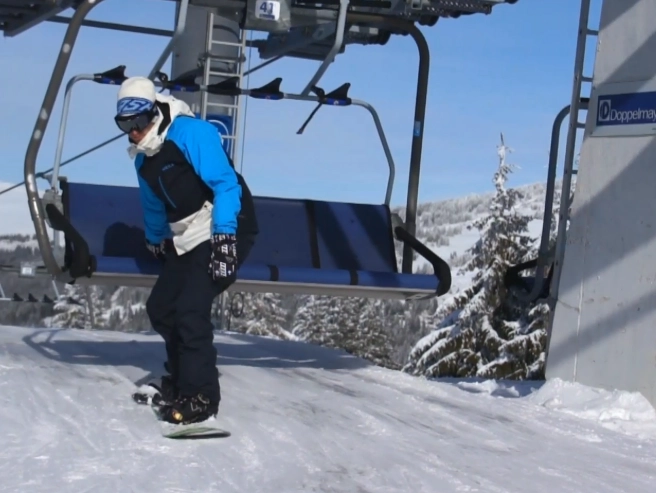
As you feel the tug, let it pull you. Don't try to sit on it. Just let it take your weight. Keep your back straight, knees slightly bent.
2. The Ride Up: Finding Your Balance
You're moving! Now what?
Posture: Face directly up the hill. Your shoulders and hips should be square to the direction of travel, even though your feet are sideways. It feels weird at first—like you're torsionally twisted—but it's stable. Look ahead, not at your feet.
Weight Distribution: About 60-70% of your weight should be on your front foot. Your back foot is just for light steering and stability. If you lean back, the nose of your board will lift and you'll start to fishtail.
Board Position: Let your board run straight in the track. Don't try to carve or turn. If you drift, use gentle pressure on your back foot toes or heels to steer back into the center. Small corrections.
Relax your arms. That front hand is just lightly guiding the pole. Your back arm is out slightly for balance. Breathe. Chat with your lift partner if you have one. The calmer you are, the easier it is.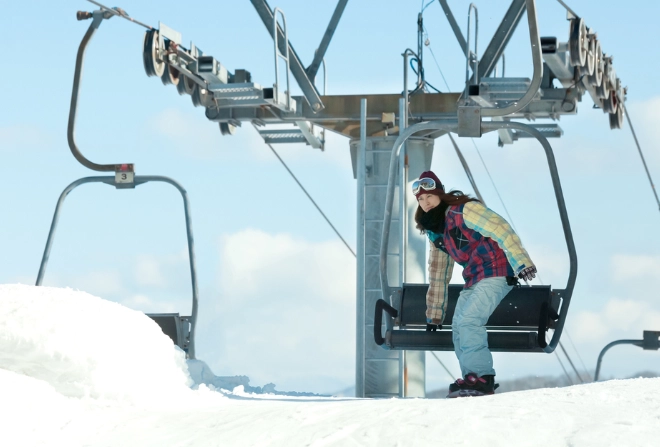
3. The Exit: Stick the Landing
You'll see the top station approaching. This is where people panic and bail early. Don't.
As you reach the flat or slightly uphill run-off area, the pull will lessen. Do not let go of the pole until you are clearly on the exit ramp. Just keep standing and let the lift push you onto the flat area.
Once you have solid ground under you and are no longer being pulled, gently let the disc slide out from behind your knee. Use your front hand to guide the pole away from you so it doesn't snap back.
Now, immediately skate or step away from the exit path. Get clear so the people behind you don't pile into you. Congratulations, you've just successfully learned the core of how to ride a button lift on a snowboard.
What to Do When Things Go Wrong (Because They Will)
Even pros have off days. Here's your emergency protocol.
If you fall at the start: Let go of the pole immediately and crawl/slide out of the way. The lift operator will stop the lift. Don't be embarrassed—it happens constantly. Just get clear, give a wave, and go to the back of the line to try again.
If you fall mid-way: Let go. Try to slide to the side of the track. The lift will stop. You'll likely have to unstrap and walk down or to the side. It's a hassle, but it's not the end of the world. Some resorts have mid-station exits for this reason.
If your board starts fishtailing wildly: This usually means you're leaning back. Focus on driving your front knee forward, into the pull. Shift that weight forward. It often corrects itself.
| Problem | Likely Cause | Quick Fix |
|---|---|---|
| Being pulled over forwards | Disc too far forward (in front of knee), leaning too far into pull | Place disc BEHIND front knee, stand more upright |
| Board fishtailing side to side | Leaning back on back foot, weight not forward enough | Consciously put 70% weight on front foot, look uphill |
| Cannot steer straight | Stance too rigid, fighting the natural track | Relax knees, make tiny steering inputs with back foot |
| Extreme thigh burn | Trying to "sit" or squat on the disc, tensing up | Stand up! Let the disc support you, don't actively sit |
Button Lift vs. Other Lifts: A Snowboarder's Perspective
Button lifts aren't the enemy. They serve a purpose. Let's compare.
Chairlifts: Easy once you're on, but the loading/unloading requires timing and a straight glide. Personally, I find a busy chairlift queue more stressful than a T-bar.
Rope Tows: These are the worst. They require constant grip strength and are brutal on gloves. A button lift is a luxury compared to an old-school rope tow. The International Ski Federation (FIS) even has guidelines for lift safety and design, and let's just say rope tows are being phased out for good reason.
Gondolas: Obviously the king of comfort, but they don't go on every slope. Button lifts access terrain that often doesn't justify a chairlift installation.
The button lift is a tool. Annoying? Sometimes. Terrain-unlocking? Absolutely.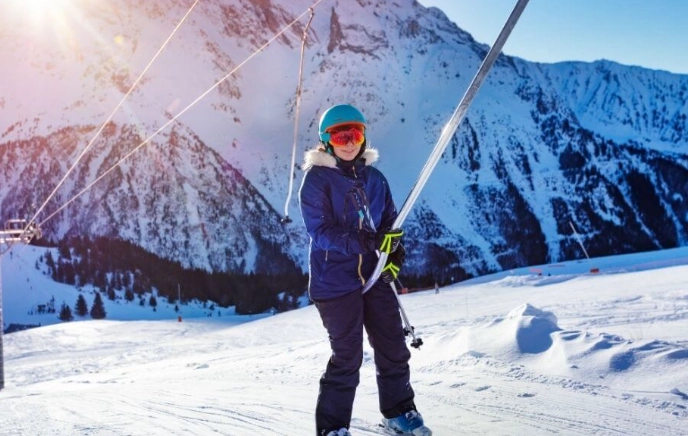
Advanced Tips and Common Questions
One pro tip for variable terrain: if the lift goes over a steep roll, you might feel a sudden tug. Bend your knees more to absorb it, like a shock absorber, rather than letting it jerk your upper body.
Final Thoughts: Embracing the Button Lift
Learning how to ride a button lift on a snowboard is a humbling but incredibly rewarding skill. It turns a point of anxiety into a non-issue. It opens up whole mountains of blues and reds that you might have avoided. The feeling of smoothly riding one to the top, especially on a cold, crisp day with no queue, is actually kind of peaceful.
Remember, every snowboarder on that slope has had to learn this. No one is born knowing it. The lift operators have seen it all a thousand times. So take a breath, get your setup right, place that disc behind your front knee, and let it pull you up. Before you know it, you'll be doing it without a second thought, wondering why you ever found it difficult. Then you can be the one giving the reassuring nod to the next nervous rider in line.
Now get out there and ride.