Your Quick Ski Pack Guide
- What Exactly Makes a Backpack a "Ski Backpack"?
- The Three Main Tribes of Ski Backpacks (And Which One You Belong To)
- The Make-or-Break Features: What to Scrutinize Before You Buy
- Ski Backpack Showdown: A Quick Look at Popular Models
- How to Pack Your Ski Backpack Like a Pro (The Layer Method)
- Answering Your Burning Ski Backpack Questions
- Final Thoughts: It's About the Experience
Let's be honest. For a long time, I thought any old backpack would do for a day on the slopes. I'd shove a water bottle, some snacks, and an extra layer into my trusty college pack and call it good. That changed the first time I tried a proper ski-specific backpack. The difference wasn't subtle; it was like swapping hiking boots for ski boots. Suddenly, everything had a place, the weight sat right on my hips, and I wasn't constantly wrestling with straps. A good ski backpack isn't just about carrying stuff; it's about freeing you up to focus on the skiing.
But walk into a gear shop or browse online, and the choices are overwhelming. Uphill ski packs, resort packs, freeride packs, 15-liter, 40-liter, avalanche airbag systems... It's enough to make your head spin. How do you even start? You're not just looking for a bag. You're looking for the right tool for the type of skiing you do most. This guide is here to cut through the noise. We'll talk about the different types of ski packs, the non-negotiable features, the nice-to-haves, and the stuff that's just marketing fluff. I'll even share some packing strategies that took me years to figure out (and one packing fail that left me very cold and very annoyed).
 Choosing the wrong pack can ruin a perfect day. Choosing the right one feels like a superpower.
What Exactly Makes a Backpack a "Ski Backpack"?
This is the first thing to get straight. A dedicated ski backpack solves problems that regular backpacks create in a snowy, active environment. The core idea is integration and access. It's designed to work with your ski gear and your body in motion. Think about trying to get a shovel out of a top-loading hiking pack while wearing gloves and standing on a slope. Not fun. A ski-specific pack will have a dedicated, separate compartment for avalanche safety gear (shovel, probe) that opens wide and fast, often with a diagonal or full-length zipper.
Then there's the carry. Most have dedicated, reinforced straps or loops to carry your skis or snowboard in an A-frame or diagonal carry. Some even have a sleeve for a hydration bladder with an insulated tube port to keep your water from freezing. The materials are tougher, often using ripstop nylon or similar, with a durable water-resistant (DWR) coating to shed snow and light moisture. The back panel and shoulder straps are designed to fit over a bulky ski jacket without feeling restrictive. So, while you *could* use a hiking pack, a proper ski backpack just makes the whole experience smoother, safer, and more enjoyable.
The Three Main Tribes of Ski Backpacks (And Which One You Belong To)
Not all ski packs are created equal. They generally fall into three categories based on your primary activity. Picking the right category is 80% of the battle.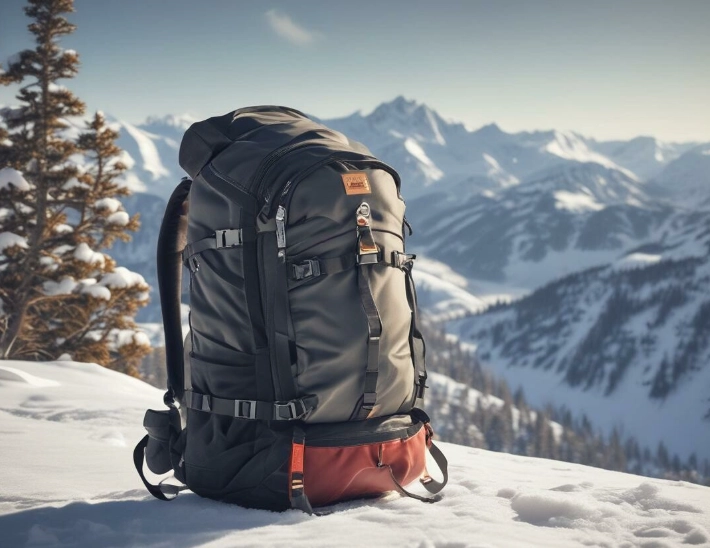
The Uphill Machine: Ski Touring & Alpine Touring (AT) Backpacks
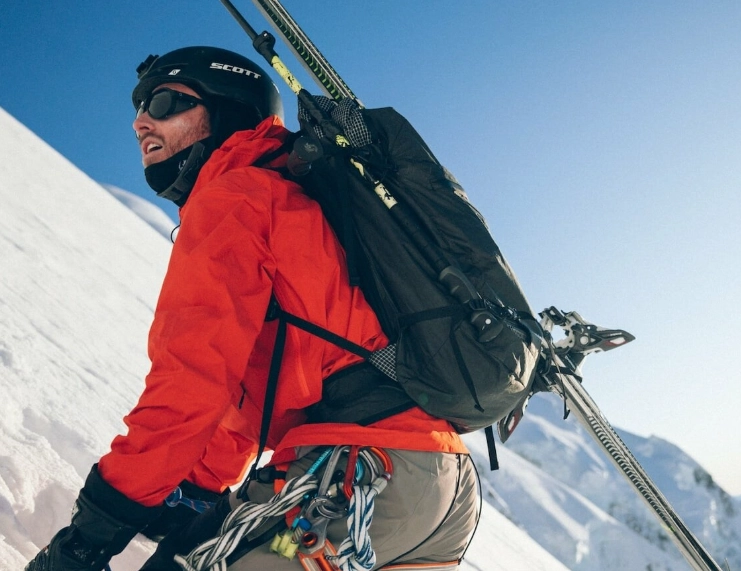
This is for the skier who earns their turns. If your day involves climbing up as much as skiing down, this is your category. The priority here is lightweight, breathable, and streamlined. Every ounce counts when you're skinning up a mountain. These packs are often minimalist, with a close-to-the-body fit to prevent swaying. They feature great ventilation on the back panel (sometimes a trampoline-style suspended mesh) to keep sweat at bay. You'll find simple, efficient ski carry systems and just enough organization for safety gear, layers, food, and water. Capacity usually ranges from 20L to 35L. Brands like Black Diamond, Arc'teryx, and Salomon really shine here. I made the mistake of using a bulky freeride pack for a long tour once – my back was a sweaty mess, and the extra weight felt brutal by the last lap.
The Resort Cruiser & Sidecountry Daypack
This is probably the most popular and versatile category. You're riding lifts, but you might duck a rope for a quick sidecountry lap, or you just want to carry more comfort items for a full resort day. These packs balance features with a moderate weight. They have more organization than touring packs—think goggle pockets, helmet carry, separate compartments for a hydration bladder, snacks, and a spare puffy jacket. The ski carry systems are robust and easy to use with gloves on. Capacity is the sweet spot here, typically between 18L and 30L. They're great for carrying your avalanche safety trio (beacon, shovel, probe) even if you're mostly in-bounds, just in case. The fit is still important but can be a bit more forgiving than a hyper-specialized touring pack.
The Freeride & Big Mountain Powerhouse
Built for charging big lines, filming, or multi-day backcountry missions where you need to carry more gear. These are the larger, burlier packs, often from 30L up to 50L+. They're built like tanks with super-tough materials. Features are abundant: multiple tool attachments for ice axes, reinforced ski carry for heavy freeride skis, extensive compression straps to cinch down loads, and often compatibility with avalanche airbag systems. The trade-off is weight. These packs can feel like overkill for a quick resort day, but if you're heading into the middle of nowhere for an overnight winter camping trip, there's no substitute. Dakine and Ortovox make some iconic models in this space.
The Make-or-Break Features: What to Scrutinize Before You Buy
Okay, you've narrowed down the type. Now let's dig into the details that separate a good ski backpack from a great one. These are the things you need to pay attention to.
Fit is King (or Queen). Seriously, this is number one. A pack that doesn't fit well is miserable. You need an adjustable torso length. Most good packs have a harness system that slides up and down. A pack that's too long will bang on your butt; too short, and the waist belt won't sit on your hips properly, putting all the weight on your shoulders. The waist belt should be padded and sit snugly on your hip bones, transferring most of the load. Shoulder straps should be contoured and comfortable. Always, always try it on with a jacket similar to what you'll ski in. Load it up with some weight in the store if you can. A poorly fitting ski backpack will have you wanting to ditch it by lunchtime.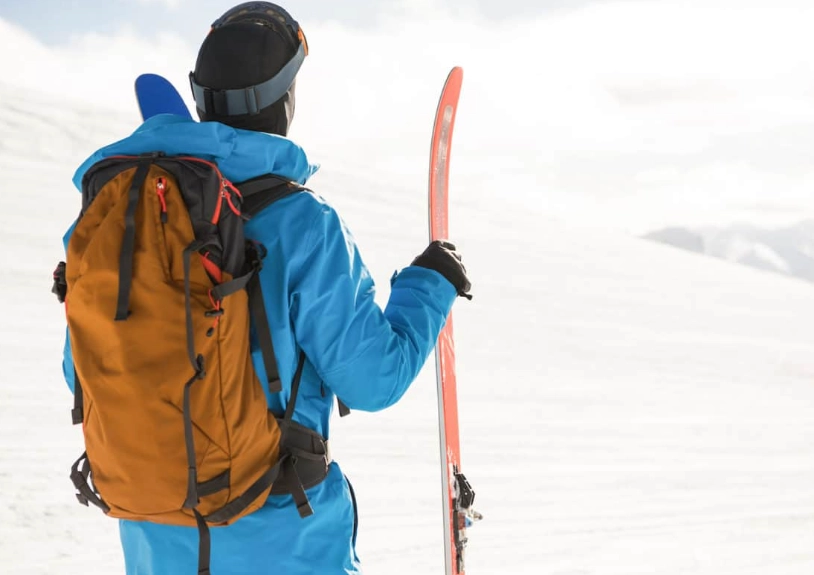
Access: The Diagonal Zipper Game-Changer. Remember the problem of digging for your shovel? The solution is a dedicated avalanche tool compartment with a separate external zipper. The best designs use a diagonal zipper that runs across the back of the pack. This lets you swing the pack around on one shoulder, unzip the diagonal, and have full, immediate access to your shovel blade and probe without emptying the entire main compartment. It's a brilliant piece of design for safety and convenience.
Materials & Weather Resistance. You're in the snow. Stuff gets wet. Look for packs made with high-denier ripstop nylon or similar robust fabrics. A DWR (Durable Water Repellent) finish is standard and helps snow bead off. Is it fully waterproof? Rarely, and that's okay—it's a backpack, not a dry bag. For true waterproof protection for electronics or down jackets, use a stuff sack or dry bag inside the main compartment. Some brands use proprietary materials like GORE-TEX laminates for higher waterproofness, but you pay a premium. For most, a good DWR is sufficient.
The Carry System: How to Haul Your Planks. There are two main ways a pack carries skis: A-Frame and Diagonal. A-Frame carry (skis vertical on either side of the pack) is more stable and balanced but can interfere with head movement. Diagonal carry (skis horizontal across the pack) is lower profile and often easier to manage in tight spaces or trees. Some packs offer both. Look for sturdy, wide straps with buckles that are easy to manipulate with cold, gloved fingers. Some high-end packs even have a dedicated side sleeve for ski tails to slide into for a super-secure carry.
Hydration Compatibility. Staying hydrated is crucial, and stopping to pull out a water bottle is a hassle. A dedicated hydration sleeve and a port for the tube is a huge quality-of-life feature. The real pro tip? Look for a pack with an *insulated* tube sleeve or port. This, combined with blowing the water back into the bladder after you drink, is the best defense against a frozen drinking tube on a cold day.
Ski Backpack Showdown: A Quick Look at Popular Models
To make things more concrete, here's a quick comparison of some well-regarded packs across the categories. This isn't an exhaustive list, but it gives you a flavor of what's out there.
| Pack Name (Example) | Best For | Key Capacity | Standout Features | Considerations |
|---|---|---|---|---|
| Black Diamond Cirque 35 | Alpine/Ski Touring | 35L | Ultra-lightweight, great vented back panel, minimalist & efficient. | Very stripped-down; fewer organizational pockets. |
| Ortovox Haute Route 32 | Touring & Freetouring | 32L | Excellent safety compartment access, integrated safety pocket for beacon. | Can be pricey; fit is very specific. |
| Dakine Poacher RAS 26L | Resort & Sidecountry | 26L | Super versatile, great organization, compatible with Dakine's Ridge Airbag system. | A bit heavier than pure touring packs. |
| Arc'teryx Alpha SK 30 | Technical Ski Mountaineering | 30L | Bombproof materials, clean design, excellent tool attachment points. | Very expensive; overkill for casual use. |
| Salomon MTN Lab 25 | Fast & Light Touring | 25L | Focus on weight savings, simple diagonal ski carry, hydration compatible. | Limited padding; not for heavy loads. |
How to Pack Your Ski Backpack Like a Pro (The Layer Method)
You've got the perfect pack. Now, what goes where? Throwing everything in willy-nilly is a recipe for frustration. I use a "layer" method, thinking about when I'll need things.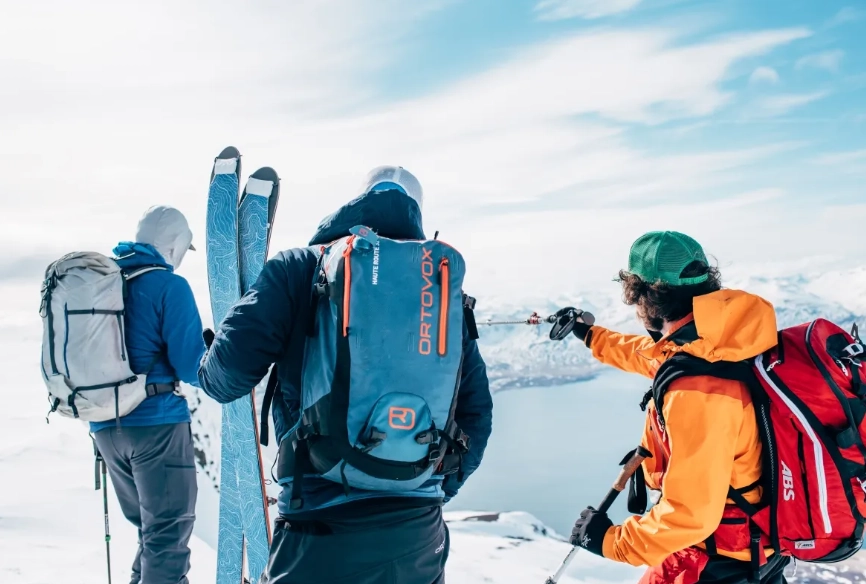
- The Bottom Layer (The "Won't Need It" Zone): This is the bottom of the main compartment. Put your spare, puffy down jacket here. You hopefully won't need it until you stop for a long lunch or have an emergency. It's light and compressible.
- The Middle/Back Layer (The Safety & Core Zone): Against your back, in the dedicated compartment, go your avalanche safety gear: shovel and probe. Your beacon should be ON YOUR BODY, under all layers, not in the pack. In the main compartment behind this, pack your lunch, a thermos, and heavier items. This keeps the weight high and close to your center of gravity.
- The Front/Top Layer (The "Need It Soon" Zone): Closer to the opening of the main compartment, put items you might need during the day: an extra mid-layer fleece, a first-aid kit, a repair kit (duct tape, ski strap, multi-tool).
- The External & Quick-Access Pockets (The "Need It Now" Zone): Goggles (in a soft case) go in a dedicated goggle pocket. Snacks, lip balm, sunscreen, phone go in the stretchy front or hip belt pockets. Your water tube should be routed and clipped to a shoulder strap.
Answering Your Burning Ski Backpack Questions
You can, but you'll be making compromises. The lack of a dedicated, easy-access avalanche gear compartment is the biggest safety concern. The carry systems for skis are often clunky or non-existent. The straps and back panel aren't optimized for bulkier ski jackets. So, while it's possible for a simple resort day where you're carrying very little, I'd recommend against it for anything involving sidecountry or backcountry travel.
It depends entirely on your use case, but here's a rough guide:
- Resort Day (no safety gear): 10-18L. Just for snacks, water, a layer.
- Resort & Sidecountry (with safety gear): 18-30L. The sweet spot for most.
- Backcountry Day Touring: 25-35L. Enough for safety gear, layers, food, water, maybe a light shelter.
- Multi-Day/Ski Mountaineering: 35L+. For overnight gear, more food, more fuel.
When in doubt, go a little smaller than you think. A half-empty large pack is awkward and encourages overpacking.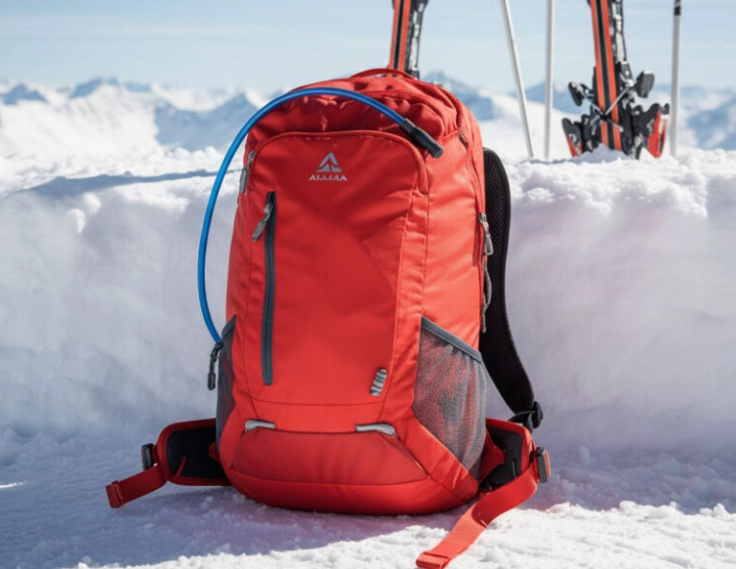
Most packs have straps at the bottom (for ski tails) and higher up (for the ski brakes or bindings). For an A-frame, you attach each ski vertically to its respective side. For a diagonal carry, you stack the skis together (bases out) and strap them horizontally across the pack. Snowboards typically strap vertically in an A-frame style. Practice at home before you're on a windy ridge!
This is a big, personal, and financial decision. An avalanche airbag backpack (like systems from Mammut, Black Diamond, or Arc'teryx) is designed to increase your survival chances in a slide by creating volume around your head and helping you stay near the surface. They are expensive and require annual canister maintenance or battery charging. Are they a magic force field? Absolutely not. They are a last-resort safety tool. The consensus in the avalanche safety community is that they are a valuable additional layer of protection for frequent backcountry travelers, but they do NOT replace avalanche education, prudent decision-making, a beacon, shovel, and probe. You must still know how to use your traditional safety gear. The American Avalanche Association is an excellent resource for understanding risk and education.
First, always empty all pockets and shake out dirt and snow. For general cleaning, use a damp cloth with mild soap. For a deeper clean, most packs are machine washable on a gentle, cold cycle with a technical gear cleaner (like Nikwax Tech Wash). Never use fabric softener or bleach. Always air dry completely—no dryers. To re-waterproof, you can tumble dry on low heat for 20 minutes to reactivate the DWR, or apply a new DWR treatment spray designed for packs and shells.
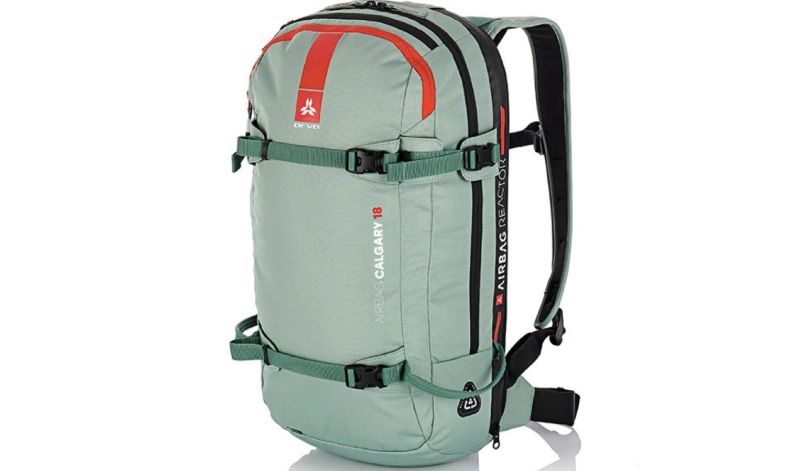 The right gear doesn't make you a better skier, but it sure removes the excuses.
Final Thoughts: It's About the Experience
At the end of the day, the best ski backpack for you is the one you forget you're wearing. It becomes an extension of you, holding what you need without getting in the way of the reason you're out there: to feel the glide, find the powder, and share laughs with friends in the mountains. Don't get paralyzed by the search for perfect. Think about your most common ski day, nail the fit and the key features for that activity, and then go use it. A well-chosen pack will last you for seasons, becoming a trusted piece of your kit, covered in lift ticket tags and memories from lines you'll never forget.
Got a question I didn't cover? Drop it in the comments below. Now get out there and make some tracks.