Quick Navigation
You're standing at the base of a snowy mountain, skis or board in hand, looking up at the machinery that's going to haul you to the top. Your friend points and says, "Let's take that chairlift." Someone else says, "The gondola looks faster." And the trail map just calls everything a "lift." It's enough to make your head spin before you've even started. What's another name for a ski lift anyway? Is it all the same thing?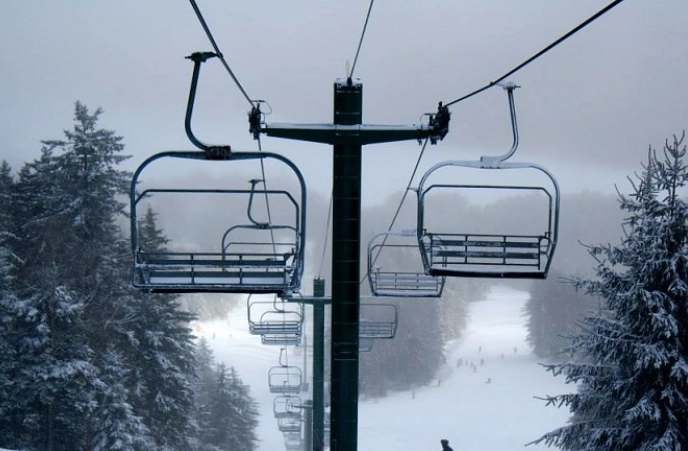
Not at all. That's the short answer. The long answer is a fascinating dive into engineering, history, and mountain culture. The term "ski lift" is the universal umbrella, the generic catch-all. But underneath that umbrella, you've got a whole family of machines with specific names, functions, and quirks. Knowing the difference isn't just about sounding like a pro—though it helps—it's about planning your day, managing your energy, and even dealing with a bit of anxiety if you're new to this.
Core Takeaway: "Ski lift" is the general term. The most common other names are chairlift, gondola, T-bar, platter lift (or button lift), rope tow, and cable car or aerial tramway. Each serves a different purpose on the mountain.
I remember my first time on a proper mountain. I saw the map, saw the word "lift," and just headed for the nearest line. Turns out it was a T-bar. Let's just say my first attempt at riding one with a snowboard ended with me face-down in the snow, dragging for a few embarrassing feet before the attendant stopped the thing. If only I'd known what I was getting into! That experience taught me that understanding the equipment is half the battle.
Breaking Down the Lift Family: From Chairlifts to Magic Carpets
If someone asks, "What's another name for a ski lift?" the answer depends entirely on what they're looking at. Let's categorize them. Broadly, ski lifts fall into two camps: aerial lifts (your skis are off the ground) and surface lifts (your skis or board stay on the snow). The experience, speed, and comfort level between these two are night and day.
Aerial Lifts: The Sky's the Limit
These are the big ones, the workhorses of most resorts. They carry you up in the air, which means they can traverse rough terrain, go up steeper grades, and generally get you to the good stuff faster.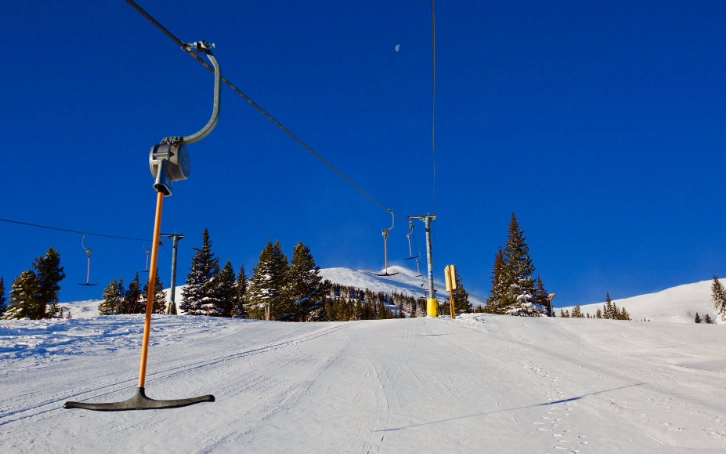
Chairlift: This is arguably the most common synonym for a ski lift in many people's minds. You sit on a chair (usually for 2, 4, 6, or even 8 people) that's suspended from a moving cable. Your skis dangle below you. They come in fixed-grip (slow, constant speed) and high-speed detachable (the chair detaches from the cable in the terminal, so you load and unload slowly, then it speeds up for the ride). A high-speed quad is a game-changer for covering vertical feet.
Gondola (or Cable Car in some regions): This is an enclosed cabin that carries you up the mountain. It's a godsend in bad weather—you stay dry and warm. Gondolas can carry more people than chairs (often 6-12) and are great for getting from a base village to a mid-mountain lodge. Some are even heated! In Europe, you might hear the term "telebérique" or "cable car" used for larger cabin systems.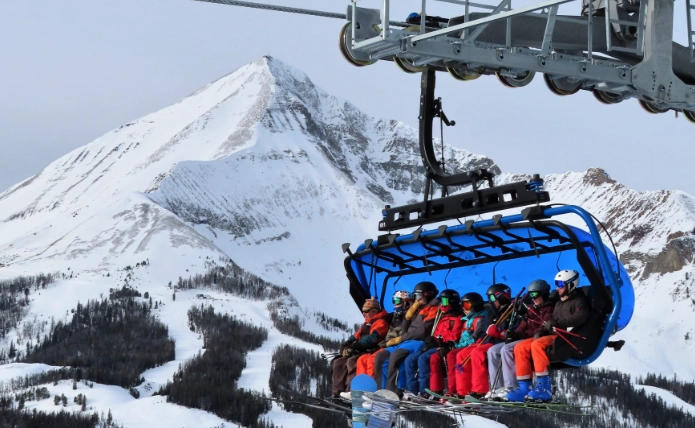
Aerial Tramway: Think of this as a giant gondola. Usually two large cabins that shuttle back and forth on a single cable, carrying dozens or even hundreds of people at once. They're for massive vertical gain in one shot. Jackson Hole's famous tram is a perfect example. The ride is an event in itself.
Surface Lifts: The Snow-Draggers
Older, simpler, and often the source of beginner frustration (I'm not bitter about that T-bar, really). These lifts keep you on the ground.
T-Bar: A classic. It's a metal bar in the shape of a "T" that you place behind your rear end, and it pulls you up while you stand on your skis or board. It requires some balance. For snowboarders, it's a skill to learn—usually riding with your front foot strapped in and your back foot resting on the board.
Platter Lift (Button Lift/Poma Lift): Similar idea to a T-bar, but instead of a bar, it's a round disc (the platter or "button") on a pole that you put between your legs. You let it pull you. It's common on beginner slopes. Falling off is common too, but they're usually slow and gentle.
Rope Tow: The most basic of all. A continuously moving rope that you grab onto and hold while being pulled uphill. It's brutal on gloves and requires serious grip strength. You don't see many of these at major resorts anymore, but they're still around in smaller, local hills or for terrain parks.
Magic Carpet: This is the ultimate beginner lift. It's literally a conveyor belt on the snow, like the moving walkways in an airport but for skiers. You just stand on it with your skis on and get carried up a gentle slope. No grabbing, no sitting, no balancing. Perfect for first-timers and a great answer to "what's another name for a ski lift?" when talking about the most user-friendly option.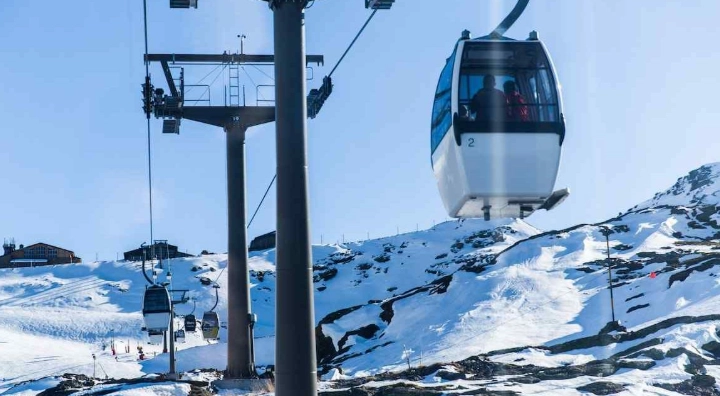
Fun Fact: The first recorded mechanical ski lift was a rope tow, built in 1934 in Shawbridge, Quebec, using an old car engine for power. It revolutionized the sport by eliminating the need to hike up. You can read about early lift history on sites like the International Skiing History Association website, which archives these developments.
Why Do So Many Different Names Exist?
It's all about evolution and purpose. Early ski areas needed cheap, simple ways to get people up hills. The rope tow and single chairlifts (yes, chairs for one person!) were born. As resorts grew and targeted more terrain, they needed more powerful, faster, and higher-capacity systems. The technology branched out.
A gondola or tram can move thousands of people per hour from a crowded base area. A fixed-grip double chairlift is a cost-effective way to serve a classic intermediate run. A magic carpet is the only safe, intuitive option for a bunny hill. Each design solves a specific mountain transportation puzzle. The terminology stuck based on the mechanics: you sit on a *chair*, you ride in a *gondola*, you're pulled by a *T*-shaped bar.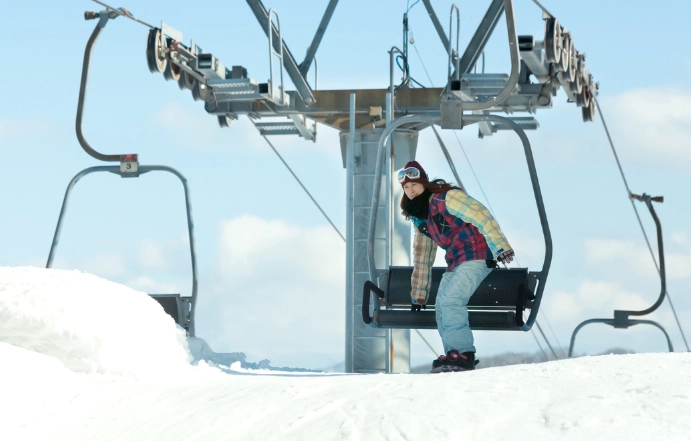
Honestly, I have a love-hate relationship with surface lifts. On one hand, I appreciate their simplicity and low environmental footprint. On the other hand, as a snowboarder who learned as an adult, they were my nemesis for a solid season. I'd watch skiers glide onto the T-bar with ease while I'd fumble and fall, creating a domino effect behind me. It's a humbling experience. But once you get it, it opens up parts of the mountain that might only be served by these older lifts.
Regional dialects play a part too. In some parts of Europe, "drag lift" is a common term for surface lifts like T-bars and platters. "Button lift" is more common in the UK and Australia. "Poma" is actually a brand name (from the company Pomagalski) that became genericized for platter lifts, much like "Kleenex" for tissues.
Beyond the Basics: The Jargon You'll Hear on the Mountain
Once you know the main categories, you'll start to notice the sub-categories and slang. This is where the answer to "what's another name for a ski lift?" gets really detailed.
- Fixed-Grip vs. Detachable: This refers to chairlifts. Fixed-grip chairs are permanently attached to the cable—they move at a constant, often slower speed. Detachable chairs clamp onto the cable for the ride but release in the station, allowing them to slow down for easy loading/unloading before speeding up to twice the speed for the ascent. It's a major upgrade.
- High-Speed Quad/Hex/Six-Pack: The number refers to how many people per chair. A quad seats four, a six-pack seats six. "High-speed" almost always means detachable. This is the gold standard for moving lines quickly.
- Telebérique / Aerial Tram: As mentioned, large capacity cable cars. The distinction from a gondola is usually size and the fact they often run on a pulsed, shuttle system rather than a continuous loop.
- Funitel: A specialized, super-wind-resistant type of aerial lift with two parallel cables. They're incredibly stable in high winds where other lifts would shut down. You'll find them in places known for harsh weather.
- Funicular: A railway on a steep slope, usually in a tunnel or covered track. It's not a "lift" in the aerial sense, but it serves the same purpose at some mountain resorts (like getting to the top of Corviglia in St. Moritz).
So when you're reading a trail map and it says "High-Speed Detachable 6-Pack," you know you're in for a quick, modern ride with five other people. If it says "Fixed-Grip Double," you're likely heading to a quieter, classic part of the mountain, maybe with a longer, chillier ride.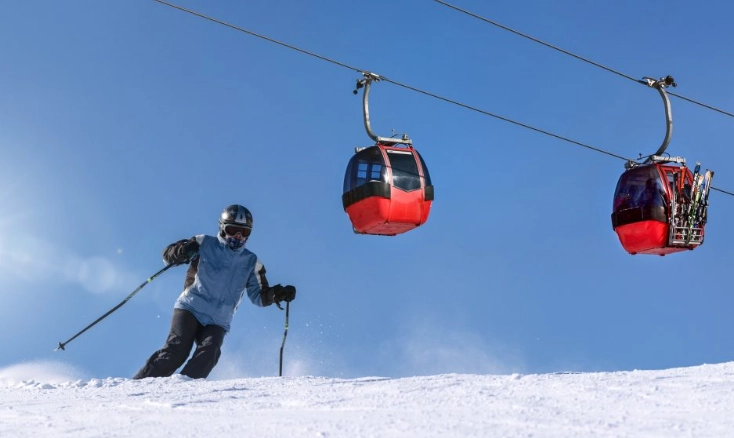
Safety and Etiquette: It's More Than Just Names
Knowing what's another name for a ski lift is one thing. Knowing how to ride it safely is another. Each type has its own rules. The National Ski Areas Association (NSAA) has a Skier Responsibility Code that covers lift safety, but here are some lift-specific tips.
Universal Rule: Always pay attention to the lift attendants. They're there to help you load and unload safely. If they give you instructions, listen.
For chairlifts: Have your poles in one hand, look behind you as you approach the load line, sit down when you feel the chair, and immediately lower the safety bar if there is one. Don't bounce. To unload, lift the bar in advance, stand up as you reach the crest, and ski straight away from the unloading zone.
For surface lifts (T-Bar/Platter): This is where most wipeouts happen. Don't fight the pull. Let it drag you. Keep your weight evenly distributed and your skis pointed straight up the fall line. If you fall, let go and crawl out of the way quickly so the person behind you doesn't crash into you. The attendant will stop the lift if needed.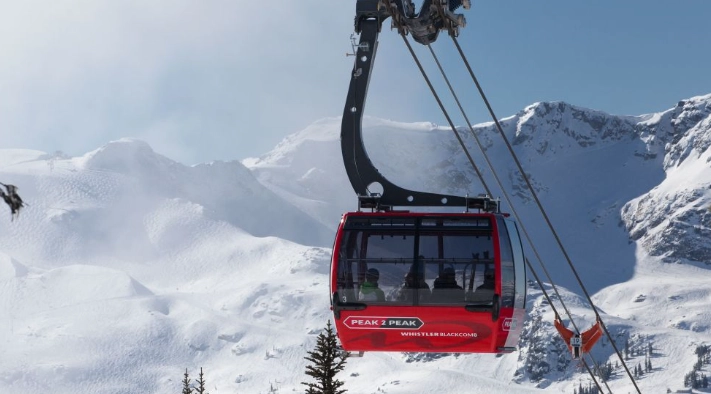
For gondolas & trams: Secure your equipment in the external holders if available. Once inside, stow your poles and anything loose so it doesn't fly around if the cabin sways. Don't try to jump on or off a moving cabin—wait for it to stop completely.
A little knowledge prevents a lot of chaos in the lift line.
Answers to Your Burning Questions (The FAQ Section)
What's the most common other name for a ski lift?
Hands down, chairlift. When most people picture a ski lift, they picture an open chair hanging from a cable. It's the iconic image. So if you're asking for one synonym, that's it. But now you know it's just one member of a big family.
Is a gondola better than a chairlift?
"Better" depends. For speed and comfort in cold or stormy weather, a gondola wins every time. You stay warm and dry, and you can have a conversation. For accessibility, gondolas are also better for beginners or people with equipment who find loading a chair tricky. However, for sheer enjoyment on a beautiful bluebird day, nothing beats the open-air experience of a chairlift. You feel the sun, the breeze, and have an unobstructed 360-degree view. Chairlifts also tend to have shorter lines at many resorts because they load faster per unit. I prefer a chair on a nice day, but I'll sprint to the gondola if it's dumping snow or bitterly cold.
Why are some lifts so scary?
This is a real user pain point, often tied to the question of what's another name for a ski lift. The fear usually comes from a few things: Height (aerial lifts), Exposure (open chairs high above rocky terrain), Swings (the chair sways in the wind), and Unfamiliarity with the loading/unloading process. T-bars and rope tows are scary for different reasons—the fear of falling and looking foolish. The key is to start with easier lifts (magic carpets, gentle chairlifts) and work your way up. Always use the safety bar on a chairlift; it makes a huge psychological difference. And remember, these machines are engineered to an incredible level of safety. They're inspected daily. The statistics from organizations like NSAA show they are an exceptionally safe form of transport.
What's the difference between a cable car and a gondola?
This is a classic point of confusion. In North American ski resort terminology, a gondola typically refers to a continuous loop of smaller cabins (6-12 people) that constantly load and unload. A cable car or aerial tram usually refers to a system with one or two very large cabins that shuttle back and forth on a cable between two terminals. In Europe, "cable car" might be used more broadly. When in doubt, look at it. Many small cabins = gondola. One or two massive cabins = tram/cable car.
Can snowboarders ride all lifts?
Yes, absolutely. But some require specific techniques. Chairlifts and gondolas are no issue. The challenge is with surface lifts. For a T-bar or platter lift, a snowboarder typically rides with only the front foot strapped in. The back foot rests on the board next to the rear binding. It requires good balance on that front leg. Many resorts have practice areas for this. It's a skill worth learning because some of the best, steepest terrain is served only by T-bars (to preserve snow quality that a chairlift tower would disrupt).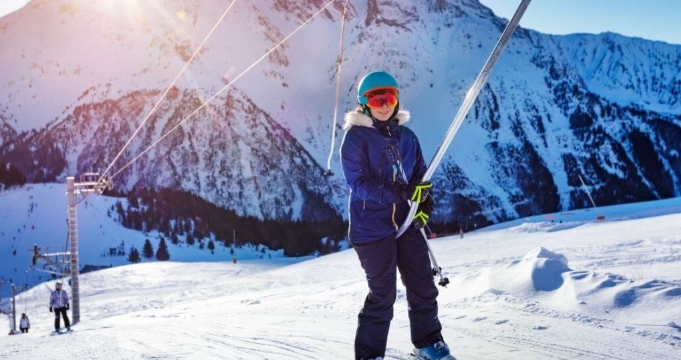
So, the next time you're planning a ski trip or just reading a trail map, you'll see it differently. You won't just see "lifts." You'll see a network of specific tools: the high-speed six-pack to the main peaks, the fixed-grip double to a hidden powder stash, the gondola to get out of a storm, and the magic carpet where the next generation is learning. Each answer to "what's another name for a ski lift" tells a story about the terrain it serves and the experience it offers.
It turns a generic piece of infrastructure into a character in your mountain day. And that makes the whole sport a lot more interesting, and a lot less intimidating, from the moment you line up.
Knowing that a "platter lift" is just a fancy name for a beginner's button pull, or that a "detachable quad" means a fast, comfortable ride, helps you manage your energy and expectations. You can seek out the lifts that match your mood—whether you want a peaceful, scenic chairlift ride or the efficient, social buzz of a gondola cabin.
The mountain is your playground. The lifts are your keys. Now you know which key opens which gate.