I remember the first time I really sat down to watch biathlon. It was during the Olympics, and I was flipping channels. There was this athlete gliding beautifully on skis, then suddenly coming to a complete stop, heart pounding, picking up a rifle, and trying to hit tiny targets 50 meters away. They missed. The crowd groaned. Then they had to ski a penalty loop. The sheer contrast of it all just hooked me. How can someone's heart rate be through the roof from an all-out ski sprint, and then they're expected to be as steady as a sniper? It seemed almost cruel, but in a fascinating way. That's the essence of biathlon, and if you've ever wondered what this sport is really about, you're in the right place. This is my attempt to unpack it all for you.
So, let's get the basic biathlon explained. At its core, biathlon is a winter sport that combines cross-country skiing (the endurance part) with rifle shooting (the precision part). Athletes race around a cross-country ski course, and their total time includes the time spent skiing and the time spent at the shooting range, plus any penalties for missed shots. It's a brutal test of two completely opposite physical demands: maximal aerobic output followed by controlled calm. It's like asking a marathon runner to stop halfway and thread a needle.
 One sport. Two contradictory skills. That's the puzzle.
What You’ll Find in This Guide
- Where Did This Crazy Idea Come From? A Quick History
- The Heart of the Matter: The Core Challenge Explained
- Breaking Down the Events: It's Not Just One Race
- The Gear: More Than Just Skis and a Gun
- How Do You Even Train for This?
- Watching Biathlon: A Beginner's Guide to Enjoying the Race
- Common Questions (The Stuff You Actually Want to Know)
- The Not-So-Glamorous Side: A Few Criticisms
- Getting Into the Sport: Where to Go From Here
Where Did This Crazy Idea Come From? A Quick History
Biathlon's roots are way more practical than you might think. It stems from survival and hunting skills in snowy regions. Think about it – traversing long distances on skis to hunt for food. Northern European countries like Norway have activities that look like biathlon in their historical records. The modern sport, however, evolved from military exercises. Soldiers needed to be skilled skiers and marksmen. These military patrol competitions were even demonstration events in the early Olympics. It wasn't until 1960 that biathlon (for men) became an official Olympic Winter Sport. Women's biathlon joined the Olympic program in 1992. The governing body, the International Biathlon Union (IBU), now oversees a packed World Cup circuit from late autumn to spring, culminating in World Championships. It's come a long way from military drills to a highly technical, televised sport with a massive following in Europe.
The Heart of the Matter: The Core Challenge Explained
Anyone can learn to ski or shoot. The magic – and the madness – of biathlon is in the transition. This is where most beginner questions start, and it's the key to understanding biathlon at a deeper level.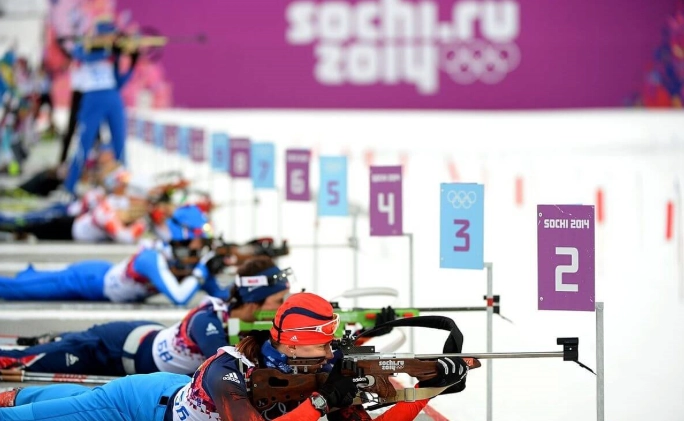
The Physiology of Chaos
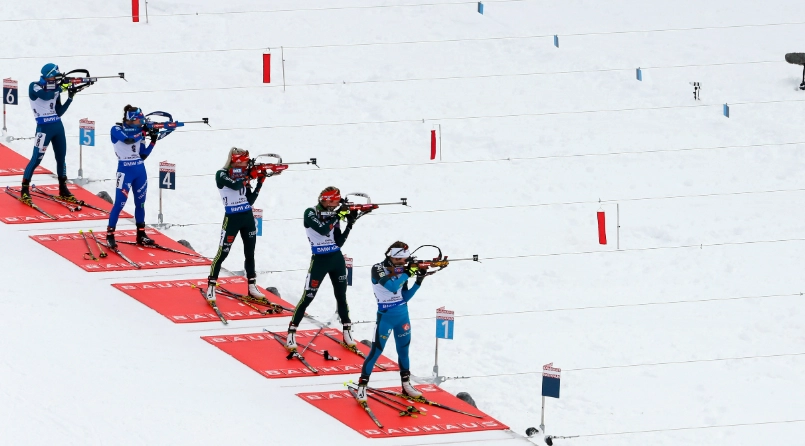
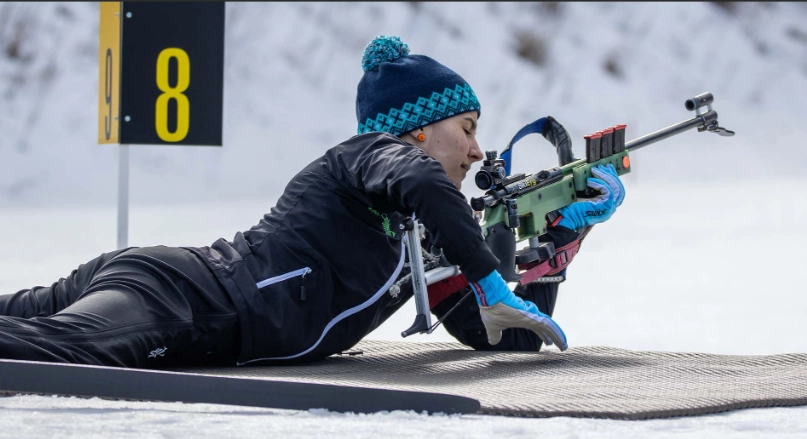
An athlete enters the shooting range with a heart rate often exceeding 180 beats per minute. Their legs are burning with lactic acid from the skiing. They're breathing heavily. Now, they must control all that to execute a fine motor skill: aiming a rifle and squeezing a trigger. The rifle itself weighs about 3.5 kg (7.7 lbs), which feels much heavier when your muscles are fatigued. The primary technique to manage this is a rapid but controlled breathing cycle as they approach the mat. They slam their poles down, drop to the ground for prone shooting, or stand for standing shooting, and try to find a rhythm. Some shoot between heartbeats. It's a mental game as much as a physical one.
And the pressure? Immense. In a sprint race, one missed shot means a 150-meter penalty loop that can cost you 20-30 seconds. In a mass start, with competitors shooting right next to you, the clatter of shots and the pressure of the race can break your focus. I've seen world champions crumble under that pressure. It's what makes the final shooting stage in a close race some of the most gripping television in all of sports.
Breaking Down the Events: It's Not Just One Race
When people ask for biathlon explained, they often think it's just one type of race. Wrong. The World Cup and Olympics feature several formats, each with its own strategy and drama. Here’s the main lineup: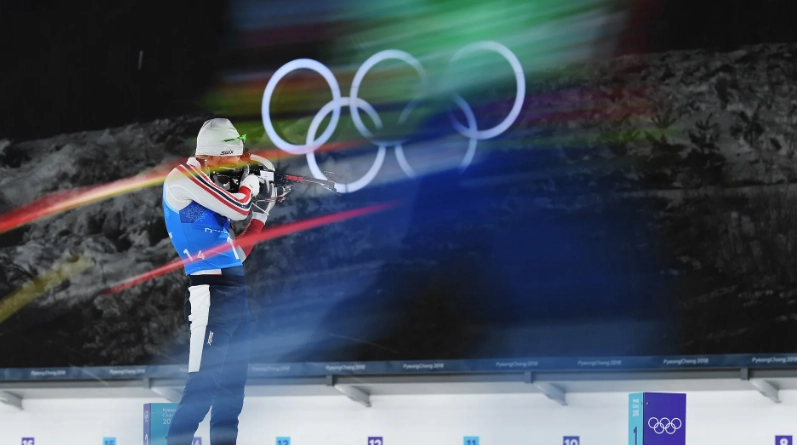
Sprint
The most basic and common format. Men ski 10km, women 7.5km. Two shooting stages: one prone, one standing. Each missed target results in one penalty loop (approx. 150m). It's fast, explosive, and a single mistake can ruin your day. The top 60 finishers in the Sprint qualify for the Pursuit.
Pursuit
A direct follow-up to the Sprint. The start order and intervals are based on the Sprint results. The winner of the Sprint starts first, then the second-place finisher starts however many seconds behind they were, and so on. First across the finish line wins. Men ski 12.5km, women 10km, with four shooting stages (prone, prone, standing, standing). More shooting means more chances to gain or lose places. It's a fantastic chase race.
Individual
The oldest and most punishing event. Men ski 20km, women 15km. Four shooting stages (prone, standing, prone, standing). The twist? Penalties are not loops, but one minute added to your total time for each miss. This places a huge premium on shooting accuracy. A clean shooting round (20/20 targets) is a monumental achievement here. You can ski slower but shoot clean and still win, which creates a totally different tactical dynamic.
Mass Start
My personal favorite to watch. The top 30 athletes on the start list all begin at the same time, side-by-side. It's chaotic, physical, and incredibly tense. Men ski 15km, women 12.5km, with four shooting stages. With everyone together, the shooting range becomes a pressure cooker. You can see your rivals hitting or missing right next to you. The race is often decided on the final lap.
Relay
A team event. Each team has four athletes. Each athlete skis a leg (men 7.5km, women 6km) with two shooting stages. Here's the big difference: for each shooting stage, you have three extra spare rounds. If you still have targets standing after using your five regular shots and three spares, you must ski a penalty loop for each remaining target. The teamwork and the drama of the final leg are electric.
Quick-Reference: Biathlon Events & Penalties
| Event | Distance (Men) | Distance (Women) | Shooting Stages (Order) | Penalty for Miss |
|---|---|---|---|---|
| Sprint | 10 km | 7.5 km | 2 (Prone, Standing) | 150m penalty loop |
| Pursuit | 12.5 km | 10 km | 4 (P, P, S, S) | 150m penalty loop |
| Individual | 20 km | 15 km | 4 (P, S, P, S) | 1 minute time add |
| Mass Start | 15 km | 12.5 km | 4 (P, P, S, S) | 150m penalty loop |
| Relay | 4 x 7.5 km | 4 x 6 km | 2 per leg (P, S) | 3 spare rounds, then penalty loops |
P = Prone, S = Standing. Distances and rules are per IBU regulations and may be adjusted for specific competitions like Youth/Junior events.
The Gear: More Than Just Skis and a Gun
Let's talk equipment. This isn't your weekend cross-country ski setup. Everything is optimized for speed, efficiency, and stability.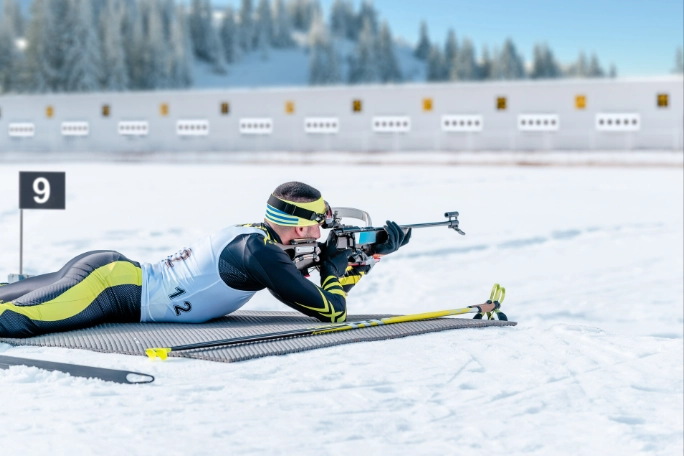
The Skis and Poles
Biathlon skis are lighter and narrower than classic cross-country skis, designed for the skating technique (where you push off the edges like an ice skater). The waxing is a science in itself, with teams having wax technicians who analyze snow temperature and crystal structure for hours. Poles are long, lightweight carbon fiber. Athletes carry their rifles on their backs while skiing, secured in a special harness that minimizes bounce.
The Rifle
This is the star of the show. It's a .22 caliber rimfire rifle. Key rules: it must weigh at least 3.5 kg without magazines and ammunition. It's bolt-action, meaning the athlete must manually cycle the bolt after each shot. They carry the rifle and ammo on their back throughout the race. The sights are diopter sights (peep sights), not telescopic scopes. No biathlon explanation is complete without mentioning the targets: black metal knock-down targets. A hit makes it flip to white. In prone, the target is 45mm in diameter (about the size of a golf ball). In standing, it's 115mm (about a large orange). At 50 meters, that standing target still looks tiny when your heart is racing.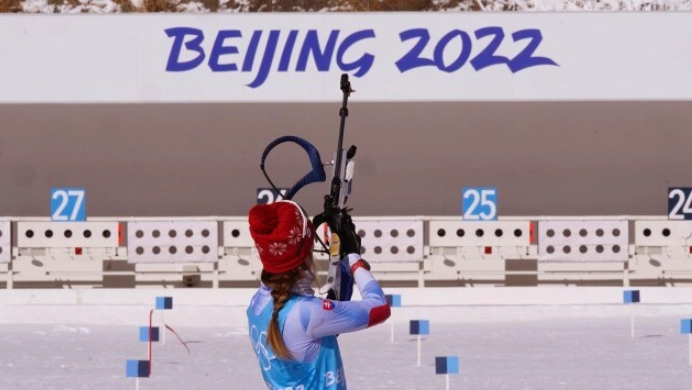
I once had the chance to try a biathlon rifle (unloaded, on a range, with no skiing involved!). The first thing that struck me was the weight balance. It's designed to be stable on the mat, not necessarily comfortable to carry. The diopter sight takes getting used to – you're aligning a front pin inside a small rear aperture. It requires a very consistent cheek weld and head position. Doing that after sprinting? I have no idea how they manage.
How Do You Even Train for This?
The training regimen of a biathlete is insane. It's essentially combining the training of two separate elite athletes.
- Endurance Base: Hours and hours of roller-skiing (skis with wheels for dryland training), running, and cycling in the off-season. Building the aerobic engine is paramount.
- Strength & Power: Lots of gym work for leg strength, core stability (crucial for shooting), and upper body strength for poling and rifle control.
- Shooting Practice: Thousands of rounds fired per year. But it's not just static shooting. They do heart-rate-up drills: doing burpees or sprinting on a treadmill, then immediately getting into position to shoot. They train to find calm within the storm of their own physiology.
- Technical Skiing: Endless work on skating technique and efficiency. Saving a few watts of energy per push can mean seconds over a race.
It's a year-round grind with very little downtime. The mental training is just as rigorous – visualization, focus drills, coping strategies for when the shooting goes wrong.
Imagine your hardest workout. Now imagine having to thread a needle at the end of it. That's their daily life.
Watching Biathlon: A Beginner's Guide to Enjoying the Race
Okay, so you're convinced it's cool. How do you watch it? What should you look for? Here’s my viewer's guide to get the most out of a biathlon broadcast.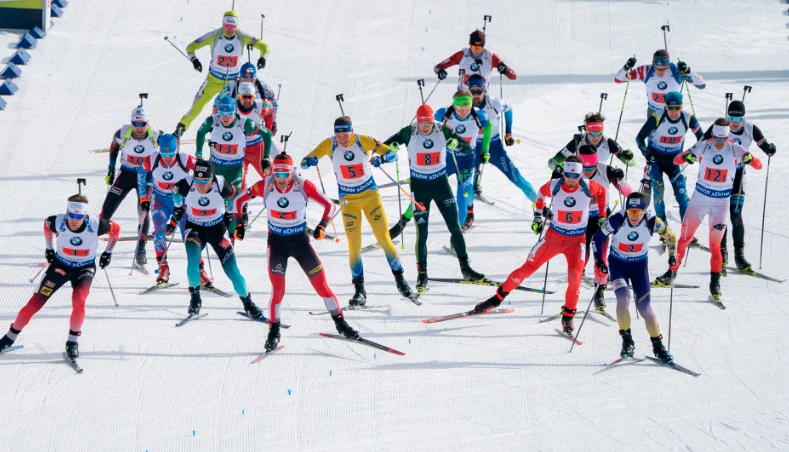
First, the graphics. They're actually great. You'll see a list of athletes with their current place, their start number, and most importantly, little shooting targets next to their name. A filled (or white) target means a hit. An empty (or black) target means a miss. The graphics also show the time behind the leader and the gap to the person ahead/behind.
Pay attention to the range. Watch how athletes arrive. Are they smooth and controlled, or gasping and chaotic? Listen to their breathing over the on-mat microphones. Watch their routine: how they settle, load the magazine, find their position. Consistency is key. A rushed shot is often a missed shot.
Look for the penalty loop. After a shooting stage, athletes with misses will peel off to ski the small, separate penalty loop. You can instantly see who had a good stage and who didn't. In a Pursuit or Mass Start, this is where positions change dramatically.
Finally, appreciate the skiing. These are some of the fittest athletes in the world. The final lap of a Mass Start, when a small group has broken away after the last shooting, is a pure, brutal battle of wills and remaining leg strength.
"Biathlon is the most honest sport. The clock doesn't lie, and the targets don't lie. You can't fake fitness, and you can't fake a steady hand under pressure." – A sentiment you'll hear from many coaches.
Common Questions (The Stuff You Actually Want to Know)
Let's tackle some of the specific questions that pop up when someone is trying to get a proper biathlon explained.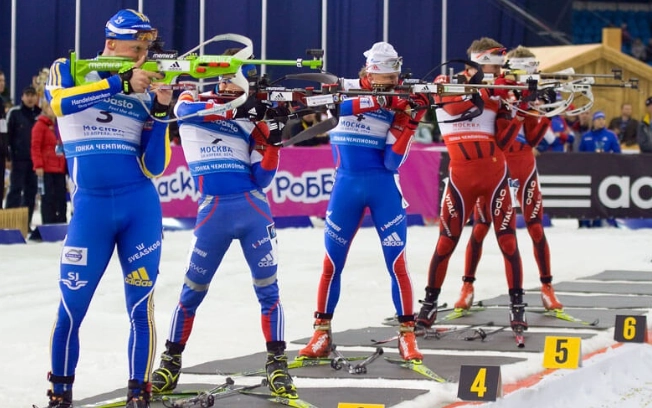
The Not-So-Glamorous Side: A Few Criticisms
Let's be real, no sport is perfect. One common criticism of biathlon is its complexity for new viewers. All the different race formats, penalty loops vs. time penalties, can be confusing at first. The broadcasters have gotten better with graphics, but it still has a learning curve.
Another point is the dominance of certain nations. Traditionally, Germany, Norway, France, Russia (now competing under a neutral flag due to sanctions), and Sweden have been powerhouses. This can make it seem less competitive, though in recent years we've seen winners from Italy, Austria, and others, which is great for the sport.
Finally, the equipment cost is a barrier to entry. A competitive biathlon rifle setup can cost several thousand dollars, on top of high-end ski equipment. This limits accessibility, though club systems and laser biathlon programs are trying to change that.
Getting Into the Sport: Where to Go From Here
If this biathlon explained guide has piqued your interest, here’s what to do next. The best place to follow the elite sport is the IBU's official website. They have schedules, live timing, and often streaming options (rights vary by country). During the winter, check your sports channels for World Cup coverage. The Olympics, of course, is the biggest showcase.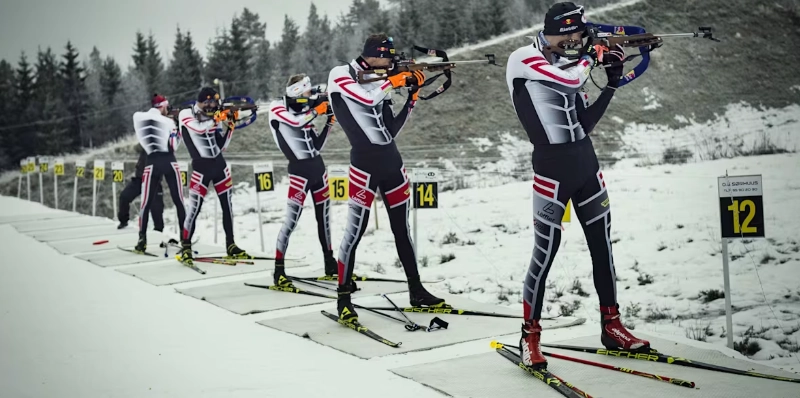
To really dive deep, look for documentaries on athletes. Seeing their training and personal stories adds a whole new layer to understanding the sacrifice involved.
Maybe you'll get hooked, like I did, on the unique tension. It's a sport that celebrates a strange duality: the beauty of human-powered speed and the intense focus of precision. It's about controlling the uncontrollable – your own body under maximum stress. And when an athlete nails that final standing shot, secures the rifle on their back, and pushes off for the victory lap, having conquered both the track and their own physiology… there's nothing else quite like it in sports.
My final thought? Don't just watch the leader. Watch the athlete in 10th place fighting to stay in the points, or the rookie experiencing their first World Cup mass start. Their stories are just as much a part of what makes biathlon compelling. It's a sport about the struggle as much as the triumph.