Quick Navigation
Let's be honest—when we watch ski jumpers hurtle down that massive slope, fly through the air, and land gracefully, most of us think: 'That's insane! How do they even do that?' The answer, of course, lies in the ramp beneath their feet. A ski jump ramp isn't just a slide; it's a meticulously calculated piece of sports architecture designed to turn human courage into controlled flight. I remember the first time I stood at the bottom of one, looking up. It felt less like a sports facility and more like a launchpad for astronauts. The sheer scale is humbling.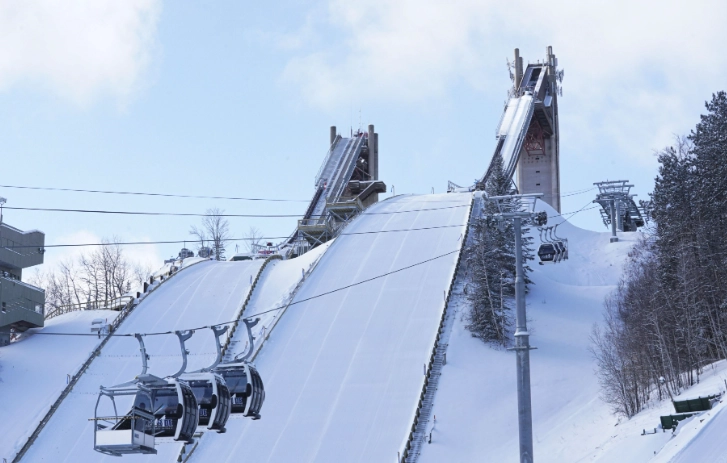
This guide is for anyone who's ever been curious about what makes these structures tick. We're going to peel back the layers, from the concrete and snow to the physics equations that make flight possible. Whether you're a casual Olympics viewer, an aspiring engineer, or just someone fascinated by the limits of human sport, there's something here for you. Forget dry, textbook explanations. We're going to talk about this in plain language, with a few personal observations thrown in (some of them involving how terrifying these things look up close).
The Anatomy of a Ski Jump Ramp: More Than Just a Slide
People often just see the steep, icy track. But a modern ski jumping hill—the official term—is a complex beast with distinct zones, each with a critical job. Getting this wrong isn't an option; the margin for error is measured in centimeters and degrees.
In-Run: The Launch Pad
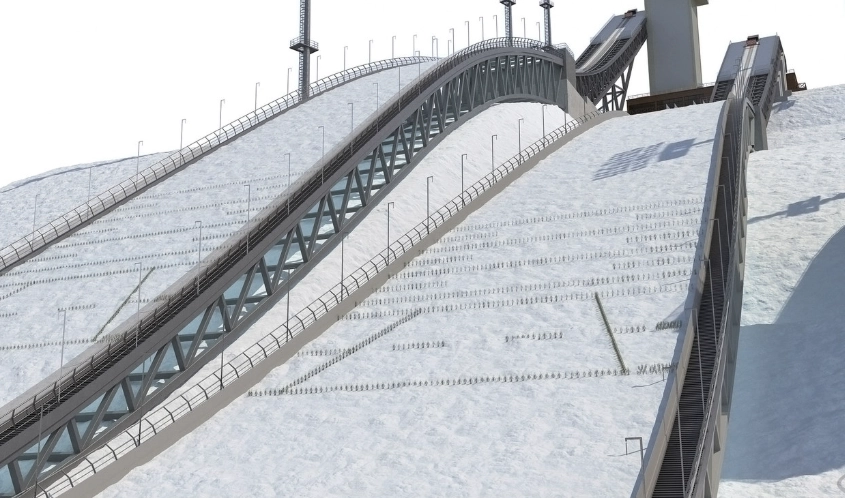
This is where the jumper starts, perched sometimes over 90 meters high. The in-run is a steep, straight track with parallel grooves to guide the skis. It's all about building speed. The angle here is brutal, often around 35 degrees. The surface is solid ice, sprayed by technicians to be perfectly smooth and fast. Think of it as the dragster's starting line. Any bumps or inconsistencies here can throw off the entire jump before the athlete even leaves the ground. The construction is usually a massive steel or concrete structure, covered in porcelain or ice tracks. It's not built into a natural hill as much as it's a tower placed on one.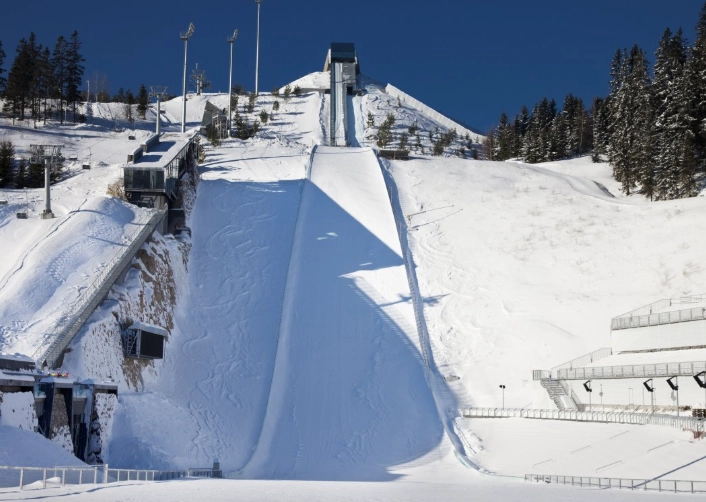
Key Point: The length and steepness of the in-run are precisely calibrated based on wind conditions on the day of the jump. Officials can move the start gate up or down a few meters to ensure jumpers hit the ideal take-off speed, no more, no less. Too slow, and they land short. Too fast, and they fly past the safe landing zone. It's a constant balance.
Take-Off Table: The Moment of Truth
This is the business end. The ramp flattens out slightly into a horizontal platform—the take-off table. This is the last point of contact. Its design is the secret sauce of the entire ski jump ramp. The angle here (typically between 7 and 12 degrees below horizontal) is what converts downward speed into upward and forward flight. It's not about launching the jumper 'up' like a springboard. That's a common mistake. It's about subtly redirecting their trajectory from 'down the hill' to 'out over the hill.' A jumper's technique at this millisecond—the powerful jump and the forward lean—works in concert with this table's angle. Get the table angle wrong, and athletes either pop up and stall or get slammed downward.
I've read old accounts of jumps from decades ago, where the take-off design was more aggressive. It led to a style where jumpers had to throw their bodies forward dramatically to avoid backslapping the hill. It looked awkward and was far more dangerous. Modern table design is a triumph of biomechanics and engineering working together.
Landing Hill: The Calculated Slope
This is the massive, sweeping hillside you see on TV. It's not flat! It's carefully shaped to match the parabolic curve of a jumper's flight path. The hill has a steep section near the top (the 'K-point' or critical point, which is the target landing area) that gradually flattens out. This contour allows the jumper to land with a smooth, telemark-style landing (one foot slightly ahead of the other) while still carrying immense speed. The slope acts as a brake. Landing on a slope that's too flat would be like hitting a wall at 90 km/h. The snow here is prepared differently—softer than the in-run ice but packed enough to support the impact.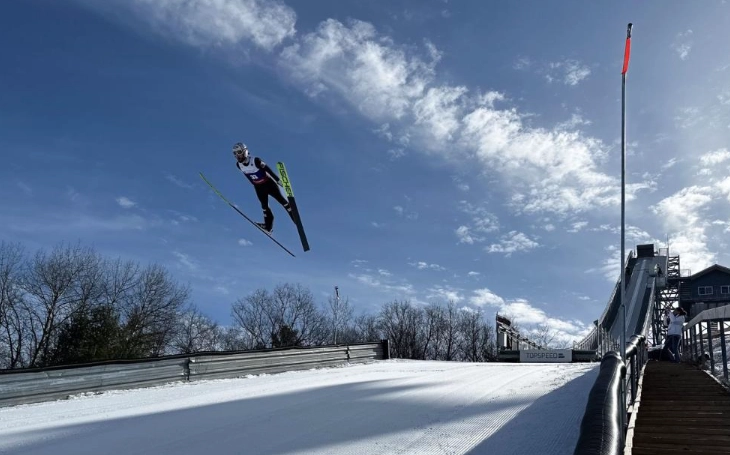
The profile of the landing hill is mathematically defined by a curve called the 'falling line.' Engineers and officials from the International Ski and Snowboard Federation (FIS) have strict specifications and formulas to ensure every certified hill worldwide provides a consistent and safe flight path. This standardization is why a jumper can compete in Austria one week and Japan the next and trust the hill will behave predictably.
Out-Run: The Gentle Stop
Often overlooked, the out-run is the long, flat(ish) area at the bottom where jumpers finally coast to a stop. Safety is the only goal here. It's long enough—sometimes over 100 meters—to allow a jumper to safely bleed off all their remaining speed, even if they fall. You'll usually see them skating off to the side here, having completed their journey.
The Physics of Flight: Why Skiers Don't Just Fall
This is where it gets really cool. Once they leave the ski jump take-off, the athlete is a projectile. But they're not a passive cannonball. They're an active pilot. The key is lift. Their bodies and skis act like an airfoil—a wing. By leaning forward and positioning their skis in a wide V-shape (a technique that revolutionized the sport in the 90s), they create a large surface area underneath their bodies. Air rushing past this surface generates lift, counteracting gravity.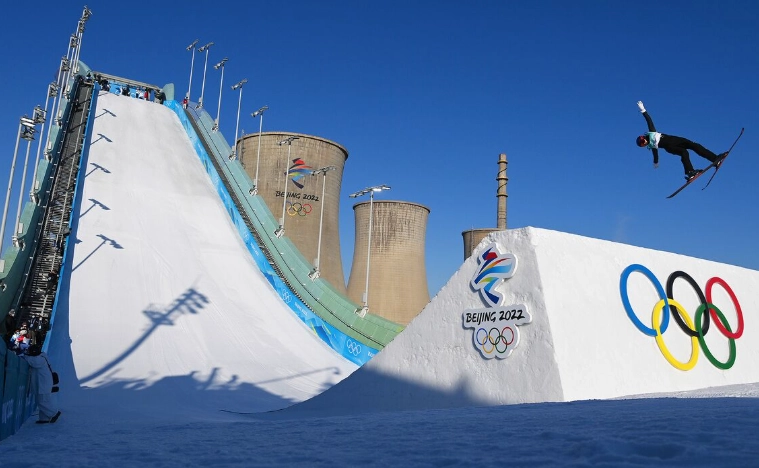
It's not pure magic; it's applied physics. They're trading their massive horizontal speed (gained on the in-run) for lift and distance. The goal is to achieve an aerodynamic, stable flight position that maximizes this lift while minimizing drag. They're essentially trying to 'float' on the air column. Watch closely next time. The best jumpers look almost still in the air, perfectly balanced. That's control. The worst thing you can do is wobble or lose that flat, ski-V position. You'll drop like a stone.
Here's a personal gripe: sometimes TV commentators make it sound like they're just jumping really far. They undersell the incredible, minute adjustments these athletes make mid-flight with their ankles, knees, and hips to stay stable. It's a core and leg workout happening at 100 km/h while trying not to think about the ground. The mental fortitude is arguably as impressive as the physical.
Wind is the eternal enemy and occasional ally. A perfect headwind increases the airspeed over the 'wing,' providing more lift. A tailwind does the opposite. That's why you see competitions paused so often. The start gate is moved to compensate, but gusty, changing winds make the ski jump ramp a different beast from one jumper to the next. It adds a huge element of luck and timing to a sport already demanding supreme skill.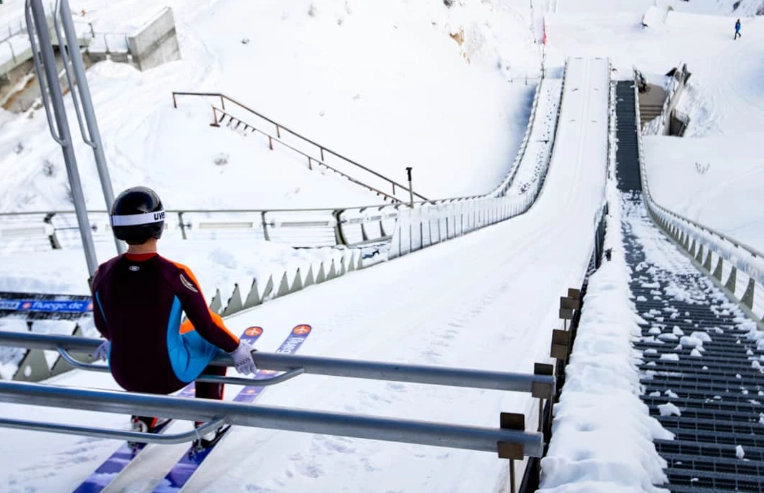
A Spectrum of Sizes: From Small Hills to Flying Giants
Not all ski jumps are created equal. They're classified by their 'hill size' (HS), which is roughly the point where the landing hill starts to flatten out. This determines how far the very best can fly. It's a world of its own, from training facilities to monsters that defy belief.
| Hill Classification | Hill Size (HS) | Typical Jump Length | Who It's For & Notes |
|---|---|---|---|
| Small Hill | Up to 50m | 20-50m | Beginners, kids, summer training on plastic. The in-run is short, maybe just a few meters tall. All about learning the basics of take-off and flight without terrifying speed. |
| Medium Hill (Normal Hill) | ~90m (HS 98-109) | 85-110m | The 'NH' in Olympic competitions. A serious competitive hill. The in-run is high, speeds exceed 90 km/h. This is where most World Cup events are held. Demands precision. |
| Large Hill | ~120m (HS 120-134) | 110-140m | The 'LH' for the brave. Everything is bigger, faster, scarier. Used in major tournaments like the Olympics and World Championships. The pressure on the take-off is immense. |
| Ski Flying Hill | ~200m (HS 185+) | 180m - 250m+ | The absolute pinnacle. Only a handful exist in the world (like Planica, SLO or Vikersund, NOR). These are not about technique anymore; they're about pushing human flight to its absolute limit. The world record (253.5m) is set here. The landing hill seems to go on forever. |
Building a large hill or ski flying hill is a massive municipal engineering project. It requires the right natural terrain (a steep, long hillside), millions in funding, and years of planning. The International Ski Federation (FIS) must certify every detail. The most famous ski jump ramps, like Holmenkollen in Oslo or Bergisel in Innsbruck, have become architectural landmarks, lighting up city skylines.
Beyond the Jump: Training, Safety, and the Future
You don't just show up and huck yourself off a large hill. The progression is brutally slow and methodical. Athletes spend years on smaller hills, mastering the motor patterns until they're automatic. They use roller-skis on plastic summer slopes, wind tunnels to practice flight posture, and massive foam pits to safely crash-land while learning new techniques.
Safety has improved dramatically, but let's not sugarcoat it—this is an extremely dangerous sport. The speeds and heights involved mean crashes, while less frequent than in the past, can be catastrophic. Modern safety measures are non-negotiable:
- The Suit and Helmet: The skintight suit is strictly regulated for porosity to prevent it from acting like a sail. Helmets are mandatory.
- Snow Preparation: A team of experts constantly manicures the in-run and landing hill to ensure perfect, consistent conditions.
- Wind Nets & Fences: Large nets are often erected along the sides of the in-run and early landing zone to protect jumpers from being blown sideways in a gust.
- Medical Team: A full trauma team is on standby at the hill bottom during every official training and competition.
The future of ski jump ramp design is fascinating. We're seeing more all-weather, refrigerated tracks that allow training and competition even in warm climates. Materials are getting lighter and stronger. Wind compensation technology is evolving, with some ideas involving active, adjustable take-off platforms (though this is controversial, as it could remove a key element of the challenge). The focus remains on making the sport as fair and safe as possible without stripping away its raw, thrilling essence.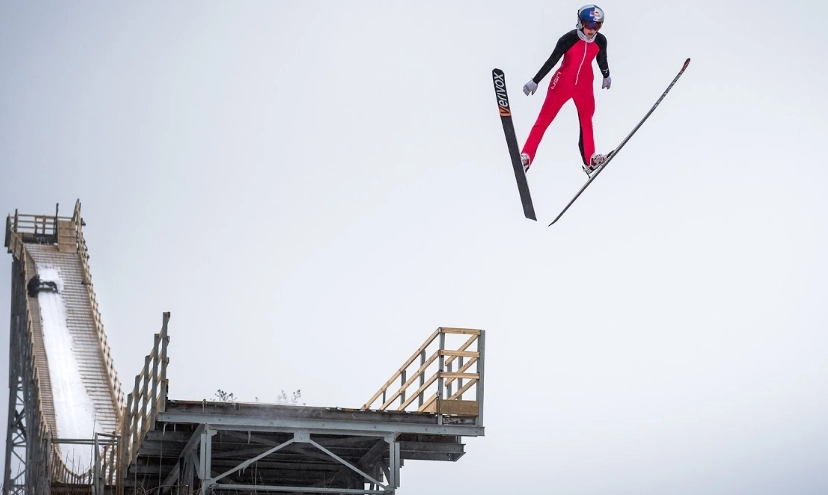
One exciting development is the growth of women's ski jumping. For a long time, the sport was male-dominated, with organizers claiming large hills were 'too dangerous' for women—a frustrating and unscientific stance. Now, women compete on large hills at the highest level, and the progress and talent in women's ski jumping are incredible to watch. It's made the sport more complete.
Your Ski Jump Ramp Questions Answered
I get it. After all this, you probably still have some burning questions. Here are the ones I hear most often, answered straight.
How steep is a ski jump ramp?
It varies by section. The in-run can be as steep as 35-38 degrees. That's steeper than most black diamond ski runs. The take-off table is much flatter, around 7-12 degrees downward. The landing hill starts steep (around 38 degrees at the K-point) and gradually flattens to about 32 degrees by the bottom.
How fast do they go?
At the moment of take-off on a large hill, speeds are typically between 95 and 105 kilometers per hour (about 60-65 mph). On a ski flying hill, it can push 110 km/h. That's highway speed... on ice... heading toward a cliff.
How far can they actually fly?
The current world record, set by Stefan Kraft in 2017, is a mind-bending 253.5 meters (832 feet). That's over two and a half football fields. On a standard large hill (HS 140), winning jumps are usually in the 135-145 meter range. It's worth checking the FIS World Cup standings to see current competitive distances.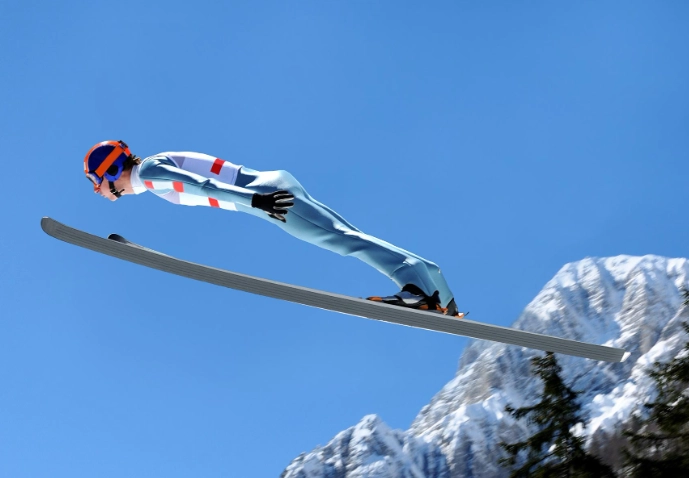
Why do they hold their skis in a V-shape?
It's all about that lift we talked about. The V-shape creates a larger, more stable airfoil surface compared to the old-fashioned parallel-ski style. More surface area under the body = more lift = longer, more stable flights. It was a game-changer when it was widely adopted.
Is it scary for the jumpers?
I've spoken to a few former competitors. The universal answer: absolutely, especially at first. But like anything, repeated exposure turns fear into intense focus. They say you're not thinking 'I'm scared' at the start gate; you're running through your checklist: posture, wind, timing. The fear, they admit, never fully goes away—it just gets channeled. That's what makes it a sport of ultimate nerve.
How much does it cost to build a ski jump ramp?
A massive amount. A small training hill might cost a few hundred thousand dollars. A full-scale Olympic-grade large hill complex, with towers, landscaping, seating, and infrastructure, can run into the tens of millions. The iconic Holmenkollen renovation in 2010 cost over 2 billion Norwegian Kroner (roughly $200 million USD). It's a major investment for any city or region.
The next time you watch a ski jumping competition, you'll see more than just people flying. You'll see the invisible hand of physics, decades of engineering refinement in that ski jump ramp profile, and a lifetime of athlete training all converging in a few seconds of breathtaking spectacle. It's a sport where the playing field itself is a character—a beautiful, daunting, and brilliantly designed character that asks the ultimate question of its participants: How far are you willing to go?
From the plastic mats of the beginner hills to the dizzying heights of Planica, the journey up the ski jump ramp is one of the most unique in all of sports. And understanding the ramp itself makes watching that journey all the more incredible.