Quick Navigation
Let's be real. Your first day at a ski resort can feel like you've landed in a foreign country where everyone speaks a confusing, adrenaline-fueled dialect. Someone yells "Watch out for the moguls on that black run!" and you just smile and nod, hoping you're not about to ski off a cliff. I remember my first time. I heard "groomers" and thought they were talking about people who brush horses. I was very wrong.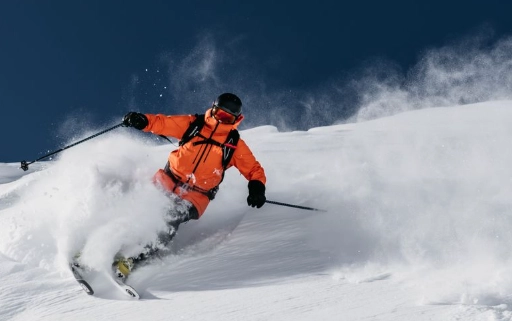
That's why getting a handle on basic skiing terminology isn't about showing off. It's about safety, buying the right gear, understanding the mountain, and frankly, not feeling like a total outsider. This guide is your translation dictionary. We'll break down the essential skiing terms for beginners into chunks you can actually digest. No fluff, just the stuff you need to know before you click into those bindings.
Why Bother Learning the Lingo? It helps you follow instructions from instructors ("bend your ankles, not just your knees!"), read trail maps accurately, rent suitable equipment, and most importantly, communicate if you need help. Knowing the difference between a "blue square" and a "black diamond" could be the difference between a fun day and a terrifying one.
The Mountain & The Map: Navigating Your Playground
Before you even touch snow, you'll be staring at a trail map. It's not just a drawing; it's a coded guide to your day. Let's crack that code.
Trail Difficulty Ratings (The Colors and Shapes)
This is the most critical set of skiing terms for beginners to memorize. The system is mostly standardized in North America, but always check locally, especially in Europe where it can vary.
- Green Circle: The beginner's best friend. These are wide, gentle slopes with a very mild incline (usually less than 25%). Perfect for your first turns and practicing that pizza slice. Think of it as the bunny slope's bigger cousin.
- Blue Square: Intermediate terrain. Now we're talking. These are steeper and might have some varied terrain. You should be able to link turns confidently on a green before venturing here. They make up most of the mountain and are where you'll spend most of your time progressing.
- Black Diamond: Advanced terrain. Steep, challenging, and may have moguls, trees, or narrow passages. Don't be fooled by a single black diamond—it's a serious step up from a blue. There's a huge range within this category.
- Double Black Diamond: Expert only. Extremely steep, likely with obstacles like cliffs, severe moguls, or tight trees. This is for experts with serious skills and local knowledge. Just admire them from the lift for now.
I made the mistake of thinking a short black diamond would be a quick adventure. It was a long, sideways, survival-slide back to safety. Lesson learned.
Lifts and Getting Uphill
You can't ski down without going up. Here’s how you’ll get there.
- Chairlift: The classic. You sit on a chair that carries you up. Types vary from slow 2-seaters to fast high-speed quads or six-packs. Safety bar: Always lower it. No arguments.
- Gondola / Cabin: An enclosed cabin that carries you up. Great for bad weather or long rides. You usually keep your skis on outside.
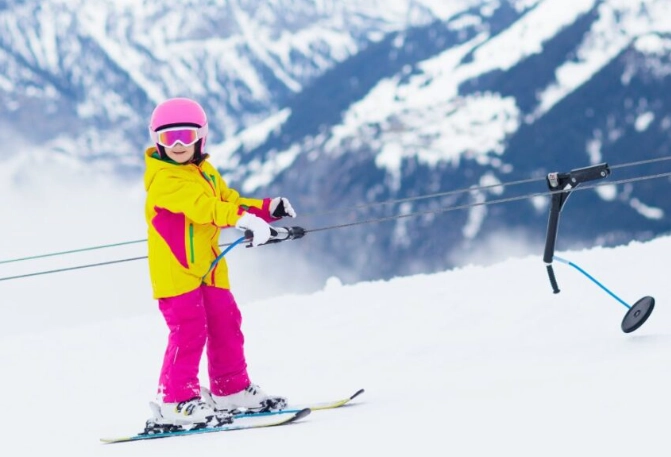
- Surface Lift: This includes T-bars (a T-shaped bar you put behind your thighs, two people per bar) and Rope Tows (a moving rope you grab). These can be tricky for beginners—don't be shy to ask for help or practice on a dedicated learning one.
- Magic Carpet: A conveyor belt on the snow for absolute beginners. It's foolproof and the best place to start.
Mountain Features and Snow Conditions
What will you actually be skiing on? The descriptions matter.
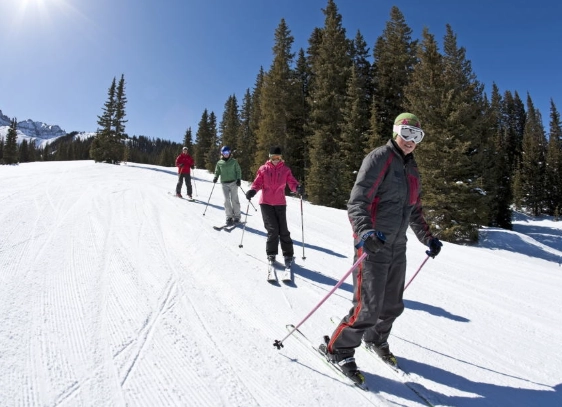
- Groomed / Corduroy: Snow that has been smoothed over by a machine (a snowcat). It leaves parallel lines that look like corduroy fabric. This is the predictable, friendly snow you want as a beginner.
- Moguls / Bumps: Large, rhythmic bumps formed by skiers turning in the same place. They require advanced technique. A mogul run is not the place for your first parallel turn.
- Powder / Pow: Fresh, deep, untracked snow. The holy grail for many skiers. It's floaty and fun but can be tiring and disorienting for newbies.
- Crud / Chop: Powder that has been skied over, creating uneven, chunky snow. It's challenging to ski through.
- Ice / Icy Patches: Hard, slick snow. It's unforgiving and makes turning and stopping harder. You'll hear more experienced skiers complain about it—they're right to.
- Off-piste / Backcountry: Terrain outside the marked, patrolled, and controlled ski area boundaries. This requires specialized gear (avalanche transceiver, probe, shovel), training, and a guide. It is NOT for beginners.
Heads Up: If you hear "off-piste" or "sidecountry," understand the risks. It's unpatrolled, avalanche terrain can exist, and rescue is not guaranteed. Stick to the in-bounds runs while you're learning. The National Ski Areas Association has clear resources on slope safety that emphasize staying within boundaries.
Your Gear: More Than Just Sticks and Boots
Renting gear? Buying? Knowing what to ask for is half the battle. This section of our skiing terms for beginners guide will make you sound like you know what you're doing at the rental shop.
The Ski Itself
Skis aren't all the same. The right type makes learning easier.
| Ski Type | What It Is | Best For... | Beginner Note |
|---|---|---|---|
| All-Mountain | The most common rental ski. Designed to do a bit of everything reasonably well on groomed runs. | Beginners to intermediates who stick to groomed trails. | This is almost certainly what you'll get. Perfectly suitable. |
| Carving Skis | Skis with a pronounced sidecut (shaped like an hourglass) that make turning easier. | Learning to make clean, carved turns on groomed snow. | Excellent for beginners. They initiate turns with less effort. |
| Powder Skis | Wider skis designed to float on deep snow. Often have rocker (upturned tips/tails). | Skiing deep, fresh snow off-piste. | Not for you yet. They can feel clunky and hard to control on hardpack. |
| Twin Tips | Skis with upturned tips AND tails, designed for skiing backwards and landing jumps. | Terrain park and freestyle skiing. | Probably not necessary. Focus on basics first. |
Parts of the Ski and Bindings
- Tip: The front, upturned part of the ski.
- Tail: The back of the ski.
- Waist / Underfoot: The narrowest part of the ski. A narrower waist (e.g., 75mm) is easier to turn for beginners.
- Sidecut: The hourglass shape. More sidecut = easier, quicker turns.
- Bindings: The mechanisms that attach your boot to the ski. They are designed to release during a fall to prevent injury. The DIN setting is the release force; technicians set this based on your weight, ability, and boot size. Do not adjust it yourself.
- Edges: The sharp metal sides of the ski. You use them to grip the snow and turn. Keeping them sharp is crucial.
Boots and Poles
- Ski Boots: Stiff, plastic boots that clip into the bindings. Fit is everything. They should be snug but not painfully tight. You should be able to wiggle your toes but not lift your heel. A poorly fitted boot ruins the day.
- Buckles: Close them from the toe upwards for an even fit.
- Forward Lean: The angle the boot keeps your shin pressed forward. Essential for good ski control.
- Ski Poles: Used for timing, balance, and pushing on flat areas. The grip should feel comfortable, and the strap should go around your wrist. Size: hold pole upside down, grip under basket; your elbow should be at a 90-degree angle.
- Basket: The round disc near the tip of the pole that stops it from sinking too deep into the snow.
Pro Tip from a Painful Lesson: When renting boots, wear one pair of thin ski socks, not two pairs of thick ones. More socks create wrinkles and pressure points, leading to cold feet and blisters. A good fit with a single sock is warmer.
The Moves: Talking About Technique
Now for the action. Instructors will use these terms. Understanding them helps your body follow instructions faster.
Stance and Balance
- Athletic Stance: The ready position. Knees and ankles slightly bent, hands forward and visible, weight centered over the middle of your skis.
- Weight Distribution: As you turn, you shift weight from one ski to the other. On easier turns, it's more 50/50. As you progress, you'll put more weight on the outside ski (the one on the outside of the turn arc).
- Forward Pressure: Keeping your shins pressed into the front of your boot cuffs. This is non-negotiable for control. Leaning back (in the backseat) is a recipe for loss of control.
Turning and Stopping (The Core Skills)
This is where the rubber meets the road—or rather, the edges meet the snow.
- Wedge / Snowplough / Pizza: The fundamental beginner stop and turn shape. Tips together, tails apart, forming a slice-of-pizza triangle. This uses the inside edges of both skis to control speed and initiate turns. It's your safety net.
- Wedge Turn / Snowplough Turn: Making a turn while in a wedge. You apply more pressure to the outside ski (e.g., to turn left, press on your right ski).
- Stem Christie: A transitional turn. You start the turn with a small wedge (the stem) and then bring the skis parallel (the Christie) to finish. It's a bridge to parallel skiing.
- Parallel Turn: The goal. Turning with skis remaining parallel to each other throughout the turn. This is done by rolling your knees and ankles to engage the edges.
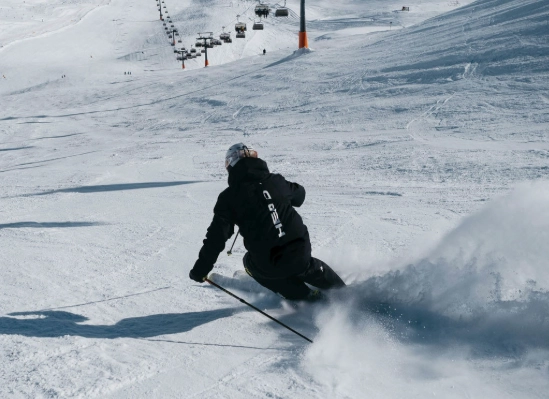
- Carving: A high-level parallel turn where the ski's edge cuts cleanly into the snow like a knife, leaving a thin, pencil-line track. The opposite of skidding, where the tails slide sideways a bit.
- Hockey Stop: A quick, powerful stop where you sharply turn both skis sideways to the fall line, spraying snow. It looks cool and is very functional.
Other Maneuvers
- Traversing: Skiing across the slope, not straight down it. Used to control speed and pick your line.
- Fall Line: The most direct, steepest path down any slope. Imagine pouring water down the hill; the path it takes is the fall line. Turning is essentially moving in and out of the fall line.
- Linked Turns: Connecting one turn smoothly into the next, forming an S-shaped path down the mountain. This is rhythmical, efficient skiing.
Safety, Etiquette, and the Ski Community
Skiing has rules. They're not there to ruin your fun; they're there to keep everyone safe. The International Ski Federation (FIS) publishes The 10 FIS Rules for Conduct, which are the global standard. Here are the key ones translated into plain English.
- Respect for Others: Don't crash into people. You're responsible for avoiding the skier downhill from you. They have the right of way.
- Control of Speed and Direction: Ski in control. You must be able to stop or avoid others/obstacles. Speed alone isn't the issue; skiing out of control is.
- Choice of Route: The uphill skier must choose a path that doesn't endanger those below. Don't bomb straight down a crowded slope.
- Overtaking: You can pass on either side, but leave enough space. Yell "On your left!" or "On your right!" if it's close.
- Entering, Starting, and Moving Uphill: Look uphill before merging onto a trail or starting after a stop. It's like merging onto a highway.
- Stopping on the Piste: Don't stop in narrow spots or just over a crest where you're invisible from above. Move to the side.
- Climbing and Descending on Foot: If you have to walk, keep to the very side of the trail.
- Respect for Signs and Markings: Obey closure signs, slow signs, and difficulty markers. They're there for a reason.
Other crucial safety terms:
- Patrol / Ski Patrol: The mountain's medics and safety crew. They wear crosses on their jackets. If you're hurt or see someone hurt, alert them or tell a lift operator.
- Closed Trail / Area Boundary: Marked with ropes, fencing, and signs. Do not duck under ropes. The area is closed due to hazards like thin snow cover, avalanches, or wildlife protection.
- Avalanche Danger / Blasting: In avalanche-prone areas, you may hear controlled explosion charges in the early morning. This is patrol intentionally triggering avalanches before the resort opens. It's a good sound.
- Tree Well: A dangerous void of loose snow that can form around the base of a tree. If you fall into one headfirst, it can be impossible to get out and lead to suffocation. Never ski alone in the trees, especially as a beginner. The National Ski Patrol (NSP) emphasizes this as a critical risk.
Common Questions Beginners Actually Ask (FAQ)
Putting It All Together: Your First Day Decoded
Let's imagine a day using these terms. You arrive, rent all-mountain carving skis and well-fitted boots. You head to the magic carpet on the bunny slope to practice your wedge (pizza) stops and turns. Feeling good, you take a chairlift (lowering the safety bar, of course) to an easy green circle run. It's been groomed to perfect corduroy. You practice traversing and making wedge turns, careful to keep your forward pressure. You see a sign for a blue square but decide to stick to greens today. At lunch, you hear people talking about the icy patches on the steeper black diamond runs. You're glad you're on the gentle fall line of the green. You finish the day with some apres-ski hot chocolate, legs tired but happy. You didn't just survive—you understood the mountain's language.
That's the power of learning the lingo. It transforms the experience from intimidating to immersive. You stop being a passive visitor and become an active participant. So take these skiing terms for beginners, hit the slopes, and start making your own stories. Just remember to look uphill before you start.