So you're curious about adaptive skiing. Maybe you saw someone gliding down a mountain on a cool-looking sled-like device, or a skier with a guide, and thought, "How does that work?" Or perhaps you or someone you know has a mobility or sensory challenge, and the idea of skiing feels like a distant dream. Let me tell you, it's far more accessible than you might think. The world of adaptive skiing has evolved in incredible ways, breaking down barriers one slope at a time.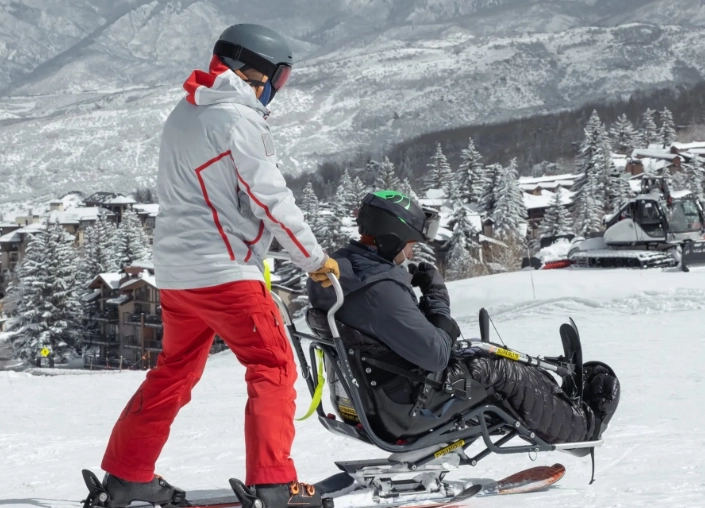
The core idea is simple: modify the equipment, technique, or support system so that people with a wide range of disabilities can experience the freedom, speed, and pure joy of skiing. But the execution? That's where it gets fascinating. There isn't just one way to do it. Understanding the different types of adaptive skiing is the first step to finding your own path to the snow.
I remember talking to an instructor at a local resort who told me about a veteran who hadn't felt the rush of speed since his injury. They got him into a sit-ski, and the grin on his face at the bottom of the hill, he said, was worth more than any paycheck. Stories like that aren't rare. They're happening every day on mountains around the world. But to make it happen, you need to know the options. So, let's ditch the technical jargon and talk practically about what's out there.
Quick Guide
- The Big Three: Breaking Down the Main Types of Adaptive Skiing
- Stand-Up Skiing (or Mono-Skiing/Bi-Skiing for Standing)
- Sit-Down Skiing (Mono-Ski & Bi-Ski)
- Skiing for the Visually Impaired or Blind
- Beyond the Big Three: Other Considerations and Adaptations
- Your Action Plan: How to Actually Get Started
- Common Questions (The Stuff You're Actually Wondering)
The Big Three: Breaking Down the Main Types of Adaptive Skiing
While adaptations can be highly personalized, most setups fall into three primary categories. These aren't just random classifications; they address fundamentally different needs related to balance, leg function, and vision. Choosing the right type is less about the disability label and more about answering a few key questions: Can you stand? Can you use your legs to steer? How is your balance and core strength?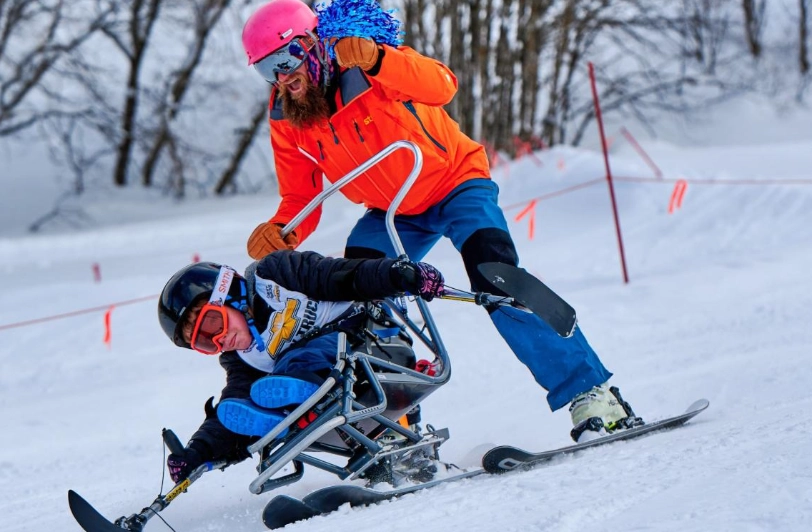
Confusion often starts because people see a piece of equipment and think that's the whole story. It's not. The equipment enables a specific technique. So when we talk about the types of adaptive skiing, we're really talking about the marriage of specialized gear with tailored teaching methods.
1. Stand-Up Skiing (or Mono-Skiing/Bi-Skiing for Standing)
This is often the first image that comes to mind for many. It's for skiers who can stand and bear weight on their legs but may need assistance with balance, stability, or leg control. The adaptations here are more about support and guidance than replacing leg function entirely.
The equipment list looks familiar but with clever twists:
- Outriggers: These are the game-changers. Imagine a cross between a ski pole and a miniature forearm crutch with a small ski tip at the bottom. They provide critical balance points. You'll see them used in pairs by skiers with conditions affecting their lower-body stability, like cerebral palsy, some amputations (particularly below-knee), or neurological conditions.
- Skier Braces: These aren't your average knee brace. We're talking about custom or off-the-shelf braces that lock the ankle and knee into a safe, functional position for skiing. They're essential for someone whose legs might buckle or lack muscular control.
- Bi-Skis for Standing? Wait, I thought bi-skis were for sitting? Usually, yes. But here's a nuance: some adaptive programs use a wide, stable bi-ski platform with a high seat that allows a skier to be in a *standing-supported* position, secured by a harness. It's a hybrid approach for those who want the standing sensation but need the full support of a seated frame. It blurs the line a bit, which is a good reminder that these categories are guides, not rigid boxes.
The technique shifts from using your edges with subtle leg movements to using your upper body and outriggers to initiate turns. It's a fantastic full-body workout and feels remarkably close to traditional alpine skiing. You're still facing forward, feeling the wind, and carving turns—just with a bit more hardware for confidence.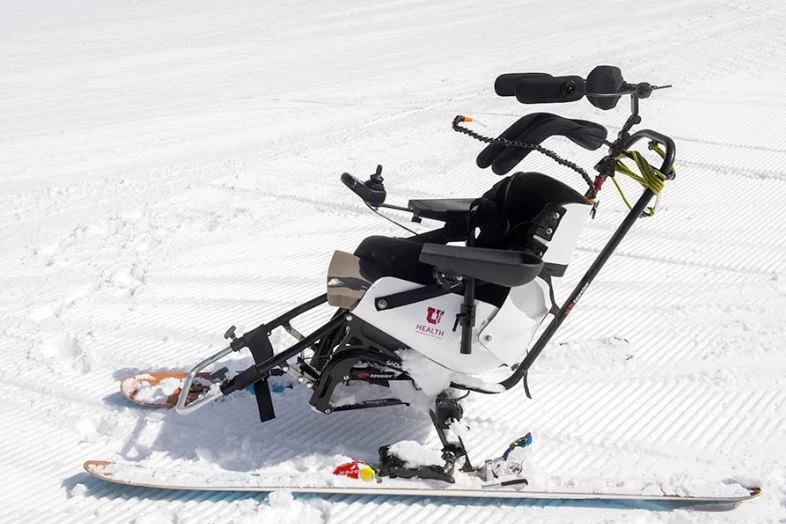
Who's it best for? Think of individuals with lower-limb weakness, partial paralysis, balance disorders, or single-leg amputations who have good core and arm strength. It's not about having "perfect" legs; it's about having enough strength and control to stand with support.
2. Sit-Down Skiing (Mono-Ski & Bi-Ski)
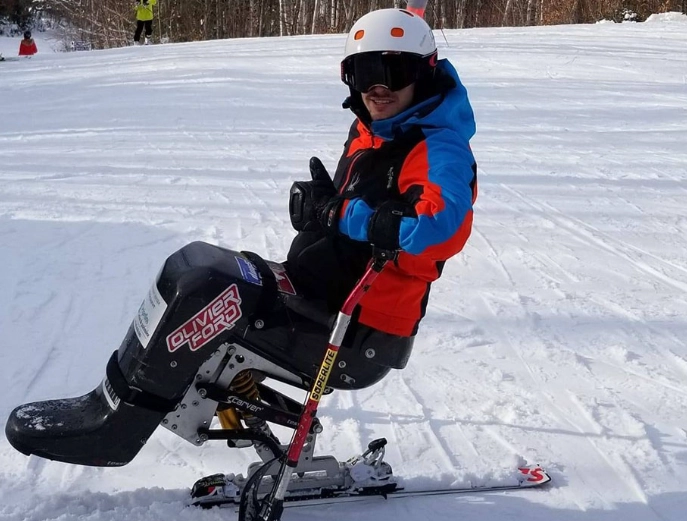
This is where adaptive engineering truly shines. If standing isn't an option due to spinal cord injuries, significant leg paralysis, double amputations, or other conditions affecting the entire lower body, sit-down skiing opens the door. This category contains the two most iconic pieces of adaptive skiing equipment: the mono-ski and the bi-ski.
Let's clear up a common point of confusion right away:
| Feature | Mono-Ski (Uni-Ski) | Bi-Ski |
|---|---|---|
| Number of Skis | One single alpine ski underneath a bucket seat. | Two shorter, wider skis mounted parallel under a seat. |
| Stability | Less stable. Requires good upper body strength and balance to control. Feels dynamic and sporty. | Very stable. Much harder to tip over. Ideal for beginners or those with limited trunk control. |
| Steering Method | Shifting your body weight (head, shoulders, torso) to engage the ski's edge, just like a stand-up skier does with their legs. It's an art form. | Primarily using hand-held outriggers (the same mini-ski tipped poles) to drag and pivot. More like driving a tank. |
| Skill Level | Intermediate to Advanced. This is for the adrenaline seeker who wants high-performance carving. | Beginner to Intermediate. The perfect starting point for almost anyone new to sit-down skiing. |
| The Feel | You feel every bump and carve. It's incredibly responsive and fast. You're *skiing*. | Smooth, stable, and secure. Allows you to focus on the scenery and the joy of movement before mastering advanced technique. |
I've had a friend try a bi-ski for the first time. His biggest fear was tipping over. Within an hour on a gentle slope, that fear was gone, replaced by the sheer fun of gliding. He graduated to a mono-ski the next season, and the difference, he said, was like going from a sturdy SUV to a sports car. Both get you down the mountain, but the experience is wildly different.
The seat itself is a custom-fitted bucket, often molded to the user, with a sophisticated suspension system (usually a shock absorber) connecting it to the ski(s). This soaks up the bumps, which is absolutely critical for someone with a spinal cord injury who can't use their legs as natural shock absorbers.
So, which of these types of adaptive skiing is right for you?
If you're new, have limited core control, or just want a relaxed, stable ride, a bi-ski is almost always the recommended entry point. If you're an experienced sit-skier craving speed, steep terrain, and the feeling of truly carving turns, the mono-ski is your machine. Many programs, like those certified by Disabled Sports USA, will start everyone in a bi-ski for safety and confidence building.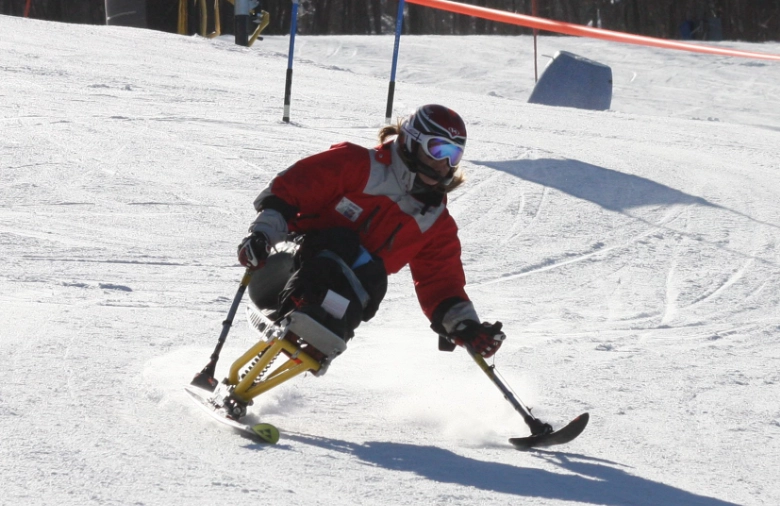
3. Skiing for the Visually Impaired or Blind
This type of adaptive skiing is less about specialized equipment and almost entirely about technique and partnership. The skier wears their normal ski gear. The adaptation is the guide.
The guide skis just ahead of the visually impaired skier and provides continuous verbal cues. We're not talking about occasional shouts of "Left!" It's a constant, flowing stream of information: "Gentle right turn in three, two, one, now." "Bump ahead." "Flat section for 50 meters." "Slowing to a stop." The guide describes the terrain, the pitch, the location of other skiers, and the actions needed.
They often use Bluetooth headsets for clear communication, but on quieter slopes, just voices work. Sometimes, the guide will ski behind, using voice commands only, which requires even more precise communication from the skier in front.
But here's the cool part—the physical connection. Many teams use a "tether," a short, rigid bar or a flexible cord with handles that connects the guide's hip to the skier's hip. This provides subtle physical feedback about the guide's movements, speed, and turns. It's not for pulling; it's for communicating. A slight tug to the right signals an upcoming right turn.
Who is it for? Obviously, skiers who are blind or have low vision. But it's also surprisingly helpful for some individuals with neurological conditions that affect spatial awareness or processing, even if their eyesight is technically fine. The constant, structured verbal guidance can provide the cognitive framework they need to ski safely.
Finding a qualified guide is key. Reputable programs train their guides extensively. Organizations like U.S. Ski & Snowboard's Adaptive Program have pathways for training and certifying sighted guides for this specific discipline.
Beyond the Big Three: Other Considerations and Adaptations
The three main types cover most scenarios, but human creativity doesn't stop there. What about cognitive disabilities? Autism? Developmental differences?
This is where adaptive skiing gets really personalized. An instructor might use:
- Simplified, consistent language and visual aids. Breaking instructions down into single, clear steps.
- Snow Sliders or Edgie Wedgies. These are simple devices that clip onto the tips of beginner skis to hold them in a "pizza" (snowplow) shape, reducing the physical and mental demand of maintaining that position. Great for anyone struggling with motor planning.
- Ski Bras. Not what you think! These are straps that connect the tails of the skis, preventing them from crossing or spreading too far apart—another great tool for building initial confidence.
- Extra instructors or side-skier support. Sometimes, the best adaptation is a second person skiing right next to the student for physical support and immediate feedback.
The philosophy here is universal design in action: create an environment where the most people can participate with the fewest barriers. Sometimes the adaptation is high-tech carbon fiber; sometimes it's a piece of plastic or a different way of speaking.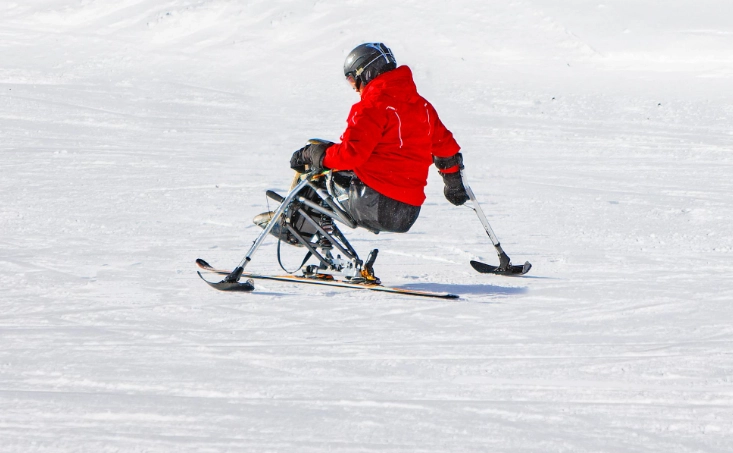
Your Action Plan: How to Actually Get Started
Alright, so you're interested. Maybe you've identified which of the types of adaptive skiing might be a fit. Now what? The biggest hurdle isn't your ability; it's often knowing where to look.
- DO NOT Buy Equipment First. This is the most common and expensive mistake. The adaptive skiing world runs on specialized, costly gear ($5,000+ for a good mono-ski is normal). Reputable programs provide all the equipment as part of your lesson. Your job is to show up. Only consider buying after you've taken many lessons and know exactly what model and fit you need.
- Find a Certified Program. This is non-negotiable for safety and quality. Google "adaptive skiing" plus your region or the name of a major ski resort. Look for programs affiliated with national bodies. In the U.S., Disabled Sports USA and Move United have chapter locators. In Canada, check Disabled Sports Canada. These organizations set instructor certification standards.
- Call Them, Don't Just Email. Have a conversation. Explain your situation, your goals, any concerns. A good program coordinator will ask questions about your mobility, strength, medical history, and experience to match you with the right instructor and equipment.
- Be Realistic About Your First Day. You might spend most of it on the gentlest learning hill, figuring out the equipment, and learning how to get on and off the chairlift (which has its own adaptive protocols). That's a huge success! It's not a failure.
- Think About Logistics. How will you get to the snow? Do you need adaptive equipment for the lodge? Mention these things when you call. Good programs think about the entire experience.
Key Resources to Bookmark
Disabled Sports USA: A premier national organization with chapters across the U.S. Their site is a treasure trove of information on types of adaptive skiing and finding local programs. Visit their website.
Move United: Another leading U.S. organization promoting community-based adaptive sports. Their sport locator is excellent. Visit their website.
International Paralympic Committee (IPC) Alpine Skiing: To see the absolute pinnacle of the sport, from mono-ski racing to visually impaired downhill. It's inspiring and shows what's possible. Visit their website.
Common Questions (The Stuff You're Actually Wondering)
Look, the mountain doesn't care how you get down it.
It only offers the experience. The types of adaptive skiing we've talked about—the stand-up, the sit-down, and the guided—are just different keys to unlock that experience. The community is welcoming, the feeling of accomplishment is real, and the view from the top is the same for everyone.
The biggest barrier is usually the one in our minds. The thought that it's too hard, too complicated, or not for "someone like me." I hope breaking down the equipment and the techniques demystifies it a bit. It's not magic; it's clever engineering and passionate instruction.
Your next step is the simplest one: pick up the phone and call a program. Tell them you're curious. Ask your questions. That single call is the first turn you'll make on your new path.