Quick Navigation
- The Right Mindset: Your First Step to Better Skiing
- Getting Your Gear Sorted (Without Breaking the Bank)
- The Foundational Pillars: Stance, Balance, and Edging
- Mastering the Turn: From Wedge to Parallel Carving
- Drills, Drills, Drills: The Path to Muscle Memory
- Leveling Up: Advanced Techniques and Terrain
- Common Questions (And Real Answers)
- Putting It All Together: Your Personal Progression Plan
Let's be honest. We've all been there. Standing at the top of a run that looked much easier from the lodge, legs feeling like jelly, and that nagging voice in your head asking, "how do I improve my skiing technique so this feels less like a survival exercise and more like fun?" Maybe you're a beginner who can get down the hill but it's a battle every time. Or perhaps you're an intermediate skier stuck in a plateau, doing the same turns year after year, wondering how to carve like those smooth skiers you see gliding past.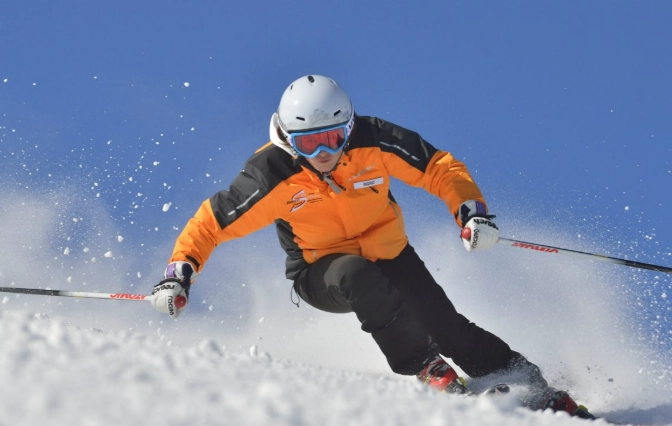
I've been skiing for over fifteen years, and I remember the frustration of that plateau all too well. I took a lesson after years of thinking I was "good enough," and the instructor pointed out a fundamental flaw in my stance I had no idea about. It was humbling, but it changed everything. Improving your skiing isn't just about looking cooler (though that's a nice bonus). It's about control, efficiency, and safety. Good technique lets you ski longer with less fatigue, handle more challenging terrain confidently, and drastically reduces your risk of injury.
This guide is the result of countless hours on the mountain, lessons from certified instructors, and conversations with far better skiers than me. We're going to strip it back to basics, build it back up, and tackle the specific things you can do to answer that core question: how do I improve my skiing technique? We'll cover the mindset you need, the gear that matters (but isn't as crucial as you think), foundational skills, advanced moves, and the drills that actually work.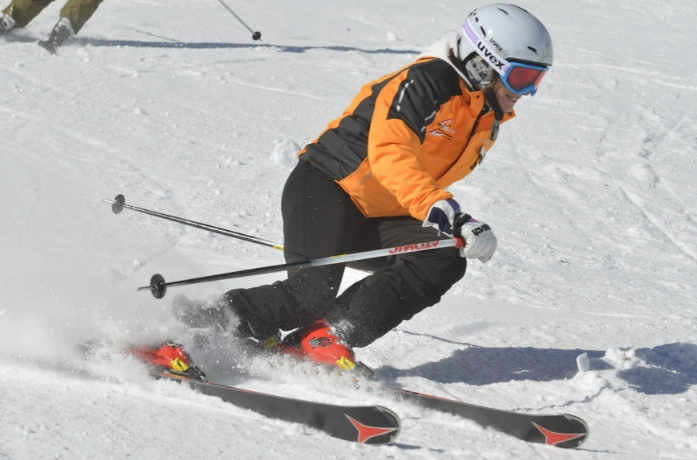
The Right Mindset: Your First Step to Better Skiing
Before we even talk about your body position, let's talk about your headspace. Skiing is a skill sport, and like any skill, it requires a learner's mindset. The biggest barrier I see isn't physical ability; it's ego and fear.
Common Mindset Trap: "I've been skiing for 5 years, I don't need a lesson." I was guilty of this for a long time. The problem? You can reinforce bad habits for years. An hour with a pro can identify and fix issues you're blind to.
Embrace being a beginner again, even if only for one skill. Want to know how do I improve my skiing technique? Start by being willing to look a bit awkward while you practice something new on a green run. The skiers who progress the fastest are the ones who aren't afraid to drill basics on easy terrain.
Fear is the other half. It makes us stiff, and stiffness is the enemy of good skiing. Your skis are designed to turn; they want to turn. Your job is to guide them, not manhandle them. A tense skier is a tired, out-of-control skier. Learning to manage fear—by starting small, breathing, and focusing on technique rather than the steepness below—is non-negotiable.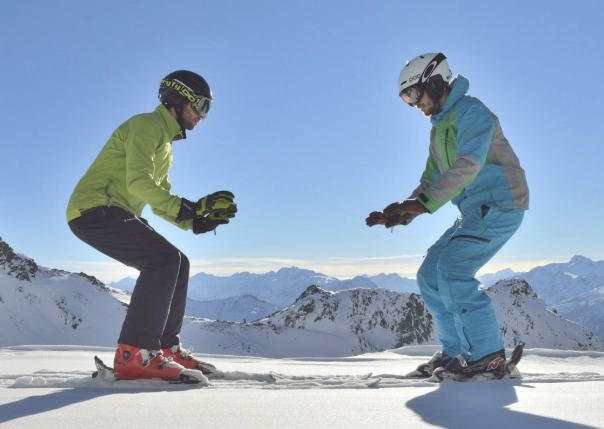
Breathe. Seriously, just breathe.
Getting Your Gear Sorted (Without Breaking the Bank)
You don't need the latest $1,200 skis to improve. But poorly fitted gear will hold you back immensely. Let's prioritize.
Boots are everything. I cannot stress this enough. Your boots are your direct connection to your skis. If they hurt, are too loose, or don't fit your foot shape, you'll be fighting them all day. A proper boot fitting from a reputable shop is the single best investment you can make in your skiing. It's more important than new skis. Tell the fitter your level and goals. Don't just buy off the shelf.
Skis matter, but less than you think for progression. As an intermediate, an all-mountain ski in the right length is perfect. Don't get sucked into hyper-specific models. Bindings should be professionally adjusted to your DIN setting (based on weight, ability, etc.).
And for heaven's sake, wear a helmet. It's 2024. This shouldn't be a debate. Goggles that fit well with your helmet and have a lens for the day's conditions (sunny vs. flat light) are also crucial for seeing terrain changes.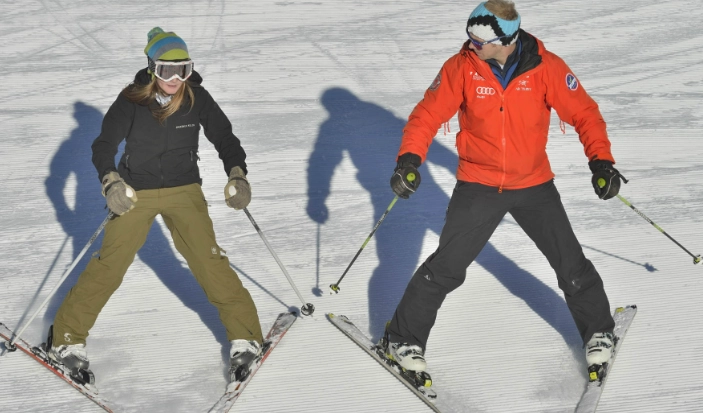
Pro Tip: Before you buy new gear, invest in a lesson and ask the instructor for gear feedback. They can often spot if your boots are the wrong flex or your skis are holding you back.
The Foundational Pillars: Stance, Balance, and Edging
This is the core. Mess this up, and everything built on top will be shaky. When people ask me how do I improve my skiing technique, I always tell them to film themselves. You might think you're in an athletic stance, but the camera doesn't lie.
The Athletic Ski Stance (It's Not What You Think)
Forget the "bend your knees" advice. That leads to people sitting in a chair-like position, weight back. Here's the checklist:
- Ankles, Knees, Hips Slightly Flexed: Think of a slight squash down in all three joints. You should feel pressure on the shins of your boots.
- Weight Forward: Your body mass should be over the balls of your feet. If you could lift your toes, you'd tip forward. A great drill is to ski with your hands forward, like you're holding a lunch tray.
- Hands Up and Forward: Hands in view, around hip height. This automatically positions your body correctly. Letting them drop drags your weight back.
- Upper Body Facing Downhill: Your shoulders and hips should generally point down the fall line. The turning comes from your legs, not your torso.
My personal nemesis was letting my inside hand drop behind me in a turn. It pulled my whole upper body around, killing my balance. An instructor had me ski with my poles held horizontally in front of me to break the habit. It worked.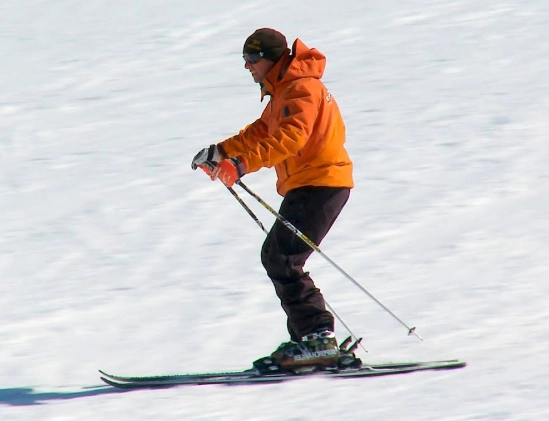
Balance: The Dynamic Game
Skiing balance isn't static. You move along the length of your skis (fore/aft) and across them (lateral) throughout a turn. The goal is to be balanced over the "sweet spot" of the ski, which changes.
Beginner error: Staying centered on the ski at all times. Advanced reality: You pressure the front of the ski to initiate a turn, then let the balance move back to center as the ski arcs, then maybe even a bit to the tails to finish with power. It's a fluid dance.
Feel your feet. What part of the boot is receiving pressure?
Edging: Where the Magic Happens
Your skis turn because their edges cut into the snow. More edge angle = tighter turn. The action comes from your ankles and knees. To roll your ski onto its edge, you press your knee and ankle slightly inward (for the inside edge). It's a subtle tipping motion, not a violent shove.
A fantastic, simple drill is the "railroad track" drill on a gentle slope. Try to make two perfectly parallel tracks in the snow, keeping your skis hip-width apart. This forces you to use independent leg rotation and edging.
Mastering the Turn: From Wedge to Parallel Carving
The turn is your fundamental unit of skiing. Let's break down the progression.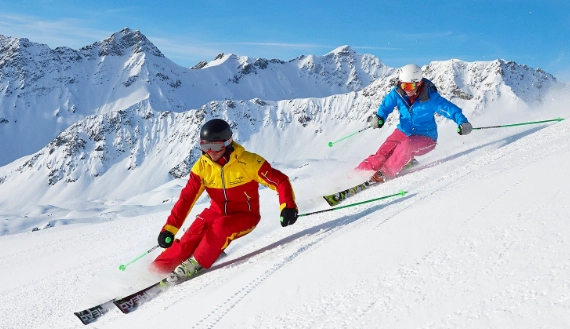
The Wedge Turn (Snowplough)
It gets a bad rap, but it's a vital control tool for beginners and experts alike (in tricky spots!). The key is to use it as a stepping stone, not a forever home. Focus on applying more pressure to the outside ski (the right ski for a left turn) to steer. The common mistake is trying to steer with the inside ski, which leads to a spin-out.
The Wedge Christie / Stem Christie
This is the bridge to parallel. You start the turn with a small wedge, but as the skis come around, you pull the inside ski parallel to the outside ski to finish the turn. The goal is to make the starting wedge smaller and smaller until it's just a tiny steering motion of the tip.
The Parallel Turn
Both skis turn together, same direction, same time. The initiation comes from a combination of subtle movements: a slight forward pressure, a gentle roll of both ankles/knees into the hill (angulation), and allowing the ski's sidecut to start the arc. The turn is then guided and controlled by managing edge pressure and balance.
Here’s a quick comparison of common turn types and their purposes:
| Turn Type | Best For | Key Focus | Common Pitfall |
|---|---|---|---|
| Wedge (Snowplough) | Beginners, slow speed control, steep or icy traverses. | Pressure on outside ski, even wedge shape. | Pushing tails out too far ("sitting in a bucket"). |
| Stem Christie | Transitioning to parallel turns, controlling speed on steeper blues. | Smoothly bringing inside ski parallel during turn. | Stemming too aggressively, creating a jerky motion. |
| Basic Parallel | Most groomed blue and black runs, efficient cruising. | Simultaneous edging, upper body facing downhill. | Rotating shoulders into the turn ("windshield wiper" arms). |
| Carved Turn | High-performance skiing on groomers, minimal speed loss. | High edge angle, pressure management, clean rail-like track. | Leaning inward instead of angulating (risking a high-side fall). |
Introduction to Carving
This is the holy grail for many intermediates. A carved turn means the ski is bent into an arc and rides cleanly on its edge, leaving a thin, pencil-line track in the snow. No skidding. It's efficient, fast, and feels amazing.
To carve, you need more edge angle and more patience. You initiate the turn, commit to the edge, and let the ski do the work. It feels like you're leaning into the turn, but in reality, you're angulating—keeping your body mass over the outside ski while your knees and ankles drive inward. The Professional Ski Instructors of America & American Association of Snowboard Instructors (PSIA-AASI) have fantastic resources on the biomechanics of carving, which you can explore on their official website for deeper dives into instructor-certified methodology.
The feeling is one of commitment. You can't bail halfway through a carved turn easily. Start on a gentle, groomed slope where you can really focus on the sensation of the ski locking in.
Drills, Drills, Drills: The Path to Muscle Memory
Reading about technique is one thing. Doing it is another. How do I improve my skiing technique without just mindlessly running laps? Deliberate practice with drills. Here are my favorites, categorized by skill.
Balance & Stance Drills
- Shuffle Turns: On a gentle slope, keep your skis flat and parallel. Initiate turns by shuffling your feet forward and back (like on a skateboard). This teaches you to move along the length of the ski for initiation.
- One-Ski Skiing: Lift the tail of your inside ski off the snow, keeping just the tip touching. Make turns balancing entirely on your outside ski. This is brutally effective for learning outside ski dominance.
- Pole Drag: Hold both poles horizontally in front of you with arms extended. Ski without letting the poles touch your body. This forces a quiet upper body and forward hand position.
Edging & Turn Shape Drills
- J-Turns: Traverse across a slope, then gently roll your knees into the hill to engage the edges and make a turn that finishes pointing directly downhill (making a "J" shape). Hold the finish, then go the other way. Great for feeling edge engagement.
- Garlands: Similar to J-turns, but you don't finish the turn. You engage the edges to start turning down the hill, then release them to slide back across the slope. It's like drawing a series of crescent moons. Teaches easy edge engagement and release.
- Round Turns: Pick a feature like a tree or lift tower. Make a complete, round turn around it, focusing on a consistent arc, not a Z-shaped skid. Use your poles to mark the start and finish of each turn's phase.
Drills feel awkward. That's the point. You're breaking an old pattern to build a new, better one. Do them on terrain where you feel 100% safe, so your brain can focus on movement, not survival.
Leveling Up: Advanced Techniques and Terrain
Once your parallel turns on blues feel solid, the mountain opens up. Here’s what to tackle next.
Pole Timing and Rhythm
Pole plants aren't just for style. They provide timing, rhythm, and a pivot point for your upper body. The plant should happen as you finish one turn and begin to initiate the next. It's a light tap, not a stake drive. Good pole timing ties your turns together into a smooth, rhythmic flow, which is essential for managing steep or bumpy terrain. A lack of rhythmic timing is a major reason people struggle when the pitch increases.
Dynamic Short Turns
For steeps, trees, and moguls, you need quick, powerful turns. This involves more aggressive up-and-down motion (extension and flexion) to release and engage edges quickly. The turn happens largely under your body; your skis pivot rapidly across the fall line. It's athletic and tiring but incredibly fun. The U.S. Ski & Snowboard organization, the national governing body, publishes training materials that often touch on the athletic fundamentals behind these dynamic movements, which you can sometimes find referenced in their public resources.
Skiing Moguls and Variable Snow
Moguls (bumps) are a technique magnifier. They demand all the fundamentals: a forward stance, independent leg action, quick edge release, and absorption. Start on a bumped-up green run. Look 2-3 bumps ahead, not at your tips. Let your legs act as shock absorbers, pulling your feet up under you as you cross each bump. Turn on the tops or the backsides of the bumps, not in the deep troughs.
For variable snow—crud, chopped powder, ice—the key is staying loose and letting your skis move underneath you. A stiff, rigid stance will get bucked. Stay in that athletic stance, keep your hands up, and allow your ankles and knees to absorb the variations.
My Bump Breakthrough: I used to fight every mogul, trying to muscle through. A instructor told me, "Stop fighting the mountain. Let the bump push your feet up. Your job is to steer them when they're light." That shift from resistance to cooperation was a game-changer.
Common Questions (And Real Answers)
Let's tackle some specific, Google-able questions that surround the main theme of how do I improve my skiing technique.
How long does it take to become a good skier?
There's no universal answer. With consistent practice (say, 10-15 days a season), a beginner can become a confident intermediate on blue runs in 2-3 seasons. Reaching advanced levels (comfortable on all black terrain, moguls, powder) often takes 5+ seasons of dedicated practice. Quality practice with focused drills beats mindless mileage every time.
Are group lessons or private lessons better for improvement?
Private lessons are far more efficient. You get 100% of the instructor's attention and a curriculum tailored to your exact needs. They're expensive but can be worth it for a breakthrough. Group lessons are more affordable and social, but you progress at the group's pace. For absolute beginners, a group lesson is fine. For an intermediate trying to break a plateau, go private, even if just for a half-day.
How can I practice skiing off-season?
Dryland training is huge. Focus on leg strength (squats, lunges), core stability (planks, dead bugs), and balance (Bosu ball, slackline). Sports like rollerblading, mountain biking, and even yoga translate incredibly well to skiing's balance and flexibility demands.
I'm always in the backseat. How do I fix it?
The dreaded "backseat" (weight on your tails) is epidemic. Causes: fear, poor boot fit, or just habit. Drills: 1) "Lunch tray" hands. 2) Shuffle turns (mentioned above). 3) Consciously try to feel the front of your boot tongues with your shins all the time. On a cat track or gentle slope, get into a tuck and feel how your weight needs to be forward. It's a constant awareness battle.
What's the one thing I can do tomorrow to ski better?
Pick one thing from this guide. Just one. Maybe it's "hands forward." Or "pressure the outside ski." Or "breathe." Focus solely on that for your first three runs of the day. Don't try to fix everything at once. Master one piece, then add another. That's how you truly learn how to improve your skiing technique.
Putting It All Together: Your Personal Progression Plan
Information overload is real. Let's make a simple, actionable plan.
- Self-Assess or Get Assessed. Film yourself, or better yet, take a lesson to identify your 1-2 biggest technique gaps.
- Choose One Focus Area. Is it stance? Balance in turns? Edge control? Pick the foundation that needs work.
- Select 2-3 Drills. From the lists above, pick drills that target your focus area. Practice them on easy terrain until they feel less awkward.
- Integrate. Take the new feeling from the drill into your normal skiing on a familiar run. Can you make 3 turns with perfect outside ski pressure? Then 5?
- Rinse and Repeat. Move to the next focus area. Skiing improvement is a spiral, not a ladder. You'll revisit fundamentals at a higher level each time.
Remember, even world cup skiers take lessons and drill basics. The pursuit of better technique is what makes skiing a lifelong sport. It's not about being perfect. It's about the feeling of linking one beautiful turn into the next, the confidence to explore new terrain, and the pure joy of sliding on snow with grace and control.
Now go get after it.
The mountain is waiting. See you out there.