快速导览
You've probably heard the term floating around gyms, sports news, or maybe even the Olympics. "Adaptive athlete." It sounds straightforward, right? Someone who adapts to play sports. But honestly, that surface-level definition doesn't even scratch the surface. It misses the heart, the grit, and the revolutionary spirit of the whole thing. When people ask "What does 'adaptive athlete' mean?" they're often looking for more than a dictionary entry. They want to understand the person behind the phrase, the sports they dominate, and maybe, just maybe, see a bit of themselves in that story.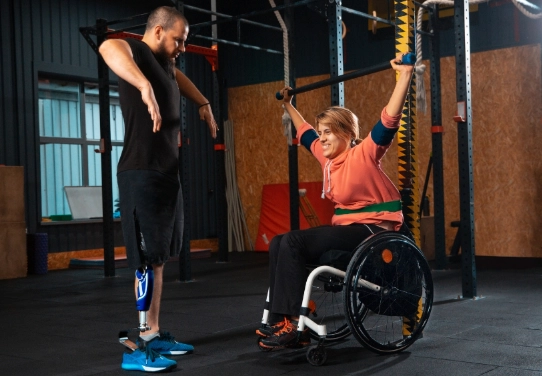
I remember the first time I saw a wheelchair rugby match. The chaos, the strategy, the sheer physicality of it completely rewired my brain about what sport could be. Those players weren't just participating; they were elite competitors in a fiercely demanding game. That's the moment the term stopped being a polite label for me and started meaning something real.
So, let's get to it. At its core, an adaptive athlete is an individual with a disability who engages in sports or athletic training. The "adaptive" part refers to the modifications made—whether to equipment, rules, or techniques—to enable participation and competition. But here's the critical bit everyone needs to hear: the word "athlete" comes first. Always. We're talking about trainers, competitors, and dedicated sportspeople whose primary identity is their commitment to their sport, not their disability.
It's not a synonym for "inspirational story" (though many of their stories are incredibly inspiring). It's not a patronizing pat on the head. It's a descriptor for a community of people who have taken the conventional playbook for physical achievement and written their own, often more innovative, version.
And that's where the magic is.
So, What Exactly Does "Adaptive Athlete" Mean? Breaking Down the Misconceptions
If you're picturing someone just "getting by" or participating in a simplified activity, you're picturing it all wrong. That's the biggest misconception. Adaptive sports are not lesser-than versions of "real" sports. They are parallel, highly specialized, and equally demanding athletic disciplines.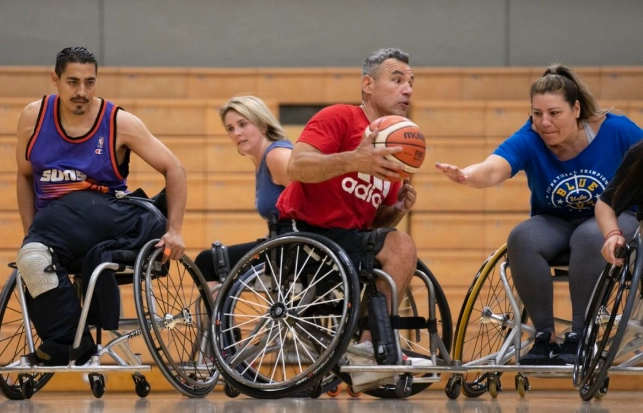
I have to be honest, the term "differently-abled" sometimes used in casual conversation around this topic often feels vague and misses the point. "Adaptive athlete" is specific. It points directly to action, to sport, to the process of adaptation itself. It's a term of action, not just identity.
When we ask what does "adaptive athlete" mean, we need to look at the components. First, there's a recognized physical, visual, or intellectual impairment. This could be anything from limb loss or spinal cord injury to cerebral palsy or blindness. Second, there is a desire and commitment to athletic pursuit. Third, and this is the key differentiator, there is an adaptation that bridges the gap between the impairment and the demands of the sport.
This adaptation is the game-changer. It's the engineering marvel of a racing wheelchair, the tactile markings on a swimming pool lane for a blind swimmer, or the rule modification in sitting volleyball that allows players to block a serve. The sport is adapted; the athlete's drive is not.
The Heart of the Matter: What Makes an Adaptive Athlete?
Let's move past definitions and into the lived reality. What does it mean to be one? In my conversations and observations, a few universal threads appear.
It's about high-performance sport. We're talking about Paralympians training twice a day, adaptive CrossFit athletes hitting PRs, and marathon handcyclists logging hundreds of miles. The training intensity is identical to any able-bodied elite program. The pain, the discipline, the sacrifice—all the same.
It's about problem-solving as a core skill. An adaptive athlete's daily life involves a level of creativity most of us never need. How do I transfer from my chair to this weight bench safely and efficiently? How do I modify my grip for this lift? This constant innovation breeds a unique kind of mental toughness.
It's about community. This might be the most powerful part. The adaptive sports community is notoriously tight-knit, supportive, and fiercely advocacy-oriented. New athletes are welcomed and shown the ropes by veterans. There's a shared understanding that goes beyond words.
So, when someone searches for what does adaptive athlete mean, they might be looking for a definition, but what they often find is a doorway into a world of resilience, innovation, and pure, unadulterated athleticism.
Where the Action Is: A Look at Adaptive Sports
You can't really grasp the meaning without seeing the arena. The range of sports is vast and growing every year. It's not just wheelchair basketball (though that's an incredible sport). It's everything from alpine skiing and snowboarding to powerlifting, archery, climbing, and even triathlon.
To give you a clearer picture, here's a breakdown of some major adaptive sports, how they're played, and the key adaptations that make them possible. This table should help visualize the diversity.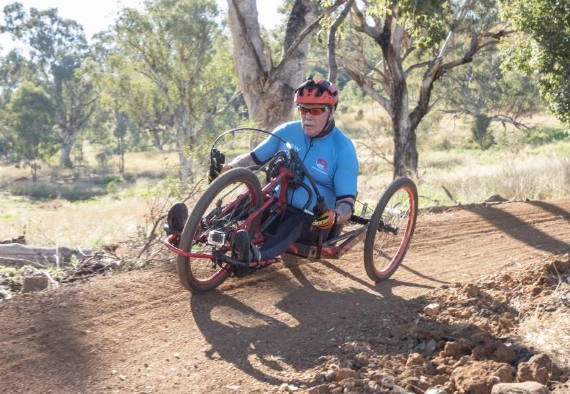
| Sport | Primary Adaptation Type | How It's Played / Key Features | Notable Governing Body / Resource |
|---|---|---|---|
| Wheelchair Basketball | Equipment & Rule Modifications | Played on a standard court with specialized wheelchairs. Dribbling rules are adapted (you can dribble, then push your chair twice). Physical, fast-paced, and highly strategic. | International Wheelchair Basketball Federation (IWBF) |
| Para Swimming | Classification System | Swimmers are classified based on their functional ability (S1-S10 for physical, S11-S13 for visual). Starts, turns, and techniques may be adapted (e.g., tapper for blind swimmers). | World Para Swimming |
| Wheelchair Rugby ("Murderball") | Equipment & Sport-Specific Design | A brutal, full-contact sport played in reinforced, offensive/defensive wheelchairs. Designed specifically for athletes with impairments in at least three limbs. A mix of basketball, rugby, and hockey. | World Wheelchair Rugby |
| Paralympic Athletics (Track & Field) | Equipment & Classification | Includes wheelchair racing (using lean, low-profile chairs), running with prostheses, seated throwing events, and guide runners for visually impaired athletes. | World Para Athletics |
| Adaptive Climbing | Rule & Technique Modifications | Athletes may climb using prostheses, with limited limbs, or be visually impaired. Routes are set with their adaptations in mind. A huge test of problem-solving and strength. | International Federation of Sport Climbing (Paraclimbing) |
| Sitting Volleyball | Rule & Court Modifications | Played on a smaller court with a lower net. Players must have at least one buttock in contact with the floor when playing the ball. Incredibly fast and requires immense core strength. | World ParaVolley |
Seeing it laid out like that makes it real, doesn't it? These aren't side activities; they are main events with their own global federations, world championships, and fiercely dedicated athletes. The International Paralympic Committee (IPC) is the central hub for most of these high-performance sports, and their website is a treasure trove of information on what it means to compete at the highest level.
Gear Up: The Tech That Makes It Possible
You can't talk about what an adaptive athlete is without geeking out a little over the gear. This is where engineering meets human potential. The adaptations are often breathtakingly clever.
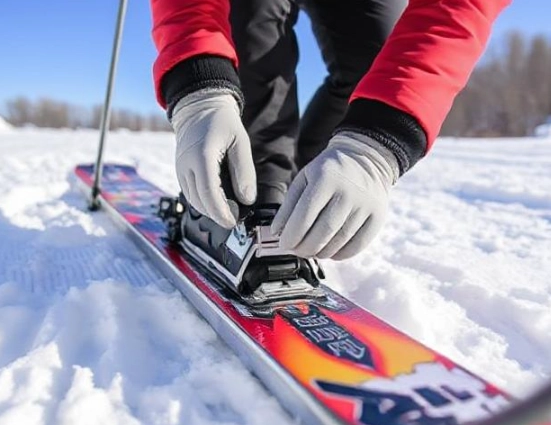
Mobility Equipment: This is the most visible. Think racing wheelchairs that cost more than a car and are tuned like Formula 1 vehicles. Or specialized monoski and sit-ski setups for alpine sports that look like something from a sci-fi movie. Running blades (prostheses for sprinting) are another famous example—they store and release energy, but they don't provide it. The power comes from the athlete's core and residual limb.
Sensory & Guidance Tech: For blind athletes, adaptation might be a tapper in swimming (a person with a pole who taps the swimmer as they approach the wall) or a guide runner in track, connected by a tether and communicating constantly.
Universal Design & Modification: In gyms, this means bench presses with safety bars, adaptive grip attachments for barbells, and functional trainers with accessible seats. The rise of inclusive fitness is slowly making this gear more common, which is a great thing.
But is it just about the gear? Not at all. The gear is useless without the athlete's engine, will, and technique. The best chair in the world won't win a race without the person in it pushing their lungs to the limit.
Finding Your Starting Line: How to Get Involved
Maybe you're reading this because you or someone you know is curious about participating. That's fantastic. Understanding what "adaptive athlete" means is the first step to becoming one. The pathway is more accessible than most people think.
The First Step is Always the Same: Reach out. The community is built on welcoming newcomers. Don't let the fear of not knowing how hold you back. Everyone started somewhere.
Here’s a practical, no-fluff guide to getting started:
- Identify Your Interest: What sport lights a fire for you? Watching the Paralympics is a great way to get ideas. Is it the speed of track? The strategy of basketball? The raw strength of powerlifting?
- Research Local Resources: Search for "adaptive sports" plus your city or region. Look for community programs, non-profits, or university-affiliated clubs. Organizations like Move United in the U.S. have member chapters across the country that offer introductory programs in dozens of sports.
- Make Contact: Send an email or make a call. Explain you're new and interested in trying. Ask about beginner sessions, equipment rental (they almost always have loaner gear for newbies), and any costs involved.
- Show Up and Try: Your first time will be awkward. Everyone's is. You might not be good at it immediately. That's not the point. The point is to experience it, meet people, and see if it clicks.
- Explore the Competitive Pathway (If You Want): If you get hooked, ask about local competitions, leagues, or classification. For sports like swimming or track, you'll need to get officially classified to compete in sanctioned events. Your local club can guide you.
For veterans and service members, the U.S. Department of Veterans Affairs Adaptive Sports Program is an incredible, well-funded resource designed specifically for you.
The barrier is rarely ability. It's almost always access and awareness. By demystifying what does adaptive athlete mean, we hopefully chip away at that second barrier.
Common Questions About Adaptive Athletes (Answered!)
Let's tackle some of the real questions people have when they're trying to figure all this out. These are the things you might be too hesitant to ask in person.
What's the difference between an "adaptive athlete" and a "Paralympian" or "para athlete"?
All Paralympians are adaptive athletes, but not all adaptive athletes are Paralympians. "Para athlete" is often used interchangeably with adaptive athlete, but it can sometimes specifically refer to athletes on a Paralympic pathway. "Adaptive athlete" is the broader, umbrella term for anyone with a disability seriously engaged in sport, from the local gym-goer to the world champion.
Do you need an "official" disability to be an adaptive athlete?
This is a nuanced one. For casual community participation, programs are often inclusive and won't require medical paperwork. For sanctioned competition, especially at the national and international level, yes, you must go through a formal classification process to verify your impairment meets the minimum criteria for that sport. This ensures fair competition.
Isn't the equipment prohibitively expensive?
It can be.
A high-end racing wheelchair or monoski can run tens of thousands of dollars. This is a massive barrier. However, and this is crucial, introductory programs almost always provide loaner or rental equipment for beginners. The goal is to get you hooked first. As you progress, organizations often have grant programs, fundraising support, and partnerships to help athletes acquire their own gear. Don't let the price tag of elite equipment scare you away from trying.
Can kids become adaptive athletes?
Absolutely. In fact, starting young is ideal. There are youth leagues, camps, and programs all over. Adaptive sports for kids are about fun, friendship, building confidence, and developing physical literacy—just like any youth sport. Organizations like the U.S. Ski & Snowboard Adaptive Program have fantastic youth pipelines.
Where can I watch adaptive sports?
More and more are being broadcast! The Paralympic Games are the pinnacle, with extensive coverage. Also, check streaming services and YouTube for world championship events in sports like wheelchair rugby, basketball, and racing. Following the social media accounts of organizations like the IPC or specific sports federations is the best way to find out when and where to watch.
How can I support adaptive athletics if I'm not an athlete?
Volunteer! Local programs always need coaches, assistants, event staff, and equipment managers. Donate to non-profits that fund equipment and programs. Most importantly, be a fan. Watch events, learn the athletes' names, and appreciate the sport for the high-level competition it is.
So, after all this, what's the final answer? What does "adaptive athlete" mean?
It means a competitor. It means an innovator. It means someone who looked at the traditional map of physical achievement, found it didn't have a route for them, and decided to draw a new one—one that often leads to places nobody else thought possible.
It's not a term of limitation. It's a term of creative, powerful, and relentless possibility. The next time you hear it, I hope you see more than just a label. I hope you see the sprinter in the blades exploding out of the blocks, the wheelchair rugby player executing a perfect pick, and the climber solving a problem on the wall with sheer will and ingenuity. That's what it means.
And if you're feeling a pull towards it, even a slight curiosity, find a local program and send that email. The community is waiting, and the starting line is closer than you think.