Quick Guide
Let’s be real. Shopping for telemark skiing equipment can feel like decoding a secret language. 75mm? NTN? Scarpa vs. Crispi? It’s enough to make your head spin, especially if you’re coming from the relatively straightforward world of alpine skiing. I remember staring at my first pair of used telemark skis, the old leather boots floppy and strange, wondering what I’d gotten myself into.
That confusion is normal. But here’s the thing – getting the right gear isn’t just about performance; it’s about fun. The wrong setup can make learning miserable. The right one feels like an extension of your body, letting you dance down the mountain.
This guide isn’t a dry spec sheet. It’s a conversation from one skier to another. We’ll walk through every piece of telemark skiing equipment you need, why it matters, and how to match it to your goals. Forget the marketing fluff. Let’s talk about what works on the snow.
The Heart of the System: Bindings and Boots
If you remember nothing else, remember this: your boots and bindings are a married couple. They have to work together. You can’t just mix and match. This is the single biggest decision you’ll make when assembling your telemark skiing equipment.
Right now, the tele world is split between two main systems. It’s kind of a classic vs. modern debate.
| Feature | The 75mm "Duckbill" System (Classic) | The NTN System (New Telemark Norm) |
|---|---|---|
| The Connection | A literal 75mm wide "duckbill" toe on the boot fits into a corresponding binding toe piece. The heel is free. | Uses a robust, alpine-like toe box that clips into a binding. Heel is still free, but the connection is more precise. |
| Feel & Control | More "organic" and fluid. Demands finer technique for edge control. Lighter, more touring-friendly options exist. | More powerful, direct, and predictable power transfer. Often feels more stable, especially on hard snow and at speed. |
| Boot Compatibility | Only works with 75mm boots. A vast used market exists. | Only works with NTN boots. This is the modern standard for new equipment. |
| My Take | I learned on this. It’s elegant in its simplicity, but that "cable" that wraps around your heel can be a pain to step into in deep powder. It also has a distinct "flex point" feel. | I switched to NTN a few seasons ago. The step-in convenience is fantastic. The power is undeniable, but some purists argue it loses a bit of the classic telemark "soul." I think it just lets me ski harder, longer. |
Choosing Your Telemark Boots
Boots are where your body meets the ski. A bad fit here ruins everything. Don’t get seduced by a fancy feature set if the boot doesn’t fit your foot shape.
The Big Two Brands: Scarpa and Crispi dominate for good reason. Generally, Scarpa boots are known for a narrower, more performance-oriented fit. Crispi often (but not always) caters to a slightly wider forefoot. You must try them on with the socks you’ll ski in.
Flex Matters: Boot flex isn't just about stiffness. It's about how the boot supports your telemark lunge.
- Softer Flex: Better for learning, touring, and a more forgiving, playful feel. Think Scarpa T2 or Crispi Evo.
- Stiffer Flex: For aggressive skiers, resort charging, and hard snow. Delivers more power and precision. Think Scarpa TX Pro or Crispi XR.
A personal gripe? Some of the burliest NTN boots can feel like alpine boots with a bellows – amazing on the downhill, but a literal drag on the uphill tour. If you tour a lot, weight and walk mode function are huge.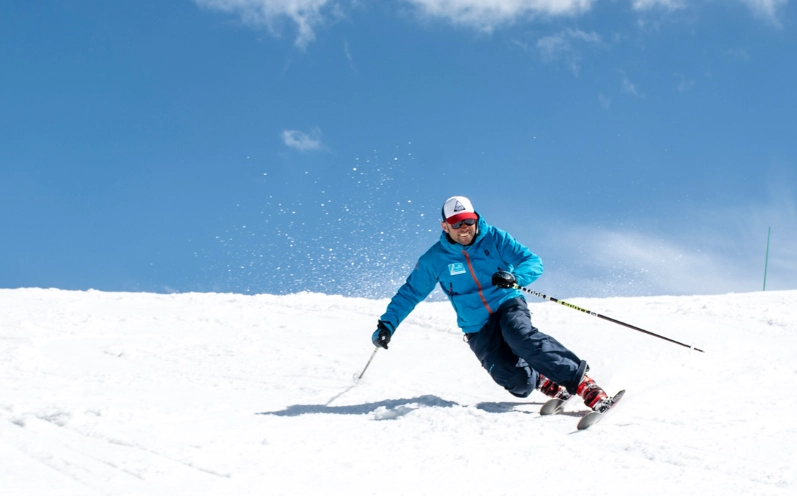
Finding Your Skis: It's Not Just About Length
Here’s some good news: you can use alpine skis for telemark. The mounting point is different (usually slightly forward of the alpine recommended line), but the ski itself doesn’t know if your heel is locked down or free.
But not all skis are created equal for tele. You’re balancing on one foot at a time, so ski traits you might not notice alpine skiing become glaringly obvious.
Key Dimensions to Understand:
- Waist Width: For mostly resort skiing, 85-100mm underfoot is a sweet spot. For deep powder touring, 100-115mm reigns. Going super wide (120mm+) can make telemark turning feel sluggish and require more effort.
- Sidecut & Turn Radius: A deeper sidecut (e.g., 15m radius) makes initiating turns easier, which is helpful when learning. A longer radius (e.g., 20m+) is more stable at speed but demands more input to turn.
- Stiffness/Flex: A medium-flexing ski is often the most versatile. A super stiff charger ski will demand perfect technique and tire you out. A super soft noodle will feel unstable.
My first dedicated telemark ski was a mid-fat all-mountain model. It was forgiving when my technique was sloppy and handled everything from ice to a foot of fresh. It was the perfect tool to learn on. I see beginners grabbing ultra-stiff freeride boards and struggling needlessly.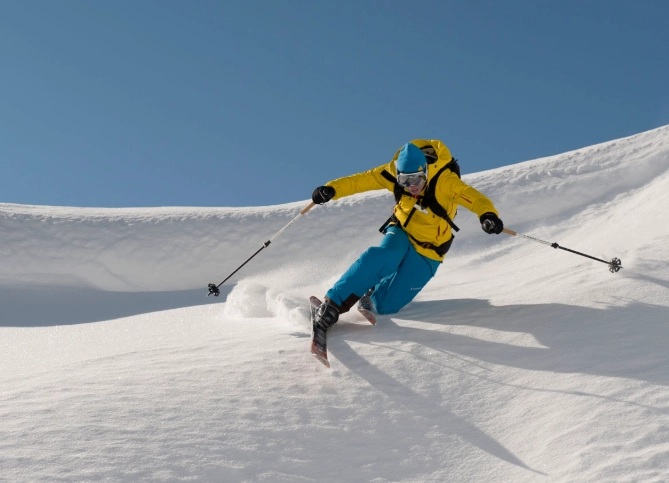
Poles: The Overlooked Game-Changer
You might think any old pole will do. Nope. Telemark pole technique is different. You plant the pole on the inside of the turn, often further forward, to help drive your body into the next lunge.
Length: A common recommendation is to go 5-10cm longer than your alpine poles. When you’re in a deep telemark lunge, a short pole is useless. A good test? Grip the pole under the basket in the store. Your forearm should be roughly parallel to the floor.
Baskets: Get big, powder-specific baskets if you ski off-piste. Small, alpine racing baskets will plunge deep into snow, jerking your arm back. It’s a small detail with a massive impact on rhythm.
Building Your Kit: From Head to Toe
Beyond the big three (boots, bindings, skis), your other gear choices support the mission.
Skis and boots are the engine, but this other telemark skiing equipment is the chassis.
Layers: Telemarking is a workout. You will sweat on the way up and can get cold on the way down. A moisture-wicking base layer, a breathable insulating mid (like fleece or a light synthetic puffy), and a waterproof/breathable shell are non-negotiable. Avoid cotton at all costs.
Pants: You need freedom of movement. Stretch fabric is your friend. Many alpine ski pants are too restrictive in the cuff for a tele boot. Look for pants with a generous, gusseted cuff or consider bibs, which also keep snow out better when you face-plant (it happens).
Gloves: You’ll be touching snow a lot when adjusting bindings or digging out. A durable, waterproof glove with good dexterity is better than the bulkiest mitt. I like a leather palm for grip on poles.
Backpack: Even for resort days, a small 15-20L pack is wise. Carry water, layers, a repair kit (duct tape, a multi-tool, a spare ski basket), and snacks. For touring, you’ll need a pack compatible with avalanche safety gear (probe, shovel, beacon).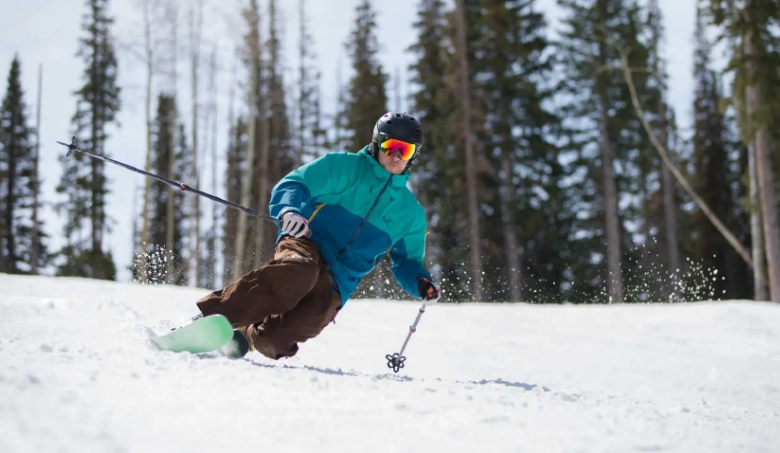
Putting It All Together: Sample Setups for Different Skiers
Let’s get practical. What does a real-world shopping list look like?
The Learner / Resort Explorer
Goal: Master the turn in-bounds without fighting your gear.
Boot: Scarpa T2 Eco (75mm) or TX Comp (NTN) – supportive but forgiving.
Binding: 22 Designs Axl (75mm) or Meidjo 3.0 (NTN) – adjustable flex, reliable.
Ski: A forgiving all-mountain ski, ~90-100mm waist, with tip rocker. Think Line Sick Day 94, Blizzard Rustler 9.
Why it works: This setup is friendly. The ski is easy to pivot, the boot won’t punish small errors, and the binding offers a smooth, progressive feel.
The Backcountry Tourer
Goal: Efficient uphill travel and capable downhill performance in variable snow.
Boot: Crispi Evo World Cup (75mm) or Scarpa TX Pro (NTN) – excellent walk modes, good balance of weight and power.
Binding: 22 Designs Vice (75mm) or Bishop BMF (NTN) – lightweight, simple, reliable in the backcountry.
Ski: A lightweight touring ski, 95-105mm waist. Think Atomic Backland 100, Black Crows Navis Freebird.
Why it works: Weight is the enemy on the skin track. This setup shaves grams where it counts (ski and binding) without sacrificing a capable, powerful boot for the descent.
The Resort Charger
Goal: Maximum power and stability for hard snow, steeps, and speed.
Boot: Crispi XR (NTN) or Scarpa TX-Pro (NTN) – stiff, powerful, precise.
Binding: 22 Designs Outlaw X (NTN) – the most powerful, alpine-like tele binding on the market.
Ski: A damp, stable all-mountain charger, 90-100mm waist. Think Nordica Enforcer 94, Volkl Mantra 102.
Why it works: This is a no-compromise downhill machine. The boot-binding combo delivers insane edge power, and the ski provides a stable platform for aggressive skiing. The uphill? Well, you’ll get a workout.
Real Talk: Answering Your Telemark Gear Questions
You’ve got questions. I’ve heard (and asked) them all. Let’s cut to the chase.
Q: Is it worth buying used telemark skiing equipment?
A: Absolutely, but be smart. The used market for 75mm gear is huge and can be a budget-friendly way in. Inspect boot shells for cracks, especially around the bellows and toe. Check bindings for cracked plastics or worn metal. Skis are generally safe if bases and edges are okay. For NTN, the market is newer, so deals are fewer.
Q: Telemark seems harder than alpine. Do I need special fitness?
A: It uses different muscles – more quads and glutes in a sustained lunge. It’s demanding at first. But good technique is more important than brute strength. Start on mellow slopes and focus on smooth movement, not holding a deep lunge forever. Your legs will adapt.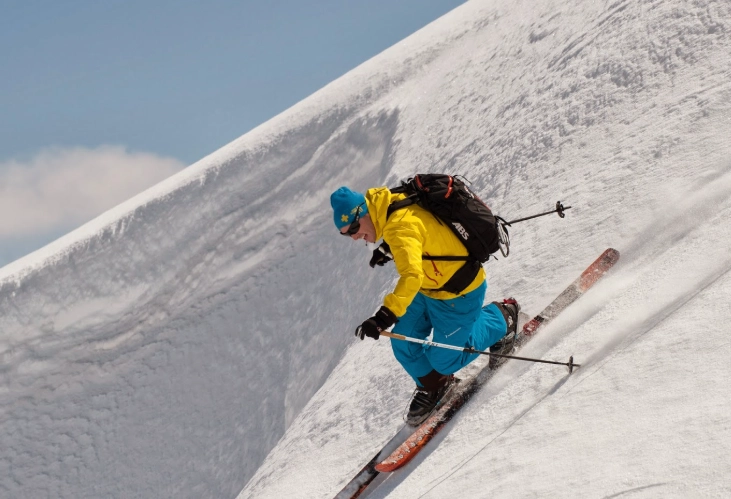
Q: How do I maintain my tele gear?
A> Bindings: Keep them free of ice and dirt. A silicone spray on pivot points can help. Periodically check screws for tightness.
Boots: Dry the liners after every use. Use boot dryers. Keep buckles and power straps functional.
Skis: Same as alpine – keep edges sharp and bases waxed. A well-tuned ski is easier to turn.
Q: Where can I learn more about technique to complement my gear?
A> This is crucial. Gear only gets you so far. The Telemark Skier Magazine website has great technique articles and community forums. For truly authoritative, in-depth gear reviews and technique breakdowns, the folks at Blister provide incredibly detailed and unbiased reviews that go far beyond marketing specs. They test gear over entire seasons in real conditions.
Look, the journey into telemark is a personal one. The gear is part of the adventure. It can be finicky, it demands attention, and getting it dialed takes time.
But when you find that sweet spot – when your boot fits just right, your binding flex feels natural, and your ski responds to your slightest weight shift – it’s pure magic. You’re not just riding down the hill; you’re actively creating each turn. That connection is what makes all the gear fuss worthwhile.
Start with the boot-fit. Choose a binding system that matches your ambition (dip a toe with 75mm, or dive into the modern era with NTN). Pick a friendly ski. Then go make some tracks, fall down, get up, and smile. That’s what it’s all about.