Quick Guide
- Why “Hard” Doesn’t Even Begin to Cover It: The Multi-Layer Challenge
- From Bunny Hill to Big Hill: The Ladder of Difficulty
- So, Can a Normal Person Even Try? The Path In
- The Top 5 Reasons People Quit (The Unfiltered List)
- Common Questions (The Stuff You're Actually Searching For)
- Final Thoughts: Hard, But Not Magic
You've seen it on TV during the Winter Olympics. A tiny figure rockets down a steep icy track, launches into nothingness, and hangs in the air for what feels like forever before landing a football field away. Your stomach drops just watching. Your immediate, gut reaction is a question: is ski jumping hard? Is it as terrifying and difficult as it looks?
Let's cut through the TV magic and get real. The short, no-BS answer is yes. It's brutally, unbelievably hard. It might be one of the most difficult sports on the planet to even try, let alone master. But that simple "yes" doesn't tell you why. It doesn't explain what "hard" actually means for a ski jumper. Is it the physical part? The mental part? The sheer danger? The answer is all of the above, mixed together in a way that few other sports demand.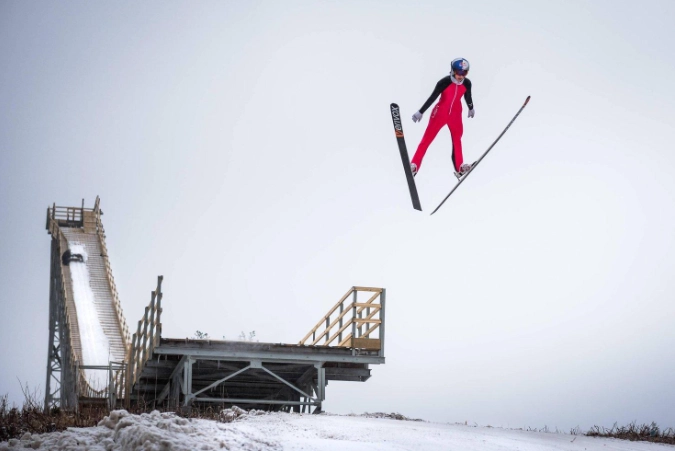
I remember talking to a former junior coach once. He said the first time a kid stands at the top of even the smallest training hill, about half of them simply freeze. They can't make themselves go. The brain screams "NO!" That's the first, and sometimes the biggest, hurdle. So if you're asking how hard is ski jumping, you're asking about confronting a very basic human fear of falling from a great height, at high speed, on purpose.
This isn't meant to scare you off if you're curious. But it is meant to be honest. We're going to peel back the layers on this extreme sport. We'll look at the physical demands that would make a marathon runner wince, the mental game that's closer to what a fighter pilot needs, and the technical precision required from your toes to your fingertips. We'll also talk about how someone actually starts, because there is a path, even if it's a steep one.
Why “Hard” Doesn’t Even Begin to Cover It: The Multi-Layer Challenge
Calling ski jumping "hard" is like calling Mount Everest "a big hill." It's technically true but misses the point entirely. The difficulty isn't one thing; it's a stack of challenges, each one demanding mastery.
The Physical Beast: It's Not Just Legs
People see the jump and think it's all about the launch. Wrong. The in-run—that steep track you zoom down—is where the battle is often won or lost. You're in a deep, aerodynamic crouch, fighting against wind blast that wants to push you upright. Your thighs are on fire. Your core is locked tight to hold the V-shaped ski position. The International Ski Federation (FIS) notes that jumpers experience immense G-forces during takeoff, similar to what a Formula 1 driver feels in a tight corner.
And then there's the landing. You hit the slope with a force several times your body weight. Your knees and ankles act as shock absorbers. Do that wrong once, and your season is over. Do it wrong hundreds of times over a career, and you're looking at chronic joint issues. The training reflects this. It's not just skiing. It's heavy squats, plyometrics, insane core workouts, and hours of balance training. The physique of a top jumper like Ryoyu Kobayashi or Maren Lundby is closer to a gymnast or a diver than to a downhill skier—powerful, lean, and built for explosive control.
The Mental Game: Your Brain is Your Worst Enemy
This might be the hardest part. Physically, you can train. Technically, you can drill. But you can't argue with the lizard part of your brain that sees a 90-meter freefall and decides it's a terrible idea. The mental pressure is immense. One tiny moment of doubt as you're accelerating, one slight hesitation in your takeoff timing, and the jump is ruined. You might land short, lose balance, or worse.
You're alone up there. No teammates to pass to. No coach yelling last-minute advice. Just you, the wind, and the hill. The ability to switch off fear and switch on hyper-focused, technical execution is a rare skill. Many talented athletes never make it because they can't conquer this mental hurdle. They can't answer "yes" to the question is ski jumping hard in their own mind and then do it anyway.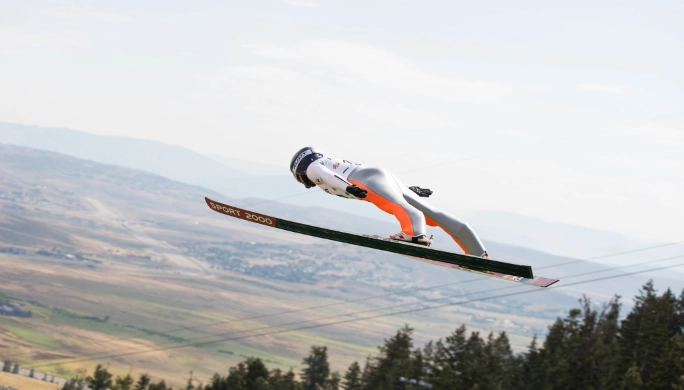
Let's be blunt: The consequence of a major mental error isn't just losing a competition. On large hills, it can be a crash at highway speeds. The sport has gotten much safer with better hill designs and suits, but the risk is inherent and real. Every jumper knows someone who's had a bad crash. That knowledge is always in the back of your mind.
The Technical Puzzle: A Million Tiny Details
You can't just "go for it." Every movement is calculated. The in-run posture is millimeter-perfect to minimize drag. The takeoff is a split-second, explosive extension that must be timed to the nanosecond. Too early, you jump into the hill. Too late, you're just falling off it.
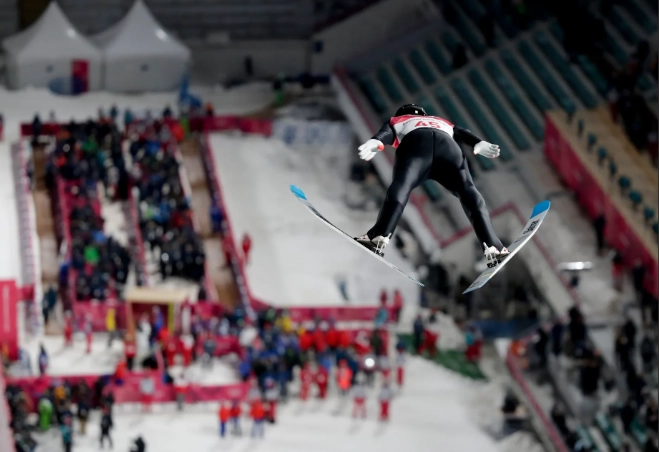
Then you're flying. You immediately get into the aerofoil position—skis in a V, body low, hands back. You're literally flying. You make micro-adjustments with your hips, knees, and ankles to control the flight. You're reading the air, feeling the lift. As you descend, you prepare for the telemark landing: one foot forward, one back, knees bent, arms out for balance. It's a thing of beauty when done right, and a messy, painful stumble when it's not.
Each of these phases is a skill in itself. Mastering the link between them is what takes a decade.
From Bunny Hill to Big Hill: The Ladder of Difficulty
Not all jumps are created equal. The sport has a clear progression, and the difficulty escalates dramatically. The FIS classifies hills by their "K-point"—the target landing area. This isn't just about going bigger; each step up changes the physics, the speed, and the mental game.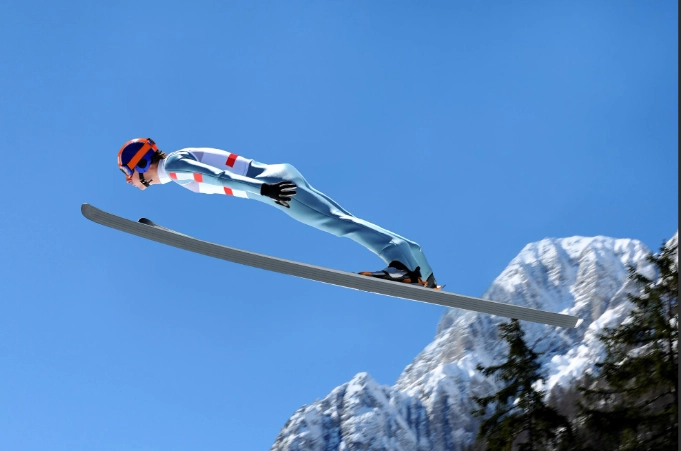
| Hill Type | K-Point (Meters) | Approx. Takeoff Speed | Flight Time | Who It's For |
|---|---|---|---|---|
| Plastic Summer Jumps / Small Hills | K10 - K20 | 30-45 km/h (19-28 mph) | 1-2 seconds | Absolute beginners, kids' programs. You learn the basic posture and landing on plastic in summer or tiny snow hills. |
| Normal Hills | K75 - K99 | 75-85 km/h (47-53 mph) | 4-6 seconds | National level competitions, advanced juniors. This is where "real" ski jumping starts. The speed and airtime are serious. |
| Large Hills | K100 - K130 | 85-95+ km/h (53-59+ mph) | 6-9 seconds | World Cup, Grand Prix, Olympics. The pinnacle of the sport. The physical and mental demands are maxed out here. |
| Ski Flying Hills | K185+ | 95-105+ km/h (59-65+ mph) | 9+ seconds | The extreme edge. Only a handful exist (like Planica, Vikersund). This is pure, unadulterated flight. The most dangerous and spectacular form. |
Looking at that table, you start to see the scale. Asking is ski jumping hard on a K15 hill gets one answer. Asking it on a K125 hill gets a completely different, much more intense one. Most people will only ever experience the first rung of this ladder, if any at all. The pros climb to the top.
So, Can a Normal Person Even Try? The Path In
This is the big question after we've spent all this time talking about how hard it is. Is it just for genetic freaks and people who started at age 5?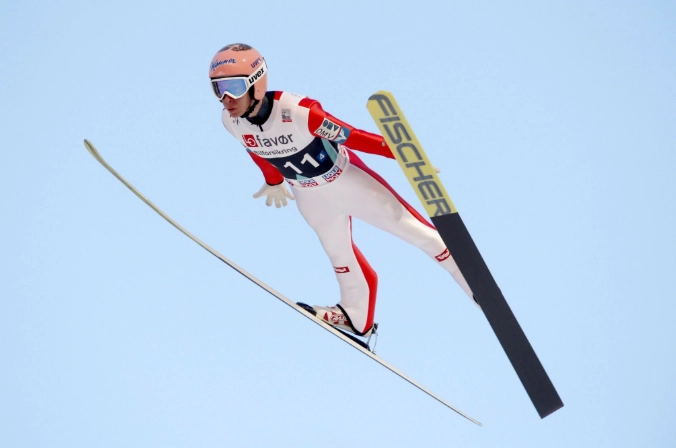
Not entirely. The door is cracked open, but it's a very specific door. In traditional ski jumping nations like Norway, Finland, Germany, Austria, Slovenia, Poland, and Japan, there are well-established club systems for kids. That's the primary pipeline. If you're an adult with no experience, your options are extremely limited and require serious commitment.
The Reality Check: There are no "ski jumping experience days" for tourists like you might find for bobsled or luge. You can't just show up at the Olympic park and give it a whirl. The liability and risk are too high. The path always starts small, slow, and under strict supervision.
If you're dead serious, here’s what the journey might look like:
- Find a Club with a Junior/Starter Program: This is your only real entry point. Search in regions with a jumping tradition. Be upfront about your age and goals.
- Master Cross-Country Skiing First: This is non-negotiable. Jumping skis are similar, and the balance and feel are foundational. Most jumpers are excellent cross-country skiers anyway.
- Dry-Land Training is Your New Life: You'll spend months, maybe a year or more, doing imitation jumps on dry ground, working on the posture (the "immer"), and landing technique. You'll use roller skis on small hills that land into pools in the summer.
- The First Snow Jumps: Your first real jumps will be on the smallest possible hill (K10-K20). You'll start from a standstill, then from very low start gates. The focus is 100% on safe posture and landing, not distance.
- The Long, Slow Climb: Progress is measured in centimeters of start gate height and meters of safe, stable landing over years, not weeks.
It's a grueling process of repetition and incremental progress.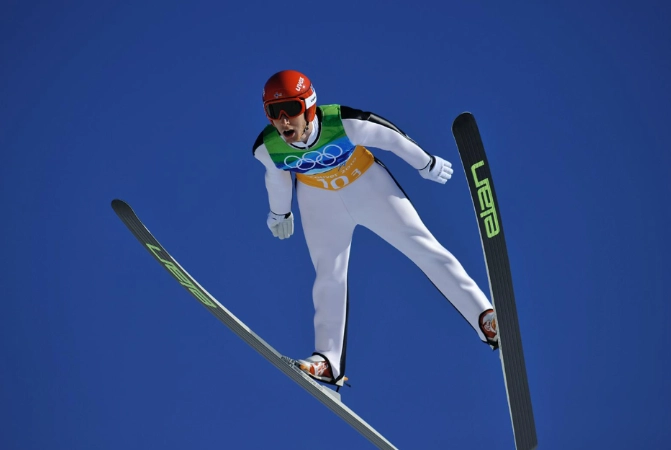
The Top 5 Reasons People Quit (The Unfiltered List)
Let's not sugarcoat it. The attrition rate is huge. Understanding why people walk away tells you a lot about the true difficulty of ski jumping.
- Fear That Doesn't Go Away: Some people never get comfortable with the sensation of launch. The fear remains acute every single time, and it becomes mentally exhausting.
- The Brutal Time Commitment: This isn't a weekend hobby. It's year-round, daily training for a sport you might only actually "do" on snow a few months a year.
- Injury: It's a common derailer. An ankle sprain, a knee tweak, a bad back from a hard landing—any setback can take you out for a season and break your momentum.
- Plateauing: The technical leaps from small hill to medium hill are massive. Many athletes hit a wall where they physically or mentally cannot make the next jump in hill size.
- Cost and Access: Travel to specific hills, equipment, coaching—it adds up quickly. If you don't live near a training center, it becomes nearly impossible.
Common Questions (The Stuff You're Actually Searching For)
Is ski jumping dangerous?
Yes, it carries inherent risk. Modern safety standards—softer hill profiles, safer landing zones, strict equipment rules—have made it much safer than in the past. According to the International Olympic Committee's sport overview, it is a highly technical sport where safety is paramount. However, crashes at high speed still happen and can result in serious injury. It's not a sport you do casually.
What's the hardest part of ski jumping?
Most jumpers will tell you it's the mental game. The physical and technical parts can be trained into muscle memory. But silencing the instinctive panic and maintaining absolute focus while accelerating toward a cliff edge is a unique psychological challenge. The takeoff timing is often cited as the single most critical and difficult technical moment.
How do they train for ski jumping without jumping?
So much of it is off the hill! They use roller skis on summer jumps into pools, trampolines with harnesses to simulate flight position, intense weightlifting (especially for legs and core), plyometric boxes, and endless balance board work. Wind tunnels are also used by elite teams to perfect aerodynamics.
Can you be too heavy or too light for ski jumping?
Absolutely. There's a strict weight-to-ski-length ratio enforced by FIS rules to prevent athletes from becoming dangerously thin to gain an aerodynamic advantage. Being too heavy hurts your flight and puts immense stress on your body at landing. It's a sport that demands a very specific, lean, and powerful physique.
How old are most ski jumpers when they start?
Very young, typically between 5 and 10 years old in the traditional powerhouse nations. They start on the smallest plastic hills, learning the feel without the fear factor being as overwhelming as it is for an adult. Starting later is a massive disadvantage, both technically and in terms of developing the specific "air feel."
My take? The sheer length of the career path is what makes ski jumping so hard. It's a decade-long investment in a hyper-specialized skill with a very narrow peak and a high risk of being derailed by injury or fear. The reward—the feeling of a perfect flight—is described by jumpers as like nothing else on earth. But the price of entry is staggeringly high.
Final Thoughts: Hard, But Not Magic
So, is ski jumping hard? We've circled the question from every angle. The verdict is in: it's arguably one of the most demanding sports in existence. It requires the explosive power of a sprinter, the core strength of a gymnast, the balance of a slackliner, the aerodynamic mind of an engineer, and the nerves of a bomb disposal expert.
But here's the crucial thing to understand: it's not magic. The people doing it aren't superhuman. They are, for the most part, people who started as tiny kids, fell in love with the flight, and spent their entire lives chipping away at this mountain of skill, one tiny, terrifying step at a time. They've just spent so many hours in that specific, terrifying environment that it has become their normal.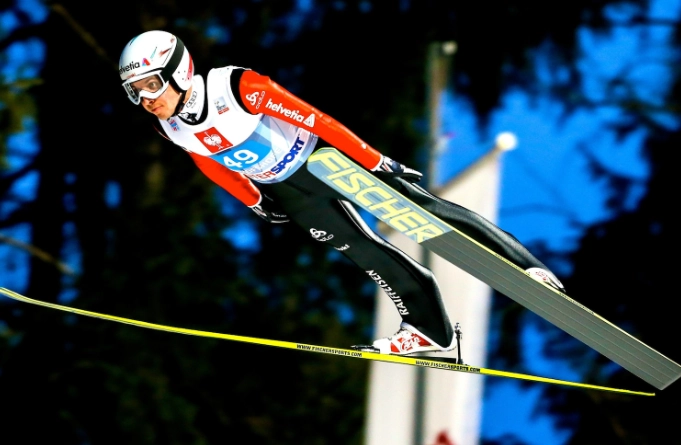
The difficulty of ski jumping is the sum of its parts—physical, technical, mental, and logistical. Conquering any one of those is a feat. Mastering all of them simultaneously, under pressure, is what creates an Olympic-level ski jumper. It's a pursuit that demands everything, which is precisely why, for those who do it, it means everything.
Maybe the better question isn't "Is ski jumping hard?" but "What kind of person chooses to do something this hard?" And the answer to that is a story of obsession, courage, and a unique desire to fly.