Your Nordic Combined Highlights
- The Core Idea: Two Sports, One Winner
- Breaking Down the Two Halves
- The Scoring System: From Points to Seconds
- Different Event Formats: It's Not Just One Race
- Why is Nordic Combined Such a Big Deal? (And Why Isn't It More Popular?)
- Common Questions About the Nordic Combined Format
- The Future of the Format
You're watching the Winter Olympics, and you see these incredibly fit athletes flying off a ski jump one minute, then later slogging it out in a grueling cross-country race. The commentators keep mentioning "Nordic combined," but the scoring seems like some kind of arcane math. What's really going on? What is the Nordic combined format, and why is it considered one of the toughest, and frankly, most niche events in all of winter sports?
Let's clear that up right now. I remember trying to explain this to my friends during the last Games, and their eyes just glazed over. It's not that complicated once you break it down, but it's a sport that doesn't get the spotlight it deserves.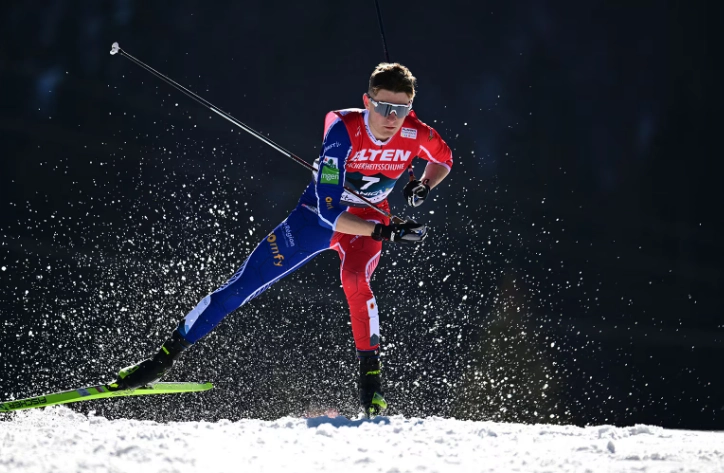
Nordic combined is the original extreme winter sport—a brutal and beautiful fusion of power, precision, and endurance.
So, if you've ever wondered what is the Nordic combined format and how it all works, you're in the right place. We're going to dive deep, skip the jargon, and look at it from the perspective of a fan who just wants to understand and appreciate the madness.
The Core Idea: Two Sports, One Winner
At its heart, the answer to "what is the Nordic combined format?" is simple: it's one competition made up of two distinct disciplines—ski jumping and cross-country skiing. The key word is "combined." An athlete's performance in the ski jumping part directly determines their starting position for the cross-country race. It's not two separate events with separate medals; it's one continuous battle where success in the first half gives you a huge advantage in the second.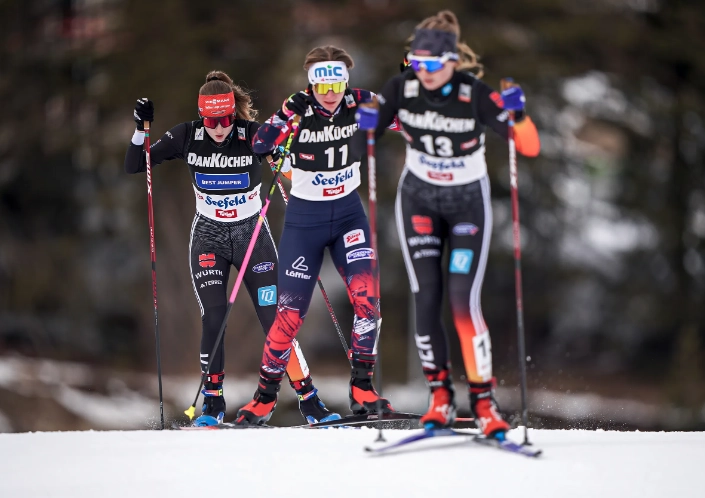
Think of it like a decathlon on snow, but with only two events that are wildly different. One demands explosive power, technical courage, and aerial control. The other is a pure, lung-burning test of aerobic endurance and pacing. Mastering both is what makes a Nordic combined athlete so special. It's like asking a sprinter to also run a marathon right after. The skillsets barely overlap, which is the whole point of the challenge.
Breaking Down the Two Halves
To truly get what the Nordic combined format entails, you need to understand its two component parts. They're not just thrown together; they're deeply intertwined in the scoring.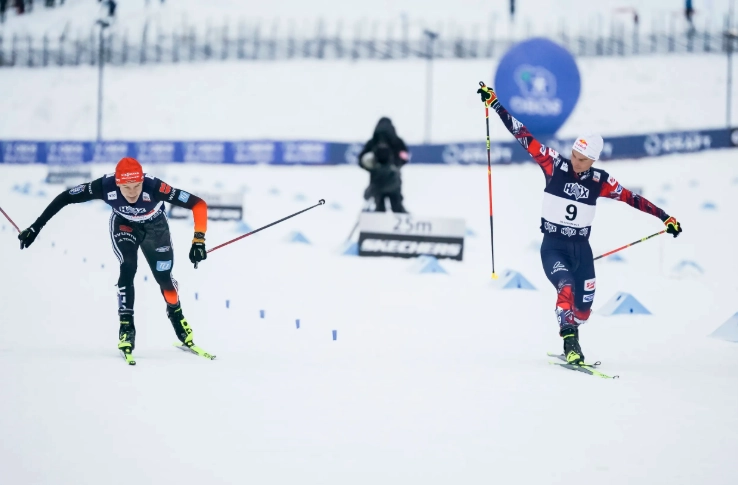
Part 1: The Ski Jump
This isn't just about who flies the farthest (though that's a big part of it). The jump is scored by judges. Here's what they look at:
- Distance Points: Every hill has a critical point called the K-point. If you land exactly on the K-point, you get 60 points (for normal hill events). For every meter you go beyond it, you gain more points. For every meter short, you lose points. The exact value per meter changes depending on the hill size.
- Style Points: Five judges score the flight, posture, and landing. Each judge gives up to 20 points. The highest and lowest scores are dropped, and the middle three are added together. A perfect telemark landing (one foot slightly ahead, knees bent) is crucial for good style marks.
The total score from the jump is what sets the stage for everything that follows. A great jumper can build a lead of over a minute before the race even starts. A poor jump can put you almost out of contention.
I've stood at the bottom of a ski jump hill, and let me tell you, it looks much, much bigger in person. The courage these athletes have is insane.
Part 2: The Cross-Country Race
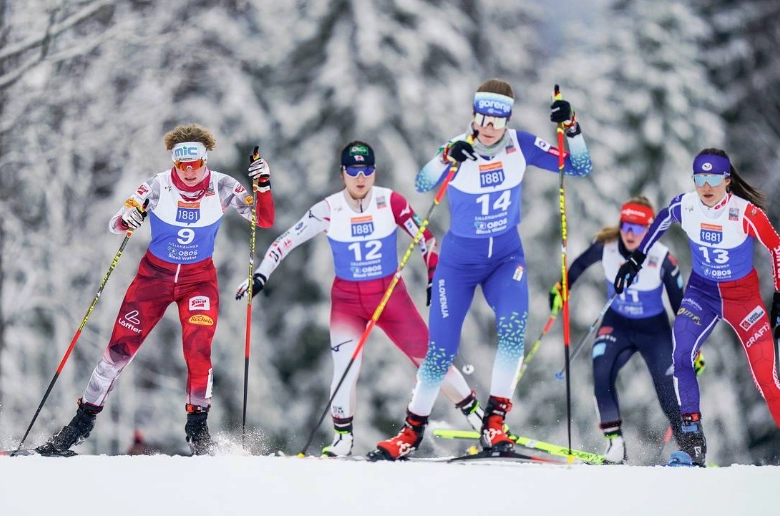
This is where the "combined" magic happens. The race is typically run in the mass start or, more commonly, the Gundersen start format (named after a Norwegian athlete). The Gundersen method is the key to understanding the modern Nordic combined format.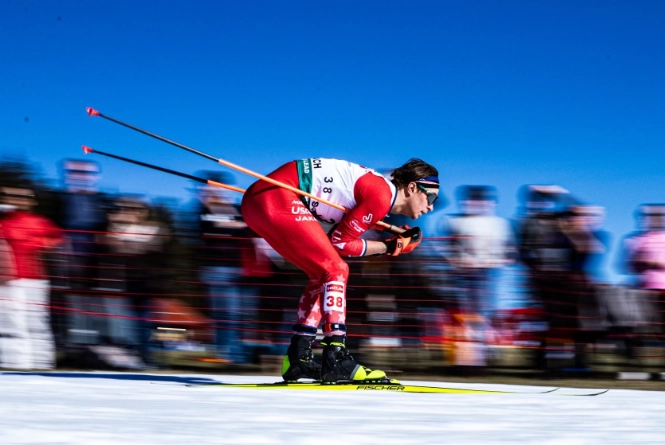
Here's how the Gundersen start works: The winner of the ski jump starts the cross-country race first. Everyone else starts behind them, with time gaps based on the point differences from the jump. Since points convert directly to seconds, a 10-point deficit might mean a 40-second delay at the start. The race then becomes a pure pursuit. The first person to cross the finish line wins the entire event. It's incredibly spectator-friendly—you know exactly who is in the lead at any moment.
The race itself is a free technique (skating style) cross-country race over a set distance. The distances have changed over time, but common formats are 10km for individual events and 4x5km for team events. It's a brutal test after the intense, anaerobic effort of the jump.
The Scoring System: From Points to Seconds
This is the part that confuses most people. It's not random; there's a fixed conversion. The standard formula used in World Cup and Olympic events is:
1 Jump Point = 4 Seconds in the cross-country start.
Let's make it concrete with an example. Imagine two athletes:
- Athlete A scores 125.0 points on the jump.
- Athlete B scores 115.5 points on the jump.
The difference is 9.5 points. Multiply that by 4 seconds/point.
9.5 points x 4 seconds/point = 38 seconds.
So, Athlete A will start the 10km cross-country race first. Athlete B will start 38 seconds later. If Athlete B can ski fast enough to make up that 38-second gap and cross the line first, they win. It creates incredible drama where a fantastic jumper can be hunted down by a stronger skier, and vice-versa.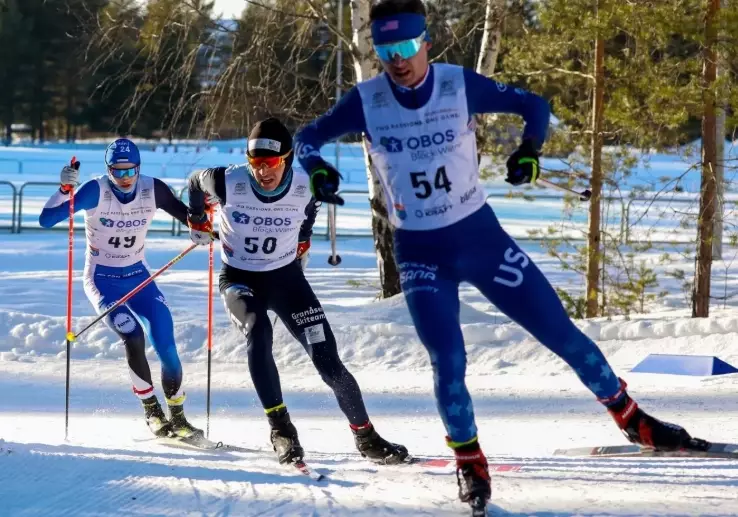
Different Event Formats: It's Not Just One Race
When people ask "what is the Nordic combined format?" they often think of just one type of event. Wrong. There are several, each with its own twist. The International Ski and Snowboard Federation (FIS), the sport's global governing body, sanctions these main competition types. You can explore the official FIS Nordic Combined rulebook for the most precise details.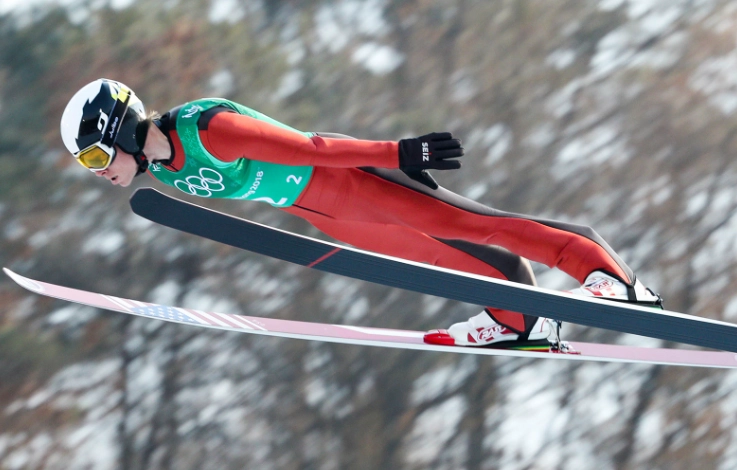
| Event Format | Ski Jump Details | Cross-Country Details | What Makes It Unique |
|---|---|---|---|
| Individual Gundersen (Normal Hill) | 1 jump on a normal hill (approx. K-98m) | 10km race (Gundersen start) | The classic, most common format. A test of all-around ability. |
| Individual Gundersen (Large Hill) | 1 jump on a large hill (approx. K-125m) | 10km race (Gundersen start) | More emphasis on the jumping power due to the bigger hill. |
| Mass Start | No jump first! | 10km race (All athletes start together) | The cross-country race is held FIRST. The finishing order determines the start order for the jump. The best jumper from the race leaders wins. |
| Compact / Sprint | 1 jump on a normal hill | 5km race (Gundersen start) | A shorter, faster version. Punishes mistakes more as there's less distance to make up time. |
| Team Event (4x5km) | Each of 4 team members takes 1 jump. Scores are combined. | 4x5km relay (Gundersen start based on team jump score) | National pride! Strategy in jump order and relay skiing order is key. Often the most chaotic and exciting event. |
The Mass Start format is a real brain-twister. It completely inverts the traditional order. Everyone skis the 10km race together first. Your finish position in that race gives you points for the jump. The leader of the race gets the most points and gets to jump last, knowing exactly what distance they need to win. It places a massive premium on being a great jumper under final-round pressure. It's a format I personally love because it changes the dynamic so much.
Why is Nordic Combined Such a Big Deal? (And Why Isn't It More Popular?)
Understanding what the Nordic combined format is also means understanding its place in sports history. It's one of the original Winter Olympic events, debuting in 1924. For a long time, it was the pinnacle of Nordic skiing. The International Olympic Committee's historical archives show its foundational role in the Games.
Its prestige comes from the sheer difficulty. You need the explosive, technical nerves of a ski jumper and the engine of a world-class cross-country skier. Very few people on earth can do both at an elite level. The training is contradictory—jumpers want powerful, heavy legs for take-off; cross-country skiers want light, efficient endurance muscles. Athletes constantly balance these conflicting demands.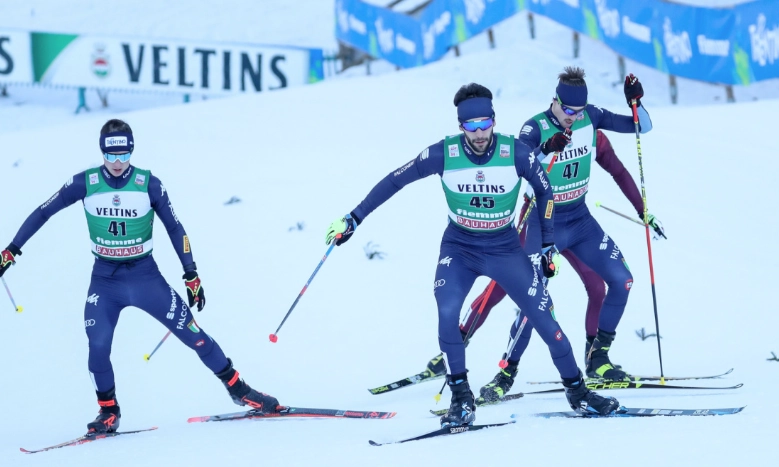
A Personal Take: I think Nordic combined is the purest test of a skier. But let's be honest, its popularity struggles. The events are long, the scoring seems complex to casual viewers, and it's dominated by a few nations (Norway, Germany, Austria, Japan). It lacks the flash of freestyle skiing or the constant action of hockey. It's a connoisseur's sport.
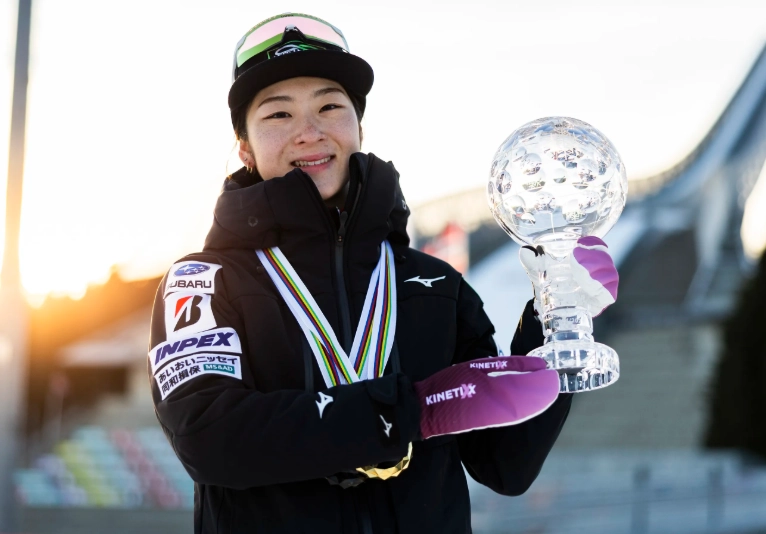
There's also the glaring issue: the lack of a women's Olympic event. This is a major point of criticism. Women's Nordic combined World Cup events exist (a huge step forward), but it's still not on the Olympic program. The argument has always been "depth of field," but that's a chicken-and-egg problem. How can the field deepen without the Olympic platform? Major sports outlets like ESPN have covered the fight for gender equality in the sport. It's a stain on an otherwise historic discipline, and many fans, including myself, believe it's past time for change.
Common Questions About the Nordic Combined Format
The Future of the Format
The Nordic combined format isn't static. FIS is always tinkering to make it more TV-friendly and exciting. We've seen the introduction of the Mass Start and shorter "compact" events. There's talk of even more radical ideas, like super-short sprint formats or mixed-gender team events to boost appeal.
The biggest challenge remains visibility. Without a strong women's Olympic event and with competition from flashier sports, it risks fading further into the background. But for those who discover it, it offers a unique kind of drama—a slow-burn, strategic, and physically awe-inspiring contest.
So, the next time someone asks you, "What is the Nordic combined format?" you can tell them. It's not just a weird hybrid. It's a historic, grueling test of two opposite athletic skills. It's a pursuit race that starts on a 90-meter tower and ends in a stadium of screaming fans. It's a sport where a single, flawless telemark landing can mean a 10-second advantage, and where a final-lap sprint can erase a minute of hard-earned lead.
It's a sport that deserves more fans. Now you know exactly what you're watching, and hopefully, you'll appreciate the incredible athletes who choose to master this ultimate combined challenge.
Final Thought: The beauty of understanding the Nordic combined format is that it turns a confusing broadcast into a clear, high-stakes drama. You're no longer just watching people ski; you're watching a calculated hunt, where every second gained on the jump hill is a cushion, and every powerful stride on the track is an attempt to claw it back. That's a story worth following.