I remember the first time I stood at the top of a small terrain park jump. My heart was hammering against my ribs, my skis felt like planks of wood, and every article I'd read about "park skiing for beginners" evaporated from my brain. The gap looked huge. The landing looked steep. Everyone else made it look so easy. That moment of pure fear is where most people either bail or get hurt trying something stupid.
Park skiing doesn't have to start that way. It's not about being fearless; it's about being smart. Over a decade of sliding on rails and popping off jumps has taught me that the best park skiers aren't the craziest—they're the most methodical. This guide is the one I wish I had. We'll skip the fluff and get straight into the actionable park skiing tips that build confidence from the ground up, covering the mindset, gear, and step-by-step progression most tutorials gloss over.
Your Quick Guide to Park Skiing
The Right Mindset & Pre-Park Prep
Before you even click into your skis, your head needs to be in the game. Most beginners fail here. They see a video and head straight for a medium-sized jump. Bad idea.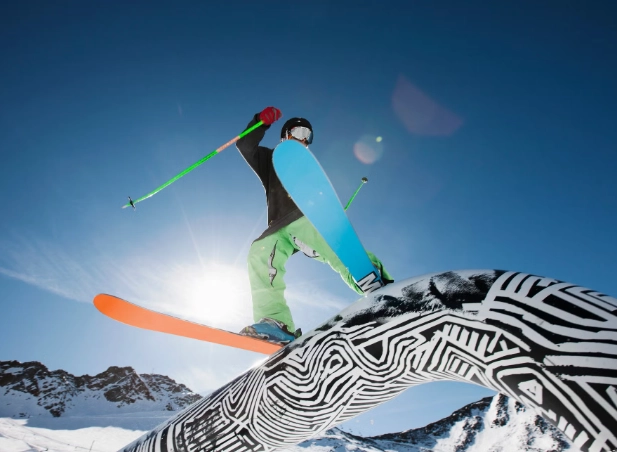
The core concept is progressive exposure. You wouldn't learn calculus before algebra. Don't try a 360 before you can do a controlled, confident straight air off the smallest jump. Your first goal in the park isn't to land a trick. It's to build a movement vocabulary. Get comfortable with the sensation of leaving the ground, the sound of your edges on a box, the different snow textures.
Spend a full day—seriously, a whole day—just skiing around the park. Don't hit anything. Just ride the sides, watch how people approach features, observe their speed and where they land. This "recon day" builds a mental map and kills the intimidation factor. A subtle but crucial tip: always have an exit plan. Before you line up for any feature, know exactly where you'll bail if your approach feels wrong. That mental safety net alone cuts anxiety in half.
Gear Choices That Actually Matter
You can learn on any ski, but the right gear makes the learning curve less painful. Forget ultra-stiff racing skis. You want something forgiving.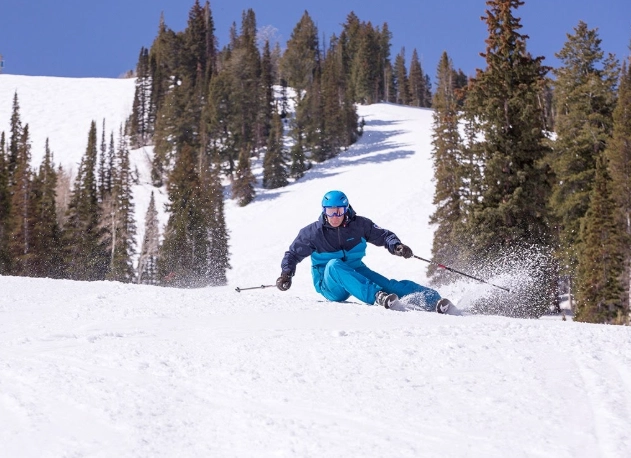
Ski Type & Length: A true twin-tip ski is non-negotiable for anything beyond basic straight airs. It allows you to ski and land switch (backwards) comfortably. For length, go shorter than your all-mountain ski. A good rule is 5-10cm shorter than your height. Shorter skis are easier to spin and maneuver in the air. I made the mistake of using my long all-mountain skis for my first rail attempts—they hooked on everything.
Bindings: Set your DIN (release tension) appropriately. Too low, and you'll pop out on simple landings. Too high, and you risk a nasty knee injury on a bad fall. Consult a certified ski tech. Don't just crank it up because a friend told you to.
The Helmet Debate Ends Here: Wear one. Always. It's not just for big crashes. A slip on a metal rail can have your head meeting steel with surprising force. Get a park-specific helmet if you can—they're often lighter and have better peripheral vision. Consider adding ski-specific mouthguard if you're progressing to bigger jumps; it's an underrated piece of protection for your teeth and jaw.
How to Read the Terrain Park Like a Pro
Every park has a map or signs, but they don't tell the whole story. Features are graded (Small, Medium, Large, XL), but these ratings can vary wildly between resorts.
Here’s what to actually look for:
| Feature Type | What to Check Before Hitting It | Beginner Focus |
|---|---|---|
| Jump / Kicker | The lip (take-off): Is it smooth or rutted? The transition: Is it a smooth curve or abrupt? The landing: Can you see the entire downslope? | Small jumps with a clear, mellow landing. The lip should be well-maintained. |
| Rail / Box | Material (metal vs. plastic boxes). Width. Slope (flat, slightly downhill). Approach speed needed. | Wide, low, flat boxes made of plastic ("rainbow boxes"). They are forgiving. |
| Halfpipe | Wall height, the condition of the transition (the curved bottom), amount of vert (vertical wall at top). | Just ski the bottom to get feel of the transition. Don't try to get air initially. |
The single biggest mistake I see? People misjudging speed for jumps. Too slow, you land on the knuckle (the flat part before the landing slope). Too fast, you overshoot the sweet spot. Find a small jump and spend time dialing in the exact speed needed to land in the middle of the transition. Watch someone who lands perfectly, start from where they start, and mimic their movements.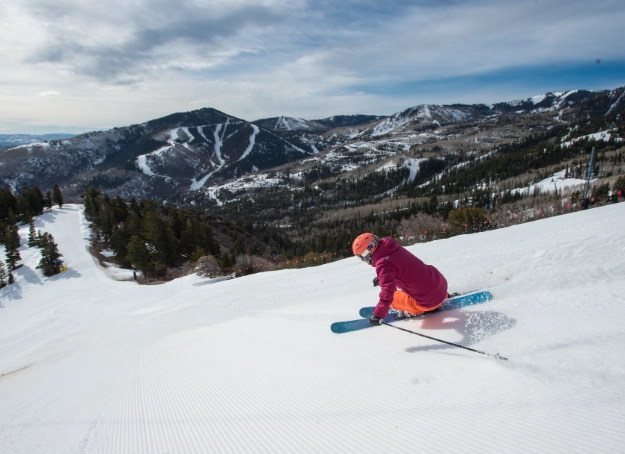
Your First Steps: The Foundation
Let's break down the first day of actual hitting features.
Step 1: The Basic Ollie on Flat Ground
Can't do a solid ollie? Don't go near a jump. Practice popping off both feet, lifting your knees to your chest, and landing balanced on flat, groomed terrain. This is your fundamental "pop" mechanic for every trick later.
Step 2: The Straight Air Off a Tiny Jump
Find the smallest jump in the park. Your goal is not height, but control. Focus on a stable, athletic stance in the air (knees slightly bent, hands forward), and spot your landing. Look at the snow where you want to touch down, not at your skis. Absorb the impact with your legs.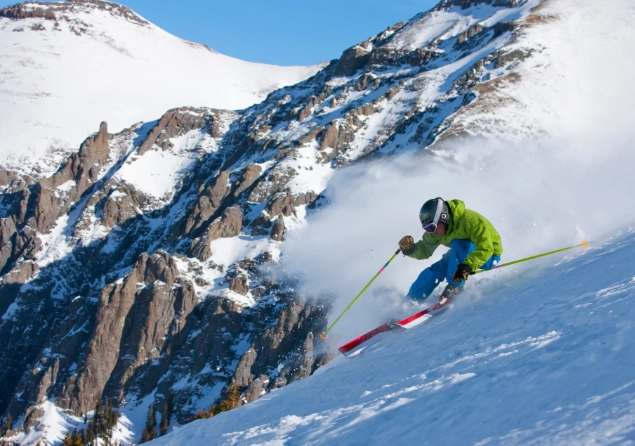
Step 3: Your First Box Slide
Pick the widest, lowest, flattest box. Approach straight on with moderate, consistent speed. As your tips touch the box, stand up tall and completely flat-based (no edges!). Look at the end of the box, not at your feet. To exit, simply keep your weight centered and ride off. The key is committing to the speed—hesitation causes edges to catch.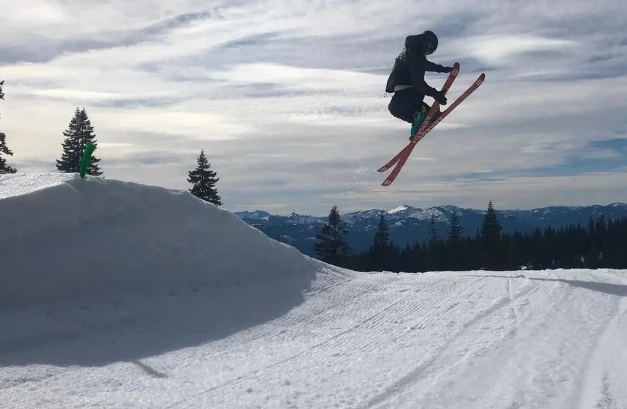
A Realistic Progression Path
This is where most guides get vague. Here’s a logical order. Master each step before moving to the next. Don't skip.
- Straight Airs (Small, then Medium Jump): Land 10 in a row cleanly before considering a spin.
- 180s (Off a Small Jump): Start with a frontside 180 (spinning towards the front of your body). It's easier to see the landing.
- 50-50 on a Box: Sliding straight along a box or wide rail.
- 360s: Only after 180s feel automatic.
- Basic Rail Slides (Frontside on a wider rail): Approaching at a slight angle.
- Graduating to Larger Features: Only when the medium version feels easy and controlled.
I spent an entire season stuck on 180s because I kept trying 360s before I was ready. The frustration was immense. Repetition on small features builds the muscle memory that makes bigger tricks possible later. There's no shortcut.
Safety: The Non-Negotiables
Safety in the park is about habits, not luck.
Warm Up: Your first run of the day should never be into the park. Take at least two warm-up runs on groomers to wake up your legs and reflexes.
Scope & Drop In: Always look uphill before entering a feature's landing zone or starting your run-in. Yell "Dropping!" if it's crowded. Respect the line.
Landing Zone Priority: The person who just landed has the right of way to clear the area. Don't drop in if someone is still in the landing.
Know Your Limits: Peer pressure is real. "Just send it" is the worst advice in skiing. If your gut says no, listen. A day spent practicing basics is infinitely better than a day spent in patrol's sled.
According to data from the U.S. Consumer Product Safety Commission, head injuries are a significant risk in action sports. Your helmet is your most important piece of equipment, not an accessory.