Let's cut to the chase. If your skis are slipping out on icy turns, chattering on hardpack, or just feel vague and unresponsive, the problem is almost always the edges. Sharp ski edges are the single most important factor for control and confidence, far more than the latest ski tech or a fresh wax job. Yet, it's the thing most skiers ignore or get wrong.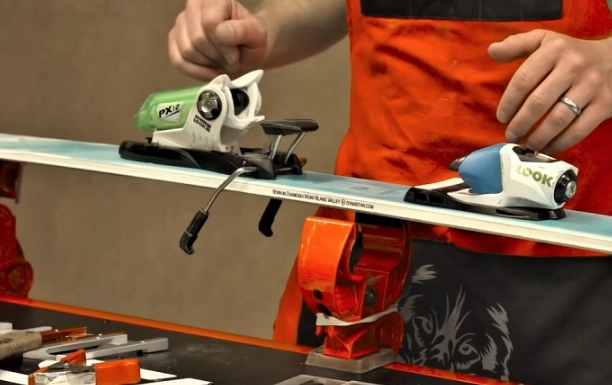
I've tuned skis for a decade, from rental fleets to World Cup boards. The difference a properly sharpened edge makes isn't subtle. It's the difference between surviving a run and owning it. This guide isn't about sending your skis to a shop. It's about showing you exactly how to sharpen them yourself, save money, and understand what you're doing so you never ski on dull edges again.
What You'll Find in This Guide
Why Sharp Edges Matter More Than You Think
Think of your ski edge like a kitchen knife. A dull knife slips off a tomato. A sharp one slices cleanly through. On snow, especially ice or hard, compacted snow, a sharp edge does the same—it bites in. This bite translates directly into:
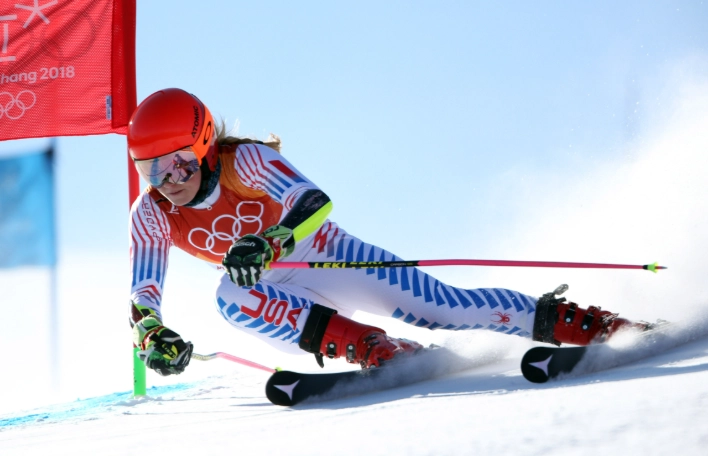
Control on ice: This is the big one. A sharp edge allows you to initiate and hold a turn on surfaces where a dull edge will just slide sideways.
Predictable turning: Your skis go where you tell them. No more vague feeling or unexpected skids.
Reduced fatigue: You're not fighting your skis all day. When they hold, you use less energy to steer and brake.
Safety: A predictable, biting edge is a safer edge, especially on steep or variable terrain.
Wax affects glide. Edges affect everything else. The International Ski Federation (FIS) has precise regulations on edge sharpness and thickness for race skis because they know it's critical. While you don't need a race tune, the principle is the same.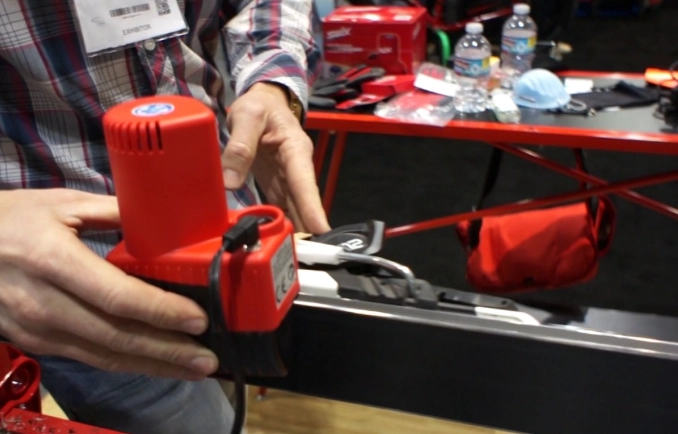
The Tools You Actually Need (And What to Skip)
You don't need a $500 workshop setup. A few key tools will handle 95% of your tuning needs. Here’s the breakdown of what’s essential, what’s nice to have, and what’s probably overkill for a DIYer.
| Tool | What It Does | Recommendation / Type | Approx. Cost |
|---|---|---|---|
| Ski Vise | Holds ski steady at waist height. A game-changer for comfort and precision. | A basic, clamp-on model is perfect. Don't skip this. | $40 - $80 |
| File Guide (Bevel Guide) | The most important tool. It holds the file at the correct angle (bevel) to the edge. | Get one with adjustable angles (e.g., 0-3°). Fixed guides are too limiting. | $25 - $50 |
| Mill File | The workhorse for removing metal and establishing the edge angle. | A 10-inch, single-cut, fine bastard file. Diamond files are more expensive but last longer. | $10 - $40 |
| Diamond Stone | Used after filing to hone and polish the edge, removing the "teeth" from the file. | A 400-grit stone is versatile. A 100-grit coarse stone is helpful for badly damaged edges. | $15 - $30 each |
| Gummy Stone | Abrasive rubber block. Cleans off metal burrs and slightly deburrs the edge for a smooth finish. | Essential final step. Get a medium grit. | $5 - $10 |
| Edge Detector / True Bar | A straight, flat bar to check for edge high spots or base flatness. | Nice for diagnosing problems, but you can start without it. | $20 - $50 |
My personal take? Skip the fancy electric sharpeners as a beginner. They remove metal too fast and it's easy to ruin your edges. Hand tools force you to learn the feel and give you more control.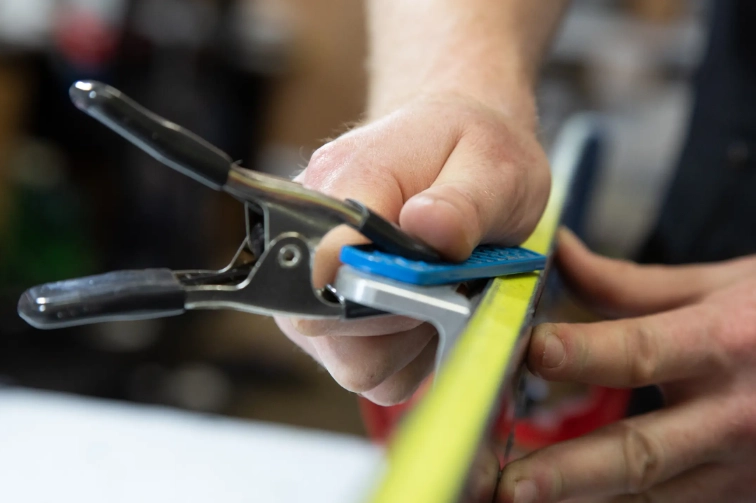
How to Sharpen Ski Edges at Home: A Step-by-Step Walkthrough
Let's walk through the process. Assume you have a typical all-mountain ski that's been used a dozen times and feels dull.
Step 1: Clean and Secure the Ski
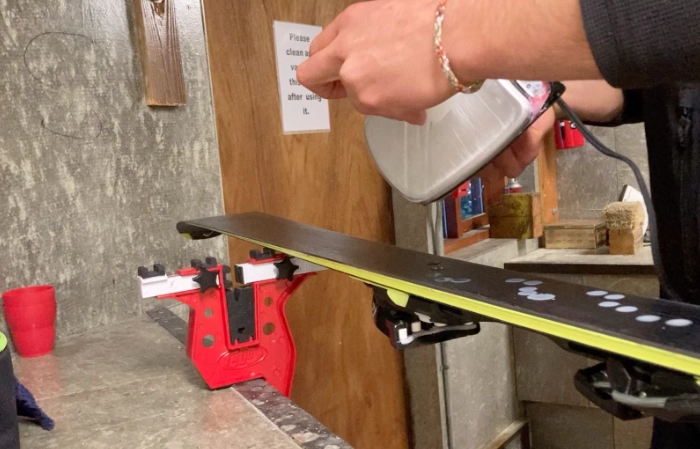
Wipe the base and edge clean of any dirt or wax. Clamp the ski securely in your vise at the waist. You'll be working on one edge at a time, from tip to tail.
Step 2: Determine and Set Your Bevel Angle
This is where most people get lost. The bevel is the angle ground onto the edge. You have two:
Side Edge Bevel: The angle on the side of the edge (facing you). This is for grip. Most skis come with a 1°, 2°, or 3° side bevel. For most recreational skiers on hard snow, a 2° side bevel is the sweet spot. It's a great balance of grip and durability. Set your file guide to this angle.
Base Edge Bevel: The angle on the bottom. This is almost always 1° or 0.5°. Its main job is to make the edge more durable and prevent it from catching. Unless you're racing, don't touch this. You need a special guide to work on it safely.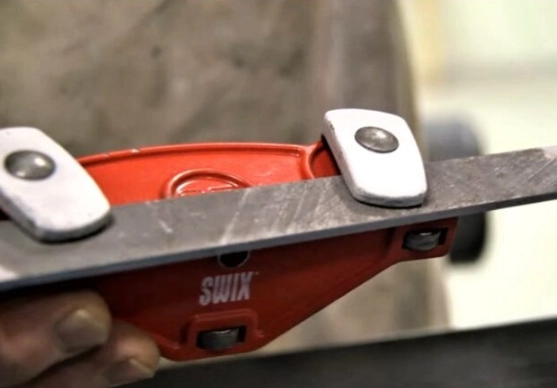
Step 3: Filing the Side Edge
Place the file in the guide. Position the guide flat on the base of the ski, with the file contacting the side edge. Using moderate pressure, push the file forward along the entire edge length, from tip to tail. Only push forward; lifting the file on the return stroke. Do this 3-5 times. You should see a consistent, shiny silver line appear along the edge. If there are rusty or deeply scratched spots, you may need a few more passes. Don't overdo it. You're sharpening, not reshaping.
Step 4: Honing with the Diamond Stone
This step removes the rough "teeth" left by the file and creates a smoother, more durable edge. Use your 400-grit diamond stone in the same guide, at the same angle. Use lighter pressure and make 2-3 passes tip to tail. You'll feel it get smoother.
Step 5: Deburring with the Gummy Stone
After filing and honing, a tiny metal burr (a wire edge) often forms on the opposite side of the edge. Take your gummy stone and lightly rub it along the side edge you just worked on, then along the base edge. This cleans off the burr and polishes the edge. It should feel smooth to a light fingernail test.
Repeat Steps 3-5 for the other side edge of the ski, then for the entire second ski. Consistency is key.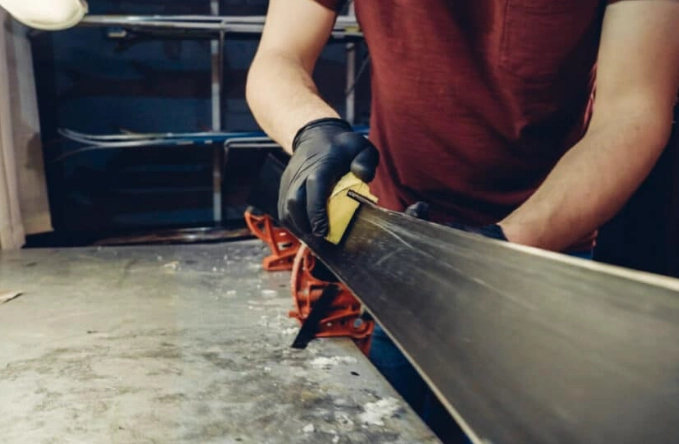
3 Common Mistakes Even Experienced Skiers Make
I've seen these errors in countless home tuning setups.
1. Over-filing the tip and tail. People press harder at the ends of the ski. The tip and tail need less edge contact than the underfoot section. Focus pressure under your foot. Use lighter, consistent passes the whole length.
2. Ignoring the base edge. While you shouldn't file it, you must deburr it. That metal burr from side filing acts like a tiny brake on your ski. A few passes with the gummy stone on the base edge solves it.
3. Using a inconsistent angle. Rocking the file guide changes the angle mid-edge. Keep the guide flat on the ski base throughout the entire stroke. This is where a good vise is crucial—if the ski is moving, you'll rock.
A Simple Maintenance Schedule That Works
You don't need to sharpen every time you ski. Here's a practical plan:
After every 3-5 days on snow: A light touch-up. Skip the file. Use just the 400-grit diamond stone in your guide (2-3 passes) followed by the gummy stone. This refreshes the edge without removing much metal.
Mid-season (or after 10-15 days): A full sharpening session as described above with the file. This is when you'll really feel the performance return.
Start of the season & end of season: Full tune, including base grind and wax at a reputable shop. Let the pros reset the base and edge flatness. Then maintain it yourself all season.
Pair your edge work with a hot wax. The process is: Sharpen edges first (metal dust gets everywhere), then clean the ski thoroughly, then hot wax.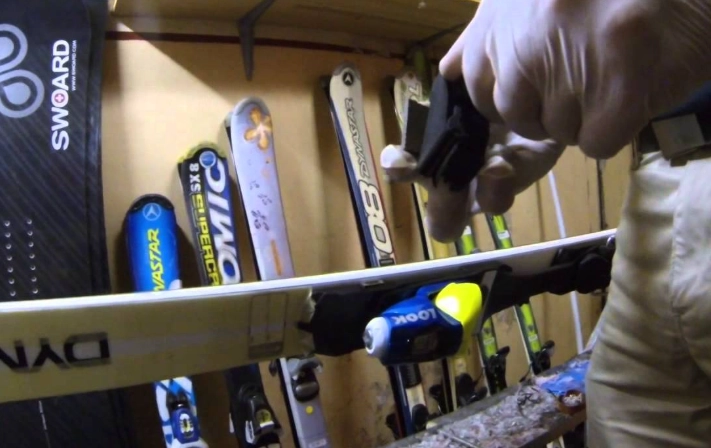
Your Edge Sharpening Questions, Answered