I remember the first time I ducked a rope. It was at Jackson Hole, a well-known gate leading to what looked like perfect, untracked powder just a stone's throw from the lift. My heart was pounding, but not just from excitement. It was a mix of adrenaline and a nagging voice asking, "Do you actually know what you're doing out here?" That moment captures the essence of sidecountry skiing: incredible access with very real consequences. Sidecountry terrain—the unpatrolled, often avalanche-prone slopes just outside a resort's boundary—is not a playground extension. It's a different world that demands a complete shift in mindset and preparation. This guide isn't about scaring you off; it's about equipping you with the knowledge to enjoy it responsibly. Forget what you think you know from skiing in-bounds. Out there, you are your own patrol, your own medic, and your own guide.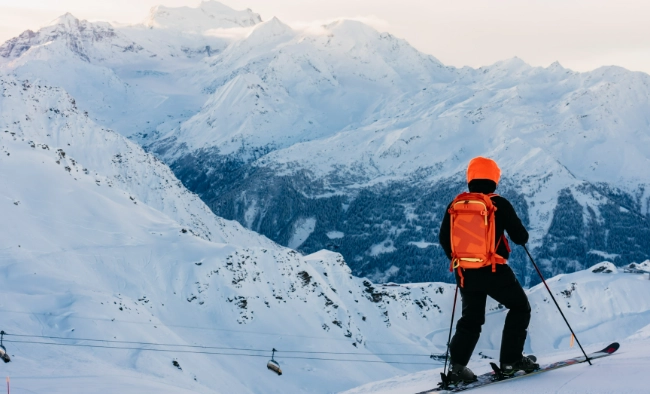
Quick Navigation: What You'll Learn
Understanding Sidecountry Terrain and Its Unique Risks
Let's get this straight first. Sidecountry is not backcountry. True backcountry involves a long approach, often requiring skins and touring bindings. Sidecountry is deceptively accessible. You ride a lift up, ski to a gate, and you're in avalanche terrain within minutes. That's the trap. The convenience fools you into thinking the risks are equally diminished. They're not.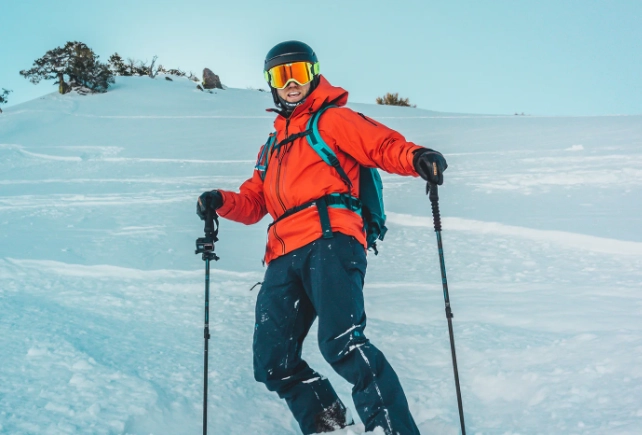
The primary hazard, of course, is avalanches. The snowpack beyond the ropes hasn't been controlled by ski patrol. It's subject to the same wind, temperature swings, and precipitation as the wild mountains, but often gets more traffic, which can stress weak layers in the snow. Other risks include:
- Cliff-outs and Terrain Traps: What looks like a gentle roll from above can hide a cliff band. Gullies can funnel you into dangerous terrain or make rescue difficult.
- Tree Wells: Deep, hollow spaces around the base of trees, especially conifers, can be deadly if you fall in headfirst.
- Getting Lost or Stranded: Exit routes aren't always clear. A wrong turn can lead you miles from the resort or your car.
- No Quick Rescue: If you get hurt, your friends are your first responders. It could be hours before professional help arrives.
The Non-Negotiables: Your Sidecountry Safety Gear
Your resort setup won't cut it. You need a dedicated kit, and you need to know how to use every piece of it blindfolded. Practice in your living room, in the parking lot, anywhere. Gear is useless without muscle memory in a panic situation.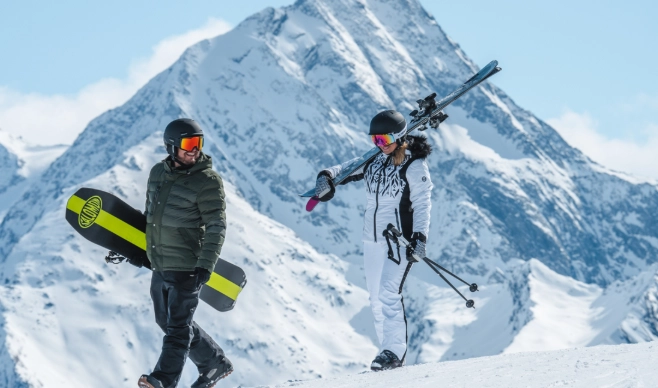
The Big Three: Avalanche Safety Tools
This is your lifeline. Every person in your group must have all three, and everyone must know how to use them.
| Tool | Purpose & Key Specs | Pro Tip / Common Pitfall |
|---|---|---|
| Digital Avalanche Transceiver (Beacon) | Transmits and receives a signal to locate a buried person. Must be worn under all layers, turned on to "transmit" before entering terrain. | The pitfall? Buying a fancy 3-antenna beacon and never practicing with it. Spend an afternoon with a partner burying a beacon in a backpack and timing your searches. Speed is critical. |
| Avalanche Probe | Collapsible pole to pinpoint a burial depth and confirm location before digging. Length matters—280cm or longer is standard. | Don't cheap out. A flimsy probe that bends when hitting ice is worse than useless. Assemble it quickly before you need it. |
| Avalanche Shovel | For digging out a victim. Must have a metal blade (plastic breaks in hard snow) and an extendable handle for leverage. | Keep it accessible, not buried at the bottom of your pack. In a real burial, you'll be digging tons of snow; a good shovel is your most physically demanding tool. |
Beyond the Big Three: Essential Supporting Gear
These items complete your system and address other critical survival scenarios.
- Backpack (20-35L): Dedicated for sidecountry/backcountry. Look for a dedicated avalanche tool pocket (A-frame or diagonal carry for shovel/probe) and ski carry system.
- First Aid Kit: Not a tiny adhesive bandage kit. Include a tourniquet, hemostatic gauze, SAM splint, and know how to use them. Take a wilderness first aid course.
- Communication & Navigation: A fully charged cell phone (in a waterproof case), a backup battery, and a physical map of the area. Satellite communicators (like a Garmin inReach) are gold standard for areas without cell service.
- Extra Layers & Survival Items: An insulating layer (puffy jacket), shell jacket, gloves, hat, emergency bivy sack, fire starter, and headlamp. Assume you might spend an unexpected night out.
How to Assess Conditions and Make Go/No-Go Decisions
Gear is the easy part. Decision-making is where most accidents happen. You need a framework, and you need to stick to it even when the powder looks perfect.
1. Consult the Avalanche Forecast
This is your bible. Check the forecast from your local avalanche center (like the Colorado Avalanche Information Center or Northwest Avalanche Center) the night before and the morning of. Don't just look at the danger rating (Low, Moderate, Considerable, High, Extreme). Read the detailed discussion. What aspects (N, S, E, W) are problematic? What elevation band? What is the problem—wind slab, persistent weak layer?
2. Observe on the Ground
The forecast is a regional guess. You need to ground-truth it. On your way up the lift, look for signs:
- Recent avalanche activity: Any slides on similar aspects? This is the biggest red flag.
- Cracking or collapsing: Do you hear a "whumpf" sound underfoot? That's a collapsing weak layer.
- Wind loading: Is snow being transported and deposited on lee slopes (typically east or north in the US)? Those are loaded slabs waiting to release.
3. Terrain, Terrain, Terrain
When in doubt, choose safer terrain. This is your primary risk management tool.
Avoid when danger is >Low: Slopes steeper than 30 degrees, terrain under cornices, gullies and bowls that collect snow, runout zones where an avalanche from above could sweep you.
Seek out: Low-angle slopes (under 25 degrees), ridges, dense trees (not glades), wind-scoured areas.
The decision is binary. If the signs point to danger, you turn around. No negotiation. The mountain will be there another day.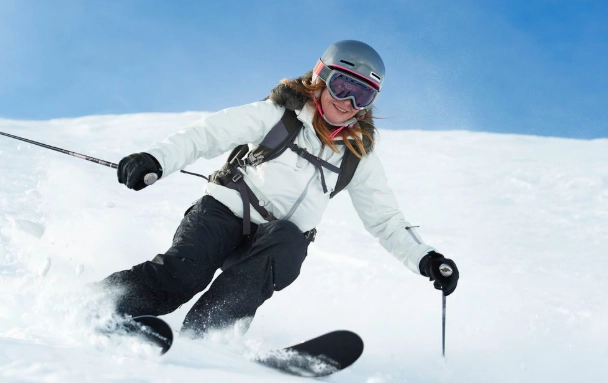
The Human Factor: Mindset and Common Mistakes
We are the weakest link. Psychology kills more skiers than any slab. Be aware of these traps:
Expert Halo: Following someone more experienced without doing your own assessment. "They know what they're doing" is a deadly mantra.
Powder Fever: The overwhelming desire for fresh tracks that clouds judgment. It's powerful. I've felt it push against my better logic. The antidote is to pre-commit to your turn-back criteria before you see the line.
Committed Terrain: Skiing into a bowl or couloir where the only way out is down. You lose all your options. Always have an escape plan.
The Silent Yes: Nobody wants to be the "weak" one who says no. Create a team culture where "I'm not comfortable with this" is celebrated as the strongest, smartest thing you can say. Use clear language: "I think the risk is too high on this slope. Let's look at option B."
Putting It All Together: A Sample Sidecountry Plan
Let's make it concrete. Say you're at a resort with a popular sidecountry gate.
Morning of: Group meets for coffee. Everyone shows their beacon (turned on, in transmit mode), probe, shovel. We check the avalanche forecast together—it says "Considerable" on NE aspects above treeline due to recent wind loading. We agree to avoid any NE-facing slopes steeper than 30 degrees. Our plan is to ski a known, lower-angle glade that faces SE.
At the Gate: We do a final beacon check. One person transmits, everyone else searches to confirm they can receive the signal. We discuss our route: ski the ridge, drop into the glade, regroup at the obvious creek bed, ski out to the road. We designate a leader and a tail person.
On the Ridge: We see obvious wind-loaded pillows on the NE faces. Red flag confirming the forecast. We stick to our plan and ski the SE glade. The snow is good, not epic, but we're skiing. On the exit, the creek bed is more filled in than expected, making travel slow. No problem—we have headlamps and extra layers. We get out tired but safe.
The day wasn't about scoring the gnarliest line. It was about applying a system and coming back safely. That's a successful sidecountry day.
Your Sidecountry Safety Questions Answered