Quick Navigation
- What Even Is a T-Bar Lift, and Why Is It So Tricky?
- Anatomy of a Fail: The Top Reasons T-Bar Rides Go Wrong
- Your Step-by-Step Guide to a Flawless T-Bar Ride
- So, You're Falling... Now What? The Safety Protocol
- My Personal Hard-Earned Lessons (The Unfiltered Version)
- Answering Your Burning T-Bar Questions
- The Bottom Line: From Fail to Nail
Let's be real. We've all seen them. Those viral videos titled "T bar ski lift fail" that flood social media every winter. A skier or snowboarder approaches the lift with a mix of determination and dread. There's a fumble, a wobble, a sudden loss of balance, and then... chaos. They're dragged a few feet, maybe do a faceplant, and the lift operator has to hit the emergency stop. Everyone has a chuckle, the person gets up embarrassed, and the cycle continues.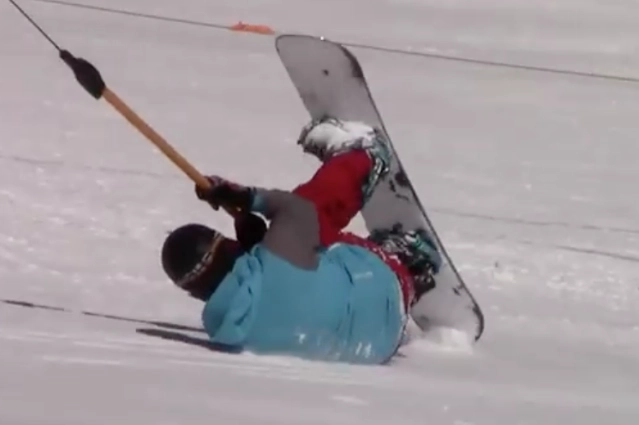
But after my own, ahem, *spectacular* debut with a T-bar a few seasons back (involving an unintended detour into the safety netting), I stopped laughing. I started wondering: why is this seemingly simple piece of equipment such a universal source of struggle? Is it really that hard, or are we missing some key information? Turns out, it's a bit of both. A T bar ski lift fail is rarely just bad luck; it's usually a perfect storm of minor mistakes, lack of knowledge, and sometimes, frankly, poor design for absolute beginners.
This isn't just another list of tips. We're going deep. We'll dissect why these fails happen, arm you with a foolproof method to ride a T-bar lift with confidence, and talk about the real safety stuff that most blogs gloss over. Whether you're a first-timer dreading your first encounter or an intermediate who still finds them awkward, this guide is for you.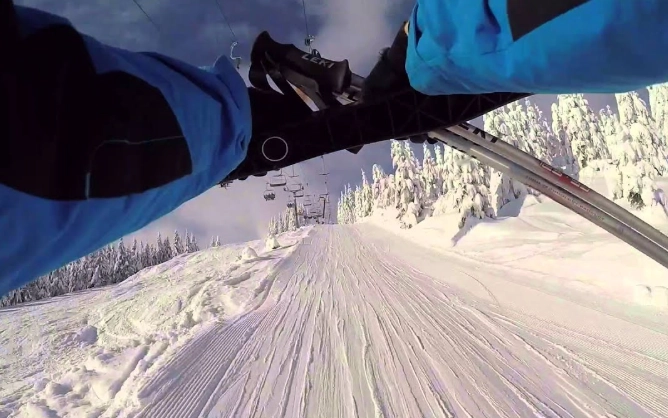
What Even Is a T-Bar Lift, and Why Is It So Tricky?
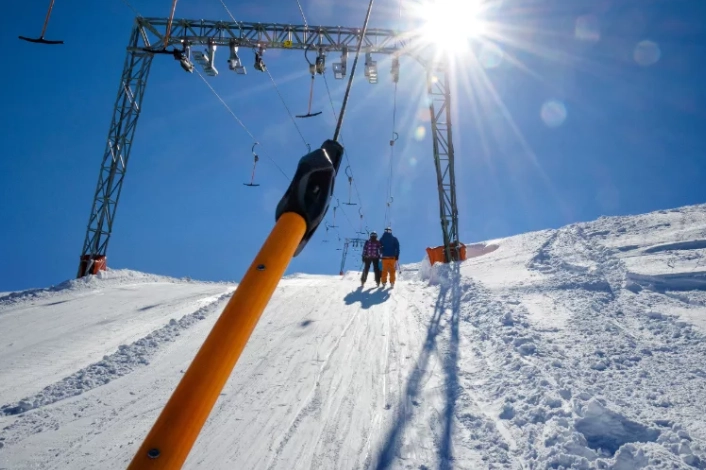
Before we diagnose the fail, let's understand the machine. A T-bar lift, also called a drag lift or poma lift (though a Poma is technically a specific brand and often a single-person platter lift), is a surface lift. Unlike a chairlift that carries you in the air, it drags you up the slope while you remain standing on your skis or board.
The "T" is descriptive. It's a metal bar attached to a moving cable overhead. At the end of the vertical part of the T is a horizontal bar, sometimes padded, sometimes not. You place this horizontal bar behind your rear, and it pushes you up the hill. It's common on beginner slopes, nursery areas, and connecting trails where installing a chairlift isn't practical.
So why the high T bar ski lift fail rate? It boils down to physics and a lack of intuitive support.
You're on a slippery surface, being pushed from behind, while trying to maintain a straight track. Any slight twist, lean, or panic-induced move can throw the whole system off. It feels unnatural because it is. We're not built to be pushed up hills on sticks.
Anatomy of a Fail: The Top Reasons T-Bar Rides Go Wrong
Watching a dozen T bar lift fail compilations (for research, I swear!), a clear pattern emerges. It's rarely one big mistake. It's a cascade of small ones.
Fundamental Technique Errors
This is the big one. Most people just wing it.
- The Death Grip Panic: Grabbing the vertical part of the T-bar for dear life. This instantly pulls you forward, off-balance, and contorts your body. The bar is for your rear, not your hands.
- The Leaning Tower of Pisa: Leaning back into the bar like it's a recliner. This makes your skis or board skid out in front of you. You need to stand upright, letting the bar push against you.
- Looking Down at Your Feet: Your body follows your eyes. Look down, and you'll go down. Focus on the horizon or the back of the person in front of you.
- Not Keeping Skis/Board Straight: A slight pizza wedge (snowplow) or an angled snowboard will cause you to veer off the packed track into the soft snow, leading to an instant tip-over.
Psychological Factors (The Mind Game)
Fear is a powerful destabilizer. The anxiety of a potential T bar ski lift fail creates tension. Tense muscles don't react smoothly. You get stiff, which makes absorbing bumps and maintaining balance harder. The lift line peer pressure doesn't help either.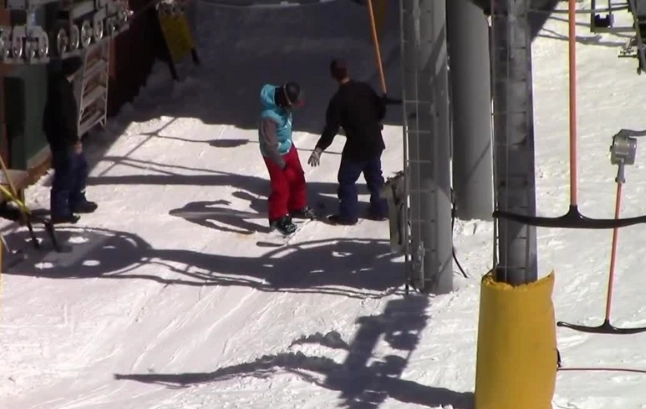
Equipment and Preparation Slip-Ups
Little things matter.
- Loose Boots or Bindings: If your gear isn't snug, you lose precise control.
- Icy or Poorly Groomed Track: Some resorts don't maintain the T-bar track as well as the main runs. Icy ruts are a nightmare.
- Carrying Poles Incorrectly: For skiers, tuck both pole grips under one arm, outside the T-bar. Don't try to hold them normally.
Your Step-by-Step Guide to a Flawless T-Bar Ride
Enough theory. Let's get practical. Follow this sequence like a checklist, and you'll drastically reduce your chances of starring in the next fail reel.
Phase 1: The Approach and Load
This sets the tone for everything. Be ready.
- Queue Observation: Watch a few people ahead of you. See where they stand, how the attendant hands them the bar, and the rhythm.
- Prepare Your Gear: Skier? Poles in one hand. Snowboarder? Make sure your stance is solid. Ensure no loose clothing is dangling.
- The Pick-Up Point: Move confidently to the load spot. Don't stop suddenly. Look at the attendant, signal if you're alone or with a partner.
- Receiving the Bar: As the attendant guides the T-bar to you, DON'T grab it. Let it come to you. Position the horizontal bar snugly behind your rear, across both buttocks. If riding double, coordinate who gets the left/right side.
It happens.
The moment of truth. The bar engages and you feel the pull.
Phase 2: The Ride Up
- The Stance: Stand up straight. Feet shoulder-width apart, knees slightly bent for suspension. Weight evenly distributed. Imagine a straight line from your head, through your spine, to your skis/board.
- Let It Push You: This is the mental shift. Don't walk, don't sit, don't resist. Let the moving cable do the work. Your job is to remain a stable, upright pillar.
- Eyes Up: Pick a fixed point ahead—a tree, a lift tower, the top station. Your body will naturally align toward where you're looking.
- Absorb the Bumps: The track won't be glass-smooth. Use your knees and ankles as shock absorbers. A slight dip and rise, like you're riding a gentle wave.
- Stay in the Track: Keep your skis or board in the worn, packed-down line in the snow. Straying to the soft sides is the fastest route to a T bar ski lift fail.
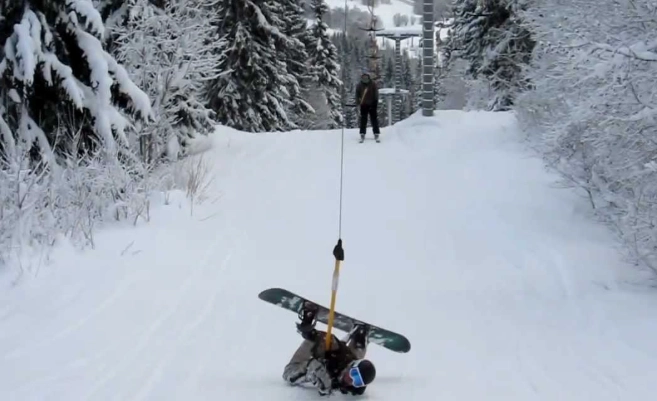
Phase 3: The Unload (Don't Blow It at the Finish!)
So many fails happen in the last 10 feet. Stay focused.
- Spot the Unload Zone: As you near the top, you'll see the track widen and flatten. This is your cue.
- Prepare, Don't Prematurely Bail: Don't start stepping away while the bar is still pushing. Wait.
- The Release: As you glide into the flat unloading area, the bar will naturally lose pressure. Simply step forward and away from the track, letting the bar swing back gently. The attendant at the top will guide it away.
- Clear the Area Quickly: Move out of the unloading zone immediately so the next person behind you doesn't pile into you. Ski or ride a few feet away before adjusting clothing or taking in the view.
So, You're Falling... Now What? The Safety Protocol
Even pros can have an off day. If you feel a T bar ski lift fail becoming inevitable, don't fight it heroically. A controlled bail is safer than a chaotic tumble.
- Let Go Early: The millisecond you know you're losing it, just release the bar. Don't hold on hoping to recover. Let it go.
- Fall to the Side: Aim to fall away from the track, into the softer snow on the side. Tuck and roll if you can.
- GET OUT OF THE TRACK: This is critical. Once you're down, scramble or crawl out of the packed path immediately. The next person on the lift is coming right behind you and won't be able to stop.
- Signal the Operator: If you can't get up quickly, or if your equipment is scattered on the track, wave your arms to signal the lift operator at the bottom or top. They will stop the lift. The National Ski Areas Association (NSAA) emphasizes that lift operators are trained for these scenarios, so don't hesitate to signal for help. You can learn more about general on-slope safety from resources like the NSAA's safety programs.
- Retrieve Your Gear Safely: Once the lift is stopped, collect your skis or board and move completely off to the side before the lift restarts.
Honestly, falling isn't the end of the world. Everyone does it. The key is doing it safely and not creating a hazard for others. The lifties have seen it all a thousand times before.
My Personal Hard-Earned Lessons (The Unfiltered Version)
After my inaugural netting incident, I made it my mission to conquer the T-bar. Here's what no one told me that made all the difference.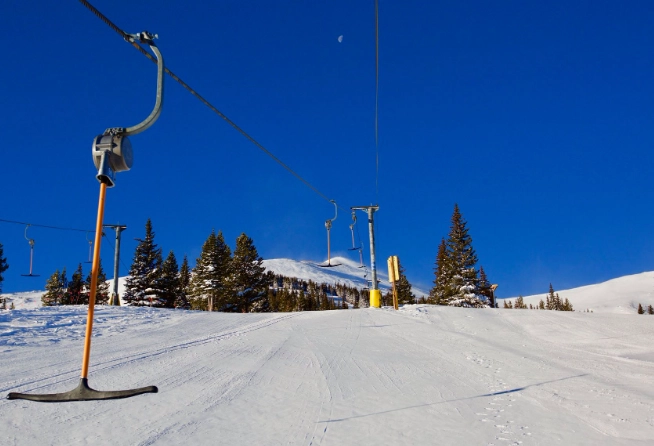
Relaxation is a Skill. My biggest breakthrough came when I stopped treating it as a test and started treating it like a break. I'd take a deep breath in the line, shake out my arms, and tell myself to just stand there. The tension in my shoulders was causing 50% of my wobble.
It's Okay to Go Solo. Riding double looks fun, but it doubles the coordination challenge. If you're nervous, take a single bar. No shame. A smooth solo ride is better than a chaotic double T bar ski lift fail.
The Chairlift Isn't Inherently Superior. I used to see T-bars as a punishment for not being on a chair. Now, I appreciate them. They're often on shorter, steeper pitches that would be annoying on a slow chair. They keep you warm because you're moving. And on a windy day, a low-to-the-ground T-bar is often still running when the big chairs are on wind hold.
Wait, Are T-Bar Lifts Actually Dangerous?
This is a common fear after seeing those fail videos. Statistically, when used correctly, they are very safe. The speeds are low, and the falls are usually just embarrassing. The real danger comes from improper use—like holding on after a fall and getting dragged, or not clearing the track after a fall. Following the safety protocols above mitigates almost all real risk. For authoritative statistics and safety standards, organizations like the U.S. Consumer Product Safety Commission (CPSC) monitor recreational equipment safety, though specific lift data is often aggregated by industry bodies.
Answering Your Burning T-Bar Questions
Let's tackle the specific things people secretly Google.
What's the hardest part for a snowboarder on a T-bar?
Maintaining a straight line while in a sideways stance. The natural tendency is for the board to want to turn downhill (toeside or heelside). You have to actively fight this by pressuring your front foot and keeping your hips square to the direction of travel. It's a core workout!
Can I practice this somewhere off the mountain?
Not really. The unique feeling of being pulled while on a slippery slope is hard to simulate. The best "practice" is on the gentlest, shortest T-bar you can find, ideally with a forgiving run-out at the top. Tell the lift operator you're learning; they're usually happy to give you a slower send-off.
How do I help my kid with their first T-bar ride?
First, make sure they are confident on their skis or board on green terrain. Ride with them as a double. Put them on the downhill side (so if they fall, they fall away from the lift cable). Have them stand in front of you, with your hands on their hips for stability. Talk them through it calmly: "Stand tall, look at that red sign, here comes a bump, bend your knees." Their first successful ride is a huge confidence booster. The Professional Ski Instructors of America & American Association of Snowboard Instructors (PSIA-AASI) have great resources on teaching children, which often include lift-loading techniques.
Why do some resorts still use these if they're so problematic?
Cost and terrain. They are significantly cheaper to install and maintain than chairlifts. They're perfect for short, steep sections where a chairlift would be overkill. They also have a lower environmental footprint and can operate in higher winds. For a specific learning area, a T-bar is an efficient tool to get beginners up a gentle slope repeatedly without the complexity of loading a chairlift.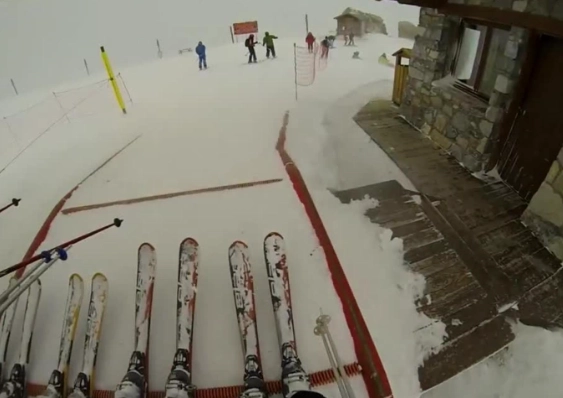
The Bottom Line: From Fail to Nail
Watching a T bar ski lift fail is funny until it's you. But it doesn't have to be you. The gap between failure and mastery is surprisingly small. It's not about athleticism; it's about understanding a simple machine and applying a few counter-intuitive techniques.
Stop seeing the T-bar as an obstacle or a joke. See it as a tool. A tool that gets you to untracked powder on a connecting trail, that lets you lap the park without long lines, that teaches you balance and patience. Master it, and a whole section of the mountain opens up to you. You'll ride past the struggle and the embarrassment, and honestly, you'll feel a little bit of pride every time you glide smoothly off at the top.
Next time you're in line, take that deep breath. Stand tall. Let it push you. You've got this.