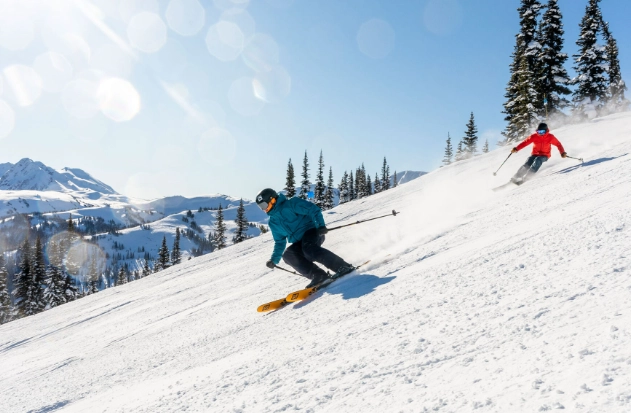
You're staring at pictures of people gliding down pristine mountains, all smiles and stylish gear. Then you look down at your own two feet and wonder: can I actually do that? Is skiing hard for beginners?
The short, honest answer is yes, it presents a real challenge. But here's the crucial part everyone misses: it's a surmountable challenge. The difficulty isn't some innate talent test. It's a series of specific, learnable skills mixed with a psychological game. I've taught skiing for a decade, and I've seen the same patterns. The ones who succeed aren't the fearless athletes; they're the ones who understand what they're getting into and have a plan.
This isn't another fluffy article telling you "anyone can do it!" We're going to dissect the real hardness, the stuff blogs gloss over—the awkward rental shop moment, the terror of your first unintentional slide, the muscle burn nobody warns you about. More importantly, we'll map out exactly how to navigate it.
Your Ski Start Roadmap
How Hard Is Skiing, Really? Breaking Down the Myth
Think of learning to ski like learning to drive a manual transmission car. The first hour is a chaotic symphony of stalling, jerking, and panic. Your brain is overloaded. But after a few focused sessions, the movements start to sync. Skiing follows the same curve.
The initial learning phase is steep. You're dealing with:
- Unfamiliar Equipment: Long planks attached to your feet that have a mind of their own.
- An Unstable Environment: A slippery, inclined surface that defies normal walking logic.
- Physical Demand: Using muscle groups (like your inner thighs and ankles) in ways your desk job never prepared them for.
Most people feel genuinely awkward and out of control for the first half-day to a full day. That's normal. It's not a sign you're bad at it. The turning point—where it stops feeling impossibly hard and starts feeling fun—usually comes on day two or three with proper instruction.
The Non-Consensus View: The biggest hidden difficulty isn't the skiing itself. It's managing your expectations and frustration. You'll see a 5-year-old whizzing past you. Your friend who "picked it up in an hour" (they're lying or had prior experience) will be waiting. Comparing your chapter 1 to someone else's chapter 20 is the fastest way to make skiing feel hard. Focus on your own micro-wins: standing up without help, making your first controlled wedge, stopping exactly where you intended.
The Three Core Challenges (And How to Beat Them)
Let's get specific. When beginners say skiing is hard, they're usually talking about one of these three things.
1. The Balance and Control Puzzle
On skis, your center of gravity needs to be forward over the balls of your feet. Every instinct tells you to lean back to "sit down" and brake. This is the worst thing you can do—it takes away steering control and makes you go faster. The mental shift to leaning forward into the hill is counterintuitive and scary.
How to beat it: Practice on flat ground first. Just stand in your skis, bend your ankles and knees (like you're hovering over a public toilet seat), and feel your shins pressing into the front of your boots. This "athletic stance" is your home base.
2. The "Turning is Braking" Revelation
New skiers often think the way to stop is to point their skis across the hill and hope friction works. That's a slide, not a stop. Real control comes from using the edges of your skis. A proper turn, where you roll your ankles and knees to engage the ski's sidecut, is what slows you down and changes direction. This edge control feels utterly foreign at first.
How to beat it: Don't try to make perfect turns right away. Start with a "wedge" or "pizza slice." Gently push your heels out and ski tips together. This uses the inside edges of both skis to create a natural brake. It's your training-wheel turn. Master slowing and stopping in a wedge before you worry about parallel turns.
3. The Fear Factor
This is the silent multiplier. Fear tenses your muscles, locks your joints, and shuts down the learning part of your brain. The fear of speed, of falling, of looking foolish, of getting hurt—it's all valid.
How to beat it: First, get the right lesson. A good instructor controls the terrain so you're never on a slope that triggers panic. Second, learn how to fall safely (to the side, like a tree falling) and how to get up (it's a specific technique). Knowing you have an "exit strategy" reduces anxiety massively.
Your First Days: A Realistic, Step-by-Step Plan
Here’s what a successful first two days should look like. This is the plan I use with nervous adults.
| Phase | Focus & Goals | Terrain & Drills | Mindset Tip |
|---|---|---|---|
| Day 1 Morning | Making friends with the equipment. Learning to stand, walk, slide, and stop in a wedge. | Flat or very gentle "bunny hill." Practice side-stepping up, gliding straight down, and making a wedge to stop. | Your only job is to not panic. Speed is your enemy today. Slow is pro. |
| Day 1 Afternoon | Linking wedge turns to control speed and direction down a gentle slope. | Still on the bunny hill or a beginner green circle run. Practice turning left, then right, then linking them into an S-shape. | Celebrate every turn you initiate, even if it's ugly. You're telling the skis what to do now. |
| Day 2 Morning | Reinforcing wedge turns with more rhythm and less hesitation. Learning to use the "magic carpet" or chairlift. | Graduate to a longer, but still very easy, green run. Focus on consistent turn shape. | Muscle soreness is normal. It means you're using new muscles. Hydrate and stretch. |
| Day 2 Afternoon | Building confidence and mileage. Starting to feel the edges engage and the flow of linked turns. | Exploring another easy green run. The goal is to reduce the wedge size gradually. | This is where the fun flickers start. You're spending less time thinking and more time doing. |
If you try to skip to Day 2 terrain on Day 1 morning, you'll have a bad time. Progress is incremental.
Gear: The Silent Saboteur (How to Get It Right)
Bad gear makes skiing feel impossibly hard. Good gear makes it feel achievable. This is the most common mistake I see.
The #1 Beginner Mistake: Renting the wrong size ski boot. Boots that are too big will destroy your control. Your heel must be locked in place. When you lean forward, your shin should press firmly against the front of the boot liner. If you can lift your heel inside the boot, it's too big. Size down. It should feel snug, almost tight, when you try it on in the shop. It will pack out a little.
Rental Ski Selection: For your first time, ask for a "beginner" or "easy-turn" ski. These are shorter, softer, and have more sidecut, which means they want to turn with minimal effort. Don't let them put you on an advanced ski because of your height/weight—it will be harder to maneuver.
Essential Non-Negotiable Items:
- Helmet: Rent or buy. This is non-negotiable for safety and for confidence.
- Goggles: Not sunglasses. Goggles protect from wind, snow, and UV glare, which is intense at altitude. You can't learn if you're squinting.
- Proper Socks: One pair of thin, tall ski socks (merino wool or synthetic). No cotton socks, no double-socking. This prevents blisters and improves boot fit.
Choosing Your First Mountain and Lesson
Not all ski resorts are created equal for beginners. A massive, expert-focused mountain can be intimidating and logistically harder. Look for resorts known for their beginner facilities.
Here are two North American examples that excel with first-timers:
Breckenridge, Colorado: Has a dedicated, free beginner slope at the base (the Trygve's Platter area). The ski school is massive and well-organized. The real win is the "BreckConnect" gondola—it takes you from town to the beginner slopes without navigating a complex base area. A 3-day beginner lesson package here can cost around $600-$800, including lift access to beginner terrain, rentals, and instruction.
Whistler Blackcomb, British Columbia: Their "Never Ever" Day 1 lesson is legendary. It includes a magic carpet lift ticket, rentals, and a full-day lesson. They have fantastic, wide, gently sloping beginner zones separate from the main chaos. It's a premium experience, so expect to pay a premium price (around $200 CAD for the first-day package).
The point is to research. Look for phrases like "fantastic beginner terrain," "dedicated learning area," and "great ski school." Read reviews from other beginners. A good resort for you will have a logical, stress-free pathway from the rental shop to the beginner lift.
Your Top Beginner Questions, Answered Without Fluff
Absolutely. Skiing is more about technique and nerve than brute strength. General cardio fitness helps with endurance, but the specific muscles you need (quads, glutes, core) are developed by... skiing. Start with a few weeks of basic squats and lunges if you want a head start, but don't let fitness be a barrier. The first day is more mentally taxing than physically exhausting for most people.
This is the golden question. Most adults need 3 full days of instruction to reach a basic level of competency where they can confidently ride easy green runs, use the chairlift, and control their speed with linked turns. After day 3, you're not "good," but you're past the "survival" phase and into the "development" phase. Spacing those days out over a week (with rest days in between) is ideal for muscle recovery and mental processing.
The classic debate. Here's the real breakdown most instructors agree on: Skiing has a easier entry but a harder mastery curve. Snowboarding has a harder entry but an easier progression curve. On day one, skiing is easier because you face forward and your legs are independent (like walking). Stopping and controlling speed is more intuitive initially. Snowboarding requires learning to balance on one edge while sideways, which leads to a lot of falls on the first day. However, once a snowboarder gets past that initial balance hurdle, progressing to linked turns often happens faster than for skiers trying to move from a wedge to parallel turns.
A valid fear. Chairlifts are safe, but loading and unloading requires a bit of coordination. Tell your instructor you're nervous. They'll take you to a practice loading zone (often a slowed-down or ground-level lift) and drill the procedure: look back, sit down as it scoops you, pull the bar down. Unloading is just standing up and skiing straight off a gentle ramp. The key is to not hesitate. Commit to the sit or the stand. Most lift mishaps happen from half-committing. After three times, it's routine.
I've taught first-timers in their 60s and 70s. Age is less important than mindset and joint health. The considerations are different: you might need more time to warm up, you'll definitely benefit from more rest days, and choosing a resort with excellent, patient instruction is paramount. The progression might be slower, but the sense of accomplishment is immense. If you have specific knee or hip issues, consult a doctor first, but modern skis and good technique are far less punishing on joints than the skis of 30 years ago.
So, is skiing hard for beginners? The honest answer remains: the initial phase is challenging. It asks you to move in unnatural ways and manage fear. But "hard" doesn't mean "impossible." It means there's a sequence to follow. Get the right gear, take a quality lesson at a beginner-friendly resort, manage your expectations, and focus on incremental progress. Your goal for day one isn't to look cool. It's to survive with a smile and come back for day two. By day three, you'll likely be hooked, wondering why you waited so long to tackle something that seemed so hard.