Let's cut to the chase. Your ski binding's DIN setting isn't just a random number you set and forget. It's the most critical safety adjustment on your entire setup. Get it wrong, and you're looking at either a binding that won't release when you need it to (hello, knee ligaments) or one that pops off every time you hit a bump (goodbye, confidence and ski). I've seen both in my years tuning skis and fitting boots, and the culprit is almost always a misunderstood or guessed DIN.
This guide is for the skier who wants to move beyond blind trust in the shop tech. We'll break down what DIN actually means, walk you through the official calculation chart step-by-step, and point out the subtle mistakes even experienced skiers make. By the end, you'll be equipped with the knowledge to have an informed conversation with your technician and understand the "why" behind your safety.
What's Inside This Guide
What Exactly is a DIN Setting?
DIN stands for Deutsches Institut für Normung (German Institute for Standardization). In simple terms, it's a standardized scale that tells your ski binding how much twisting or upward force it should withstand before it releases to protect your leg. A lower number (like 4) means it will release more easily. A higher number (like 10) means it will hold on tighter, requiring more force to release.
Think of it as the tension setting on a spring-loaded trapdoor. The DIN dial on your binding's toe and heel pieces adjusts that spring tension.
The goal is a perfect balance: a setting high enough to keep you securely attached during aggressive turns and landings, but low enough to release cleanly during a fall that could otherwise injure you. This balance is highly personal.
How to Determine Your Correct DIN Value
You don't guess. You don't copy your friend's setting. You use the standardized DIN/ISO chart, which is what every certified ski tech uses as a starting point. The chart is a multi-variable lookup table. Here are the inputs you need:
1. Your Skier Type (This is Where Honesty Matters)
This is the most subjective but crucial part. Be brutally honest with yourself.
- Type I (Cautious): You prefer slower speeds, gentle turns, and groomed runs. You rarely fall, but when you do, you want the binding to release easily. You prioritize safety over performance.
- Type II (Moderate/Average): You ski at moderate speeds on varied terrain. You make turns of all shapes and sizes. You sometimes ski aggressively but not all the time. You want a balance of safety and performance. Most recreational skiers fall here.
- Type III (Aggressive/Expert): You ski fast, make aggressive short-radius or high-energy turns, and seek out challenging terrain like steep moguls, deep powder, or off-piste. You accept a higher risk of injury for higher performance retention. You rarely fall, but when you do, it's high-energy.
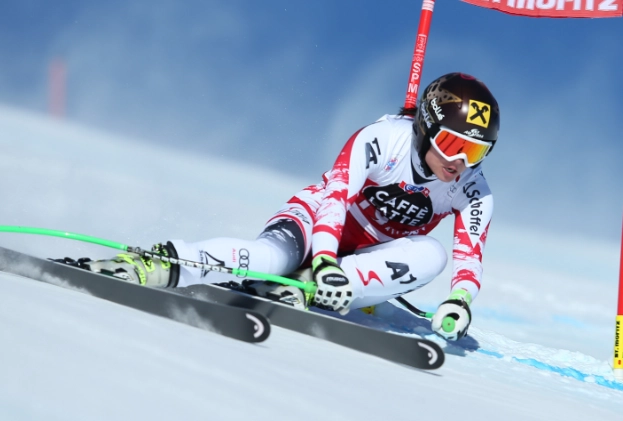
- Type III+ (Expert/Competitor): Reserved for racers, extreme skiers, and professionals who demand absolute retention and accept the associated risk. Not for recreational use.
I've lost count of the intermediate skiers who claim they're "Type III" because they ski a black diamond once a year. Overstating your type is a fast track to a DIN that's too high for your actual skill and risk profile.
2. Your Boot Sole Length (BSL)
This is NOT your shoe size. It's the length of your ski boot's sole in millimeters. You'll find it stamped on the side or heel of the boot, often near the size (e.g., "BSL 305"). It's a critical number because a longer lever (boot) creates more twisting force on your leg. Two skiers with the same weight but different BSLs will have different DIN settings.
3. Your Height and Weight
Use your current, fully clothed ski-day weight. The chart uses these to calculate your mass index. Height becomes a more significant factor for lighter or younger skiers.
4. Your Age
The chart has an age adjustment. For skiers 50 and older (some charts use 55), it typically recommends a lower DIN setting. This isn't an insult; it's biomechanics. Bones and ligaments become more susceptible to injury with age, so the safety margin is increased.
Here’s a simplified look at how these factors pull the final DIN number in different directions:
| Factor | Effect on DIN Setting | Why It Matters |
|---|---|---|
| Higher Skier Type (III vs. II) | Increases DIN | Aggressive skiing generates higher forces; binding must hold on longer. |
| Increased Weight | Increases DIN | More mass creates more kinetic energy that must be overcome for release. |
| Longer Boot Sole Length (BSL) | Increases DIN | Creates a longer lever arm, increasing twist on the leg. |
| Age 50+ | Decreases DIN | Prioritizes injury prevention due to changes in bone/ligament resilience. |
Where to find the official chart? Binding manufacturers like Marker, Salomon, and Tyrolia publish them. For a reliable digital tool that follows the ISO standard, you can refer to resources from professional ski organizations, but remember the caveat in our FAQ below.
Common DIN Setting Mistakes You're Probably Making
This is where that "10 years of experience" insight comes in. The chart gives you a number, but context matters.
Mistake #1: Ignoring the "Feel" After the Fact. The chart is the start. After a tech sets your bindings, they should perform a release check with a calibrated tool. But you also need to ski on them. Does the binding feel like it's releasing in situations where it shouldn't (e.g., skiing out of a turn on hard snow)? Or does it feel welded to your foot during a predictable fall? Report this feedback to your tech. A good one might adjust within a half-point of the chart value based on your feedback.
Mistake #2: Not Re-Checking When Your Gear Changes. Got new boots? Your BSL likely changed. Even a 5mm difference matters. Lost 20 pounds over the summer? Your DIN is now too high. These scenarios require a re-calculation.
Mistake #3: The "Powder Day" Crank-Up. Some skiers think they need to crank up their DIN for deep powder to prevent premature release. This is generally a myth. In deep snow, the primary release mode (twisting) is less likely to occur because the snow is soft and forgiving. The binding's anti-friction device (AFD) and forward pressure are more relevant for keeping you in. Cranking up DIN for powder just increases your injury risk without a real benefit.
Beyond the Chart: When to Tweak Your DIN
The chart isn't gospel; it's a scientifically-derived starting point. Here are real-world scenarios where a slight deviation might be discussed with your tech:
- You have a history of knee injuries. You might opt for a setting on the lower end of your calculated range for an extra safety buffer, even if it means an occasional premature release in extreme conditions.
- You're transitioning between skier types. A strong Type II moving into Type III territory might start at the high end of Type II before jumping to the low end of Type III the following season.
- Binding Age and Model. Older bindings or certain consumer vs. race models may have different performance curves. A tech with experience on your specific model might make a minor adjustment based on known characteristics.
Ultimately, your certified ski technician is your partner in this. Walk in with your stats (weight, height, age, BSL, honest skier type) and use the process outlined here. A good shop will show you the chart, explain their process, and welcome the dialogue. If a shop just sets it without asking you any questions, consider that a red flag.