In This Guide
- So, How Does a Portable Rope Tow Actually Work?
- Choosing Your Portable Rope Tow: A Real-World Buyer's Guide
- Setting Up Your Portable Rope Tow: A Step-by-Step Walkthrough
- Safety: The Boring Part You Cannot Skip
- Beyond Skiing: Other Uses for Your Portable Tow System
- Frequently Asked Questions (The Stuff You're Actually Wondering)
- Wrapping It Up: Is a Portable Rope Tow Right for You?
Let's be honest. Lift tickets are getting ridiculous. The lines, the cost, the whole crowded resort vibe... it's enough to make you want to just stay home. But what if you could have your own little slice of ski heaven, right in your backyard or a quiet spot in the woods? That's where the idea of a portable rope tow comes in. It's not some sci-fi fantasy; it's a real, surprisingly simple piece of gear that's been giving savvy skiers and snowboarders endless runs for decades.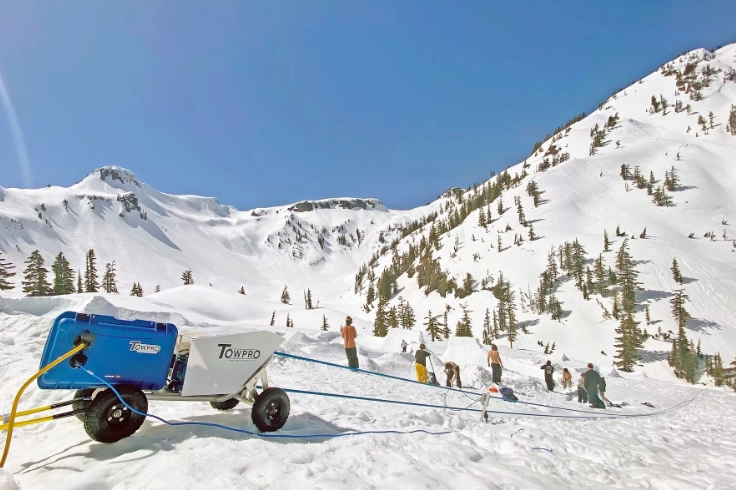
I remember the first time I saw one in action. A buddy had rigged a basic portable rope tow system on a hill behind his farm. It was just a motor, some rope, and a few pulleys, but it worked. We spent the whole afternoon lapping that slope, no lift line in sight. It wasn't steep or long, but the freedom was incredible. That experience got me hooked.
This guide isn't just a product list. We're going to get into the weeds. How do you even choose one? What kind of hill do you need? Is it safe? How much of a DIY project is it, really? I've made the mistakes so you don't have to. We'll cover everything from the basic mechanics to the nitty-gritty of setup and the crucial safety stuff nobody wants to talk about until it's too late.
So, How Does a Portable Rope Tow Actually Work?
It's simpler than you think. You don't need an engineering degree. The magic lies in the setup, not the complexity of the machine itself.
The Basic Components (The Guts of the Thing)
Every system needs these parts. Some kits come with everything, others require you to source bits and pieces.
- The Power Source: This is usually a gasoline engine (like a robust snowblower or go-kart engine) or a powerful electric motor. Gas gives you more power and runtime for bigger hills, but it's louder and needs fuel. Electric is quieter and cleaner but needs a serious battery or a very long extension cord. I lean towards gas for reliability in the cold, but that's just me.
- The Drive Mechanism: This takes the spinning power from the motor and makes the rope move. It's often a drive wheel or a capstan (a vertical post the rope wraps around). The grip here is critical—if the rope slips, you're going nowhere.
- The Rope: Not just any old rope. We're talking thick, durable, low-stretch synthetic rope (like polypropylene or polyester) designed to handle constant friction, cold, and wet conditions. A fraying rope is a failing point.
- The Anchor & Return System: You need something solid at the top of the hill to anchor the whole thing—a massive tree, a buried deadman anchor, or a purpose-built post. Then, you need pulleys or sheaves to guide the rope back down to the bottom, creating a continuous loop. Proper alignment here makes or breaks the smoothness of the ride.
You start the motor, it turns the drive wheel, which pulls the rope in a continuous loop from the bottom anchor, up to the top, and back down. You stand at the bottom, grab the rope as it goes by, and let it pull you up. To stop, you just let go. Elegantly simple.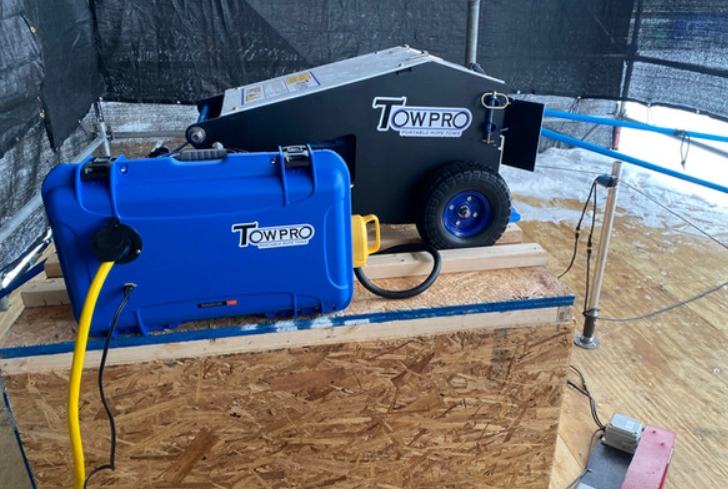
Choosing Your Portable Rope Tow: A Real-World Buyer's Guide
This is where most people get overwhelmed. Do you buy a complete kit or build your own? What specs actually matter? Let's cut through the marketing.
Key Factors That Actually Make a Difference
- Hill Grade & Length (The Big One): This dictates everything. Most consumer portable rope tow systems are designed for beginner to intermediate slopes. We're talking a 15% to 30% grade (or about 100-300 feet of vertical rise). If your dream hill is a 45-degree monster, you're looking at industrial-grade equipment, not a backyard kit. Honestly measure your slope first.
- Motor Power: More hill = more power needed. Look for horsepower (HP) or torque ratings. A 6-13 HP gas engine is common for mid-range systems. For electric, look at continuous wattage, not peak. A weak motor will stall or overheat.
- Rope Speed: Typically between 5 and 12 feet per second. Slower is better for beginners and kids; faster gets you up the hill quicker. Some systems have variable speed controls, which is a killer feature worth paying for.
- Portability & Setup Time: How easy is it to break down and move? If you're using it on public land, you need something you can set up and tear down in an hour or two. Permanent backyard installs can be more robust.
- Build Quality & Safety Features: Look for things like a guarded drive mechanism, a reliable kill switch (a "deadman's switch" you hold that stops the motor if dropped), and robust, weather-resistant components. This isn't the place for flimsy construction.
Complete Kit vs. DIY Build: The Eternal Debate
This decision comes down to your time, skill, and budget.
| Factor | Complete Kit (e.g., SnowSport, Zaugg) | DIY Build (Sourced Parts) |
|---|---|---|
| Cost | Higher upfront ($2,500 - $6,000+). You're paying for R&D and convenience. | Can be cheaper ($1,000 - $3,000), but costs can creep with mistakes. |
| Time & Skill | Lower. Comes with (mostly) clear instructions. Assembly required, but it's like advanced furniture. | High. Requires mechanical aptitude, sourcing, problem-solving. Can be a winter-long project. |
| Reliability & Safety | Generally higher. Engineered as a system, often with tested safety features. | Variable. Depends entirely on your skill. A DIY safety failure is a major risk. |
| Customization | Limited to manufacturer options. | Total freedom. You can tailor power, speed, and layout perfectly. |
| Warranty & Support | Usually included. You have a company to call. | None. You are the support department. |
For 90% of people, a good kit from a reputable manufacturer is the smarter choice. The peace of mind on safety alone is worth it. I've done both, and while the DIY was satisfying, the kit was just... easier and more reliable from day one.
Setting Up Your Portable Rope Tow: A Step-by-Step Walkthrough
Okay, you've got your gear. Now comes the real test. A good setup is safe and smooth. A bad one is frustrating and dangerous.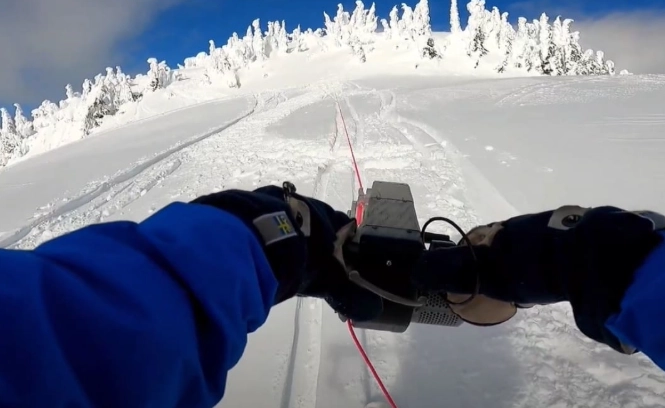
Site Selection: Not Every Hill is a Good Hill
You need more than just an incline. Look for:
- A consistent grade without sudden flat spots or extreme pitches.
- A clear, wide path for the rope and for skiers to ascend/descend safely. No hidden stumps or rocks.
- Solid anchor points at the top and bottom. A healthy, large-diameter tree is classic. For a deadman anchor, you're burying a log or concrete block deep in the ground. This anchor bears the full load—it must be immovable.
- Legal access. Seriously. Don't assume you can set up on public land or a neighbor's property. Check local ordinances and land-use rules. The last thing you want is the forest service showing up.
The Installation Process (The Condensed Version)
- Secure the Top Anchor: This is your foundation. For a tree, use wide, tree-friendly straps to avoid damage. For a deadman, dig deep below the frost line.
- Position the Motor/Drive Unit: Usually at the bottom for easier access and to keep the rope taut. Place it on a solid, level base.
- Run and Tension the Rope: Thread the rope through the system—top anchor pulley, down to drive wheel, around the return pulleys. This is a puzzle. Then, tension it. It should be firm, with just a little give. A guitar-string-tight rope is under dangerous stress; a saggy rope won't grip the drive wheel.
- Align ALL Pulleys: Every single guide pulley must be perfectly aligned so the rope runs straight through its groove. Misalignment is the #1 cause of rope derailment and wear. Spend time here.
- Test Empty, Then Test Slow: First, run the system with no one on it. Watch the rope track. Listen for odd noises. Then, do a slow, cautious test pull with an adult. Check everything again.
It sounds like a lot, but once you've done it, setup gets much faster. My first time took a whole day. Now, with my usual crew, we can have our go-to portable rope tow running in under two hours.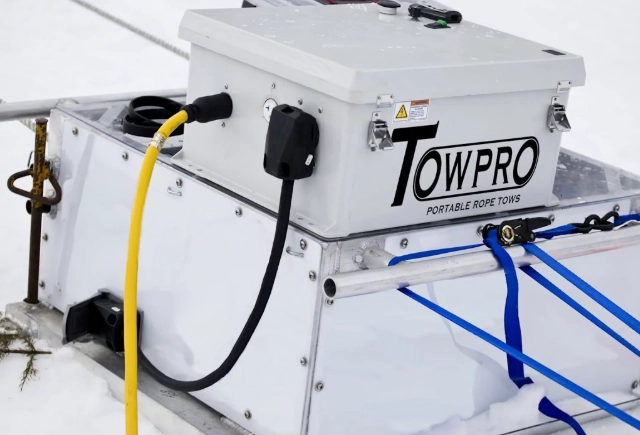
Safety: The Boring Part You Cannot Skip
This is where I get serious. A rope tow is a powerful machine with a fast-moving rope. Complacency leads to accidents.
Common Hazards & How to Mitigate Them
- Rope Burns & Entanglement: The moving rope can burn gloves or skin instantly. Never, ever wrap the rope around your hand or body. Always wear sturdy gloves. Keep loose clothing, scarves, and long hair secured.
- Falling & Collisions: Riders can fall. The person behind them might not stop in time. Enforce spacing (at least 50-100 feet between riders). Have a clear "fallen skier" signal.
- Mechanical Failure: Ropes can snap. Pulleys can fail. This is why you and all riders must wear a helmet. It's also why you inspect the entire system before each use. Look for frayed rope, cracked pulleys, loose bolts.
- Motor/Drive Area Hazards: The drive mechanism should be guarded to prevent contact with clothing or limbs. Keep the area clear of spectators, especially kids and pets.
Think of it like operating a boat or a chainsaw.
Respect the machine, and it's a blast. Ignore the rules, and you're asking for trouble. I've seen a snapped rope whip back—it's terrifying. Regular maintenance (checking bolts, lubricating bearings, inspecting the rope) isn't optional. It's part of the deal.
Beyond Skiing: Other Uses for Your Portable Tow System
Here's a fun bonus. That portable rope tow rig isn't a one-trick pony. With a little creativity, it has off-season value too.
In the summer, you can use it for hauling. We've used ours (with a different sled attachment) to drag building materials up a steep part of my property where a vehicle couldn't go. It's basically a poor man's winch.
Some people adapt them for summer tubing on grassy hills (though you need a very smooth, grassy slope and a different sled). I've even seen a guy use the motor and frame as the base for a log splitter. The point is, it's a versatile power unit you own.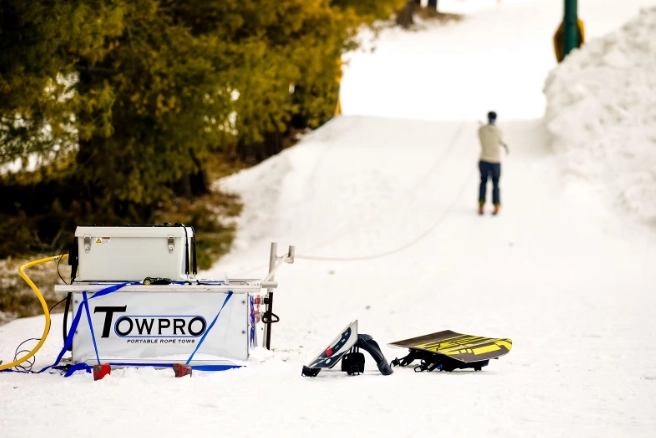
Frequently Asked Questions (The Stuff You're Actually Wondering)
Just one per rope. It's a tow, not a chairlift. You can have multiple people taking turns, but only one person should be on the rope and ascending at a time for safety. The next person waits until the first is clear at the top.
Yes, absolutely, but with strict supervision and proper training. Start them on the slowest speed setting. Make sure they are strong enough to hold on and understand how to let go safely. A child-specific harness that clips to the rope (available with some kits) can be a great safety aid for little ones, preventing them from losing grip unexpectedly.
It's seasonal engine maintenance, mostly. For gas engines: end-of-season fuel stabilization or draining, oil changes, spark plug checks. For the mechanical parts: check all bolts for tightness, lubricate pulley bearings, and meticulously inspect the entire length of the rope for wear, cuts, or UV damage before storing it out of the sun. It's less work than maintaining a snowmobile.
That's a math and lifestyle question. If your family of four skis 10 days a year at a resort, lift tickets alone could be $4,000+ in a single season. A portable rope tow system, while a big upfront cost, pays for itself in a few seasons if you use it regularly. The real value isn't just money, though. It's the convenience, the private practice time, the backyard fun, and the unique backcountry access it provides. For the right person, it's absolutely worth it.
This is critical. Your own private land is the simplest answer. For public land (like National Forests or BLM land), you must check with the local managing agency. Some areas permit them, others strictly forbid any mechanized transport. Rules vary wildly. For shared or leased land (like a hunting lease), get explicit written permission. Never assume.
Honestly, the red tape can be the biggest hurdle. Do your homework first.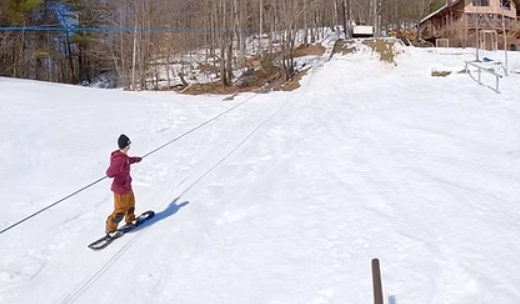
Wrapping It Up: Is a Portable Rope Tow Right for You?
Look, a portable rope tow isn't for everyone. It's a project. It requires space, some sweat equity, and a commitment to safety. It won't replace a resort's vertical or variety.
But.
If you crave more time on snow on your own terms, if you want to create a magical winter playground for your family, or if you're a backcountry enthusiast looking to maximize laps on a specific slope, then it's a game-changer. It turns a small hill into a personal ski area. The sound of the motor, the feel of the rope in your gloves, the satisfaction of building the line yourself—it adds a whole new dimension to the sport.
Start by honestly assessing your hill and your budget. Research the reputable kit manufacturers. Talk to people in the forums. Maybe even try to find someone in your area who has one and can give you a demo.
Hope this deep dive helps you make a smart decision. Stay safe, and I'll see you on the hill—whichever hill you choose.