Quick Guide
- Before You Even Try: The Right Foundation
- Breaking Down the Turn: A Step-by-Step Feel
- Your Personal Toolkit: Drills That Actually Work
- The Hall of Shame: Common Mistakes (And How to Fix Them)
- Gear Talk: Does Your Equipment Help or Hurt?
- Putting It All Together: A 3-Day Practice Plan
- Answering Your Burning Questions (FAQs)
- Final Thoughts: The Mindset for Success
Let's be real. You've graduated from the pizza wedge. You can get down a blue run, but it feels more like survival than skiing. Your turns are okay, but they're not... smooth. They're not linked. And you're definitely not carving. You see those skiers gliding down the hill, their skis turning together in perfect unison, and you think, "I want that." That's the parallel turn.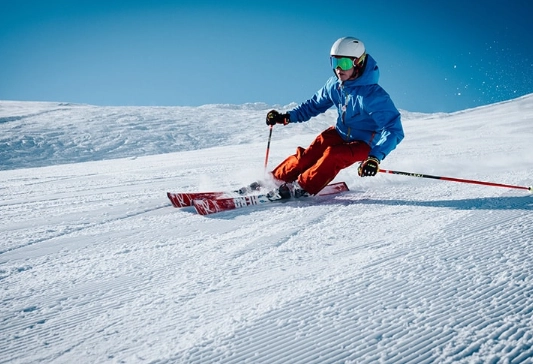
Learning parallel turns for beginners is the single biggest leap in becoming a real skier. It's the gate from intermediate to advanced. It's where the sport starts to feel effortless and, honestly, a lot more fun. But the gap between knowing you should learn them and actually doing them can feel huge. The instructions online are often confusing—"just roll your ankles," "pressure the outside ski"—what does that even mean on a slippery mountain?
I've taught this for years. I've seen the lightbulb moments, and I've seen the frustration. This guide is my attempt to bridge that gap. We're going to break it down, not with jargon, but with images you can feel in your body. We'll talk about the mindset, the muscle movements, the common face-plants (we've all been there), and a practice plan that actually works.
The Core Idea: A parallel turn isn't magic. It's simply turning both skis at the same time, keeping them roughly shoulder-width apart, using your edges to guide you instead of forcing your skis to scrape sideways. The goal is control and flow, not just getting down the hill.
Before You Even Try: The Right Foundation
You can't build a house on sand, and you can't learn parallel turns on a shaky foundation. Most people try to jump straight into the fancy footwork without checking their basics. Big mistake. It just ingrains bad habits.
First, your stance. Stand in your boots right now. Feel that? You should be balanced over the balls of your feet, not your heels, and definitely not leaning back. Your knees should be softly bent, your shins pressing gently into the front of your boots. Your hands should be in front of you, visible in your peripheral vision, like you're holding a steering wheel. This athletic, forward stance is non-negotiable. If you're in the backseat (leaning back), you have zero control to start any turn, let alone a parallel one.
Second, can you sideslip? This is the most underrated skill. Find a gentle slope. Point your skis across the hill (traversing). Now, gently flatten your skis (release the edges) and let them slide sideways down the slope a bit, then re-grip by rolling your knees slightly into the hill. This simple move teaches you edge control—the on/off switch for your skis. Mastering sideslipping gives you the confidence to release your edges to *start* a turn.
And speed. You need a bit of it. Trying to learn parallel turns for beginners on a flat cat-track is hopeless. You need momentum for the physics to work. A consistent, gentle blue run is your best friend.
Breaking Down the Turn: A Step-by-Step Feel
Forget left foot, right foot for a minute. Think of your body as one unit. A parallel turn happens in phases. I like to call them: Prepare, Release, Engage, Ride.
Phase 1: Prepare (The Set-Up)
You're cruising across the hill. To turn left, you need to first get ready to turn left. This means subtly shifting more weight to your right (downhill) ski. Not a huge lunge, just a gentle settling. Your body should be facing slightly down the hill, anticipating the new direction. This preparation stacks your body over the outside ski (which will be the right ski for a left turn) before the turn even begins.
Why? This outside ski is your turning powerhouse. Loading it with pressure early is like winding up a spring.
Phase 2: Release (The Letting Go)
This is the moment. To change direction, you must first let go of the old one. You're gripping the snow with your edges to go across the hill. To start turning, you release that grip. How? By flattening both skis simultaneously. Imagine you're standing on two big butter knives. To let them pivot, you make them flat.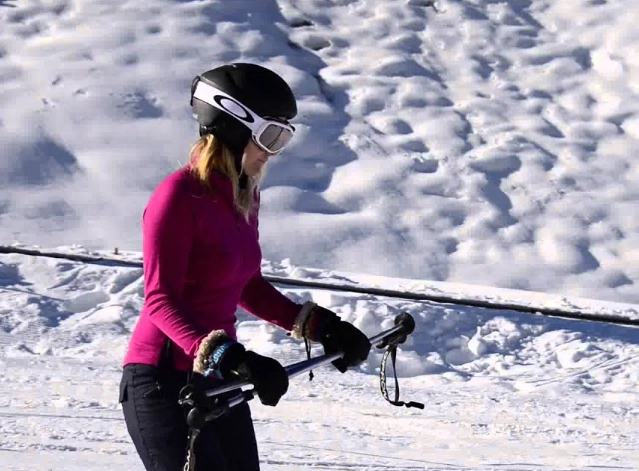
The movement comes from your ankles and knees. Roll your knees slightly uphill (if you're on the right edge, roll them left to flatten). This isn't a big jump or un-weighting—that's an old-school myth. It's a subtle, smooth release of the edge angle. The moment your skis go flat, they will naturally start to point downhill. Let them. This is often called the "fall line" moment.
Phase 3: Engage (The Commitment)
Your skis are pointing downhill, starting the turn. Now, you actively engage the new edges. For our left turn, you now roll your knees to the right. This presses the left (new outside) ski's little-toe edge and the right (new inside) ski's big-toe edge into the snow.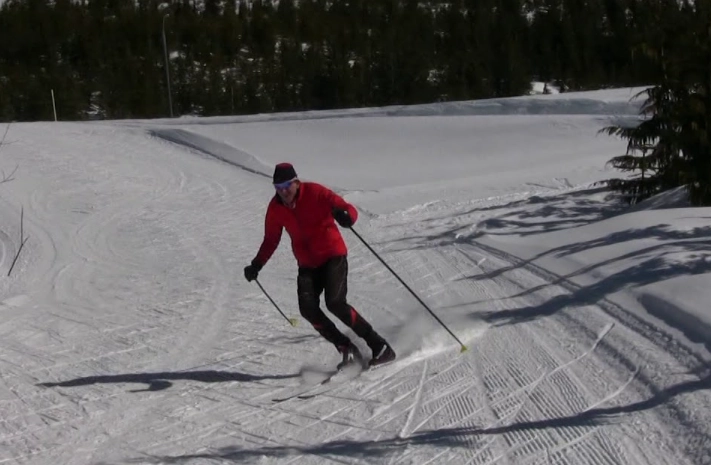
Here's the magic: You don't *steer* the skis with your feet. You guide them with pressure. As you roll your knees right and continue to press down on that new outside (left) ski, the ski's sidecut (its hourglass shape) does the work. It bends and wants to carve an arc. Your job is to stay balanced over it and let it happen. The inside (right) ski follows along, staying light and parallel.
Pro Tip: A common hiccup is trying to pick up the inside ski to make it parallel. Don't. Just focus on pressuring the outside ski. The inside ski will come along for the ride if you let it. Lifting it throws your balance off completely.
Phase 4: Ride (The Completion)
You're now in the turn, arcing across the hill in the new direction. Your body should be leaning slightly into the hill (angulation), countering the centrifugal force. Your outside leg is firm, your inside leg relaxed. Enjoy the feeling of the carve! This is the "ride" phase. From here, you're perfectly set up to prepare for the next turn—shifting weight to the new outside ski and starting the sequence all over again.
Linking these turns is the ultimate goal. It becomes a rhythm: prepare-release-engage-ride, prepare-release-engage-ride. A dance with the mountain.
Your Personal Toolkit: Drills That Actually Work
Reading is one thing. Doing is another. Here are my go-to drills for teaching parallel turns for beginners. Do them in this order.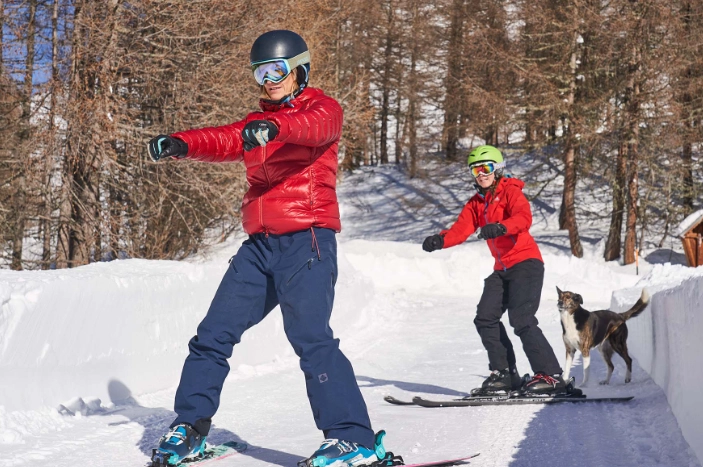
Drill 1: The Javelin Turn
On a gentle slope, make a wedge (pizza) to start a turn. As you come around, focus on pulling the inside ski (the one on the inside of the turn) back until it's parallel with the outside ski. It will look like a javelin or a hockey stop. This isolates the feeling of finishing a turn with parallel skis without worrying about the scary initiation.
Drill 2: Sideslip to Turn
Start sideslipping across a gentle slope. From the sideslip, simply roll your knees into the hill to engage your edges. You'll feel the skis grab and start to turn you up the hill. This drill directly connects the "release" (sideslipping) to the "engage" (turning) phase. It's brilliant for building edge confidence.
Drill 3: One-Ski Skiing (Seriously)
On a very flat, wide area, pick up your inside ski entirely. Try to make gentle turns using only your outside ski. This forces you to balance on and pressure that critical outside ski. It feels weird, but it teaches your body where the power needs to be. Do this for 30 seconds at a time, then switch.
The Hall of Shame: Common Mistakes (And How to Fix Them)
We all make them. Here’s a quick-reference table to diagnose your own parallel turns for beginners journey.
| The Symptom | The Likely Cause | The Quick Fix |
|---|---|---|
| My skis keep crossing. | You're trying to steer with both feet independently. You're probably stemming (pushing the tail out). | Focus on the front of your outside ski. Imagine a laser beam shooting from its tip. Guide that laser, don't think about the tails. |
| I feel like I'm going to fall backwards. | The dreaded "backseat." You're leaning away from the steep part of the hill out of fear. | Consciously drive your shins into the front of your boots. Sing a song in your head to relax. Fear creates tension, tension pushes you back. |
| My turns are skiddy, not carve-y. | You're not committing to the edge. You're flattening the ski and then immediately twisting it sideways. | Practice the sideslip-to-turn drill. Feel the "hook-up" of the edge. Trust that the ski wants to turn if you let it. |
| I can't link turns smoothly. | You're finishing one turn, stopping, then starting the next. There's no flow. | Think "down" not "across." As you finish one turn, your body should already be moving down the hill towards the next. It's a continuous flow of falling and catching yourself. |
A Personal Rant: I see so many skiers get obsessed with getting their skis perfectly parallel at the *start* of the turn. It creates this stuttery, forced motion. In modern skiing, it's perfectly fine—even ideal—for the skis to be slightly diverged (a mini-wedge) at the very initiation. They come parallel through the middle of the turn as you pressure the outside ski. Don't stress about a perfect "A" shape at the top. Focus on the feeling of the carve.
Gear Talk: Does Your Equipment Help or Hurt?
Bad gear can fight you every step of the way. You don't need the most expensive stuff, but you do need appropriate stuff.
Skis: If you're learning parallel turns for beginners, you want an "all-mountain" ski that's forgiving. Look for terms like "easy turning," "rockered tip," and "soft to medium flex." A rockered tip (where the tip rises early) helps initiate turns easier and prevents catching edges. A stiff, racing ski will be miserable. Ideally, your ski should come up somewhere between your chin and the top of your head. Shorter is more maneuverable for learning.
Boots: This is the most important piece. They must fit snugly with no heel lift. Your toes should just touch the front when standing straight, and pull back slightly when you flex forward. A boot that's too loose is a disaster—you'll be swimming in it, trying to transmit movements to your ski. Go to a professional bootfitter. Seriously. It's worth every penny.
Bindings: Make sure they're adjusted correctly for your weight and skiing level (your DIN setting). A shop can do this. Bindings that are too loose can pre-release; too tight won't release when needed. Safety first.
I learned on hand-me-down boots that were two sizes too big. I fought them for a whole season before I realized it wasn't me, it was the gear. Getting properly fitted boots was a revelation.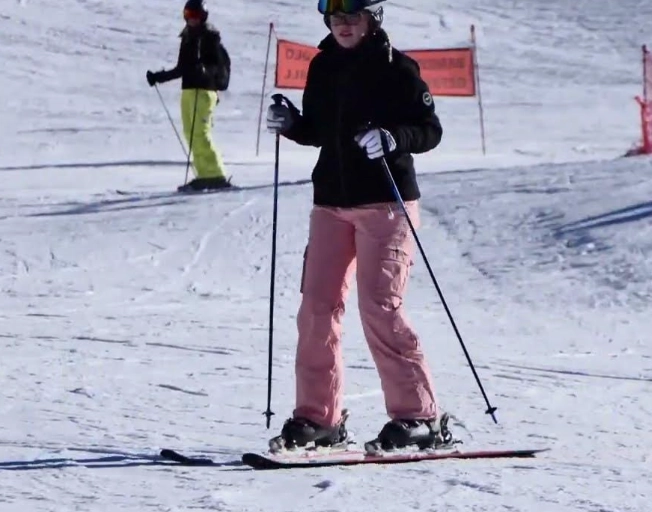
Putting It All Together: A 3-Day Practice Plan
You can't learn this in one run. Here's a realistic plan for a weekend warrior.
Day 1: Foundation & Feel
Morning: Warm up with wedge turns and sideslipping. Focus purely on stance and balance.
Afternoon: Drill the Javelin Turns and Sideslip-to-Turn. Don't even try to link them. Just get the feel of the finish and the edge engagement. Call it a day when you're tired. Muscle memory forms on rest.
Day 2: Initiation & Linking
Morning: Review Day 1 drills. Then, on a very gentle slope, try to make a turn from a traverse by releasing your edges (Phase 2). Don't worry about the carve, just get the skis to point downhill smoothly.
Afternoon: Start linking two turns. Traverse, release to turn left, ride it out, then immediately prepare and release to turn right. Make your goal just two turns. Then three. Keep the rhythm slow.
Day 3: Rhythm & Refinement
Morning: Practice on a consistent, easy blue run. Focus on the continuous rhythm. Sing a song with a steady beat ("We Will Rock You" works) and try to turn on each beat.
Afternoon: Play with turn shape. Make some big, slow turns across the whole run. Then make quicker, shorter turns. Feel how adjusting the pressure and edge angle changes the turn.
Answering Your Burning Questions (FAQs)
Final Thoughts: The Mindset for Success
Learning parallel turns for beginners is a physical skill, but it's won in the mind. You have to be okay with feeling awkward. You have to be willing to fail, to slide out, to maybe even take a gentle fall. Every skier you admire went through this.
Don't compare your first day to someone else's tenth season. Celebrate the small wins. "Today, I released my edges without panicking." "Today, I linked four turns without stopping."
It's not about conquering the mountain. It's about starting a conversation with it. You make a turn, the mountain responds. You learn to read the snow, the pitch, the rhythm. That's where the real joy is. The parallel turn is just the language you're learning to speak.
So get out there. Find your gentle blue. Take a deep breath. And let the skis turn.