Quick Navigation
- What Exactly Is a Ski Rope Tow? It's Not Just a Rope
- The Main Types of Ski Rope Tows You'll Meet
- How to Use a Ski Rope Tow: A Step-by-Step Walkthrough
- Ski Rope Tow vs. Other Lifts: A Quick Comparison
- Common Mistakes and How to Avoid Them
- Safety First: Non-Negotiable Rules for the Rope Tow
- Answers to Your Burning Ski Rope Tow Questions (FAQ)
- Finding the Groove: From Survival to Skill
Let's be honest. The first time you see a ski rope tow, it doesn't exactly inspire confidence. It looks deceptively simple—a moving rope you grab to get pulled up a hill. But for many skiers and snowboarders, especially beginners, it can be the source of more frustration and comedy than the actual skiing down. I've seen it all: people getting tangled, falling in a heap at the start, or getting dragged a few feet before giving up. I was once that person, clinging on for dear life while my skis pointed in three different directions.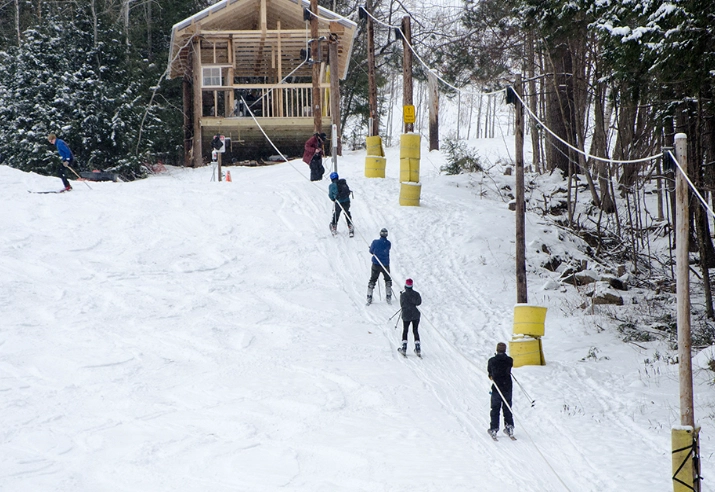
But here's the thing. Once you figure it out, a rope tow is an incredibly efficient, often free, way to access fun terrain. It's a staple at smaller hills, beginner areas, and terrain parks. Understanding how to use it confidently opens up a lot of skiing without needing a big, expensive chairlift. This guide is here to strip away the mystery and the fear. We're going to talk about what a ski rope tow actually is, the different types you'll encounter, and most importantly, a step-by-step breakdown of how to use one without embarrassing yourself. We'll also cover safety—because yes, there is a right and a wrong way to let go.
What Exactly Is a Ski Rope Tow? It's Not Just a Rope
At its core, a ski rope tow is a simple surface lift. An engine (usually at the top of the slope) drives a continuous loop of rope or cable around a series of pulleys. You stand next to its path, grab on, and let it pull you uphill while you stand on your skis or snowboard. It's old-school technology, but it's effective for short to medium slopes.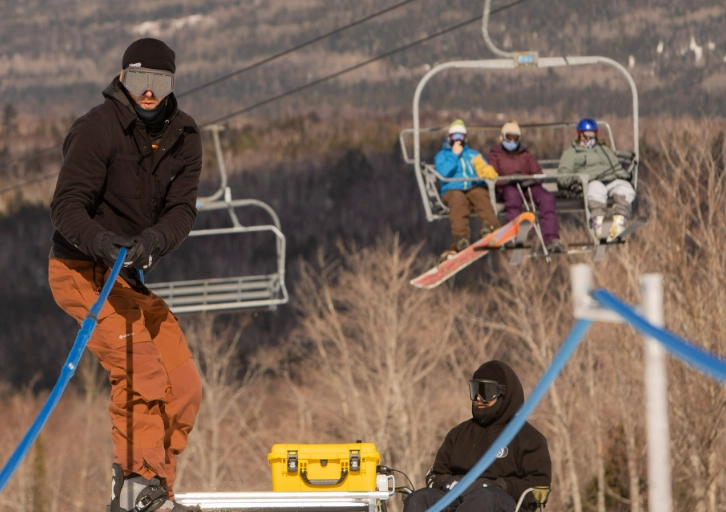
Think of it as the utilitarian workhorse of the ski world. Resorts love them because they're relatively cheap to install and run compared to a chairlift. They're perfect for that short but steep learning hill, the access point to a backcountry-style zone, or the pull into the terrain park. The National Ski Areas Association (NSAA) often discusses surface lifts like rope tows as vital infrastructure for beginner and family-friendly areas, highlighting their role in making the sport accessible.
They go by many names: rope tow, handle tow, Poma lift (for a specific type), or just "that thing that pulls you."
The Main Types of Ski Rope Tows You'll Meet
Not all ski rope tows are created equal. The grabbing mechanism is what really defines the experience. Here’s a breakdown of the most common types.
The Classic Continuous Rope
This is the purest form. It's literally a thick, endless rope running between two terminals. There are no handles. You just grab the rope itself with your hands (wearing gloves is non-negotiable here). It requires the most upper body strength and technique to keep a grip. You'll often find these on very short, gentle slopes or in old-school, local ski hills. The friction can be tough on your gloves, but it's a rite of passage.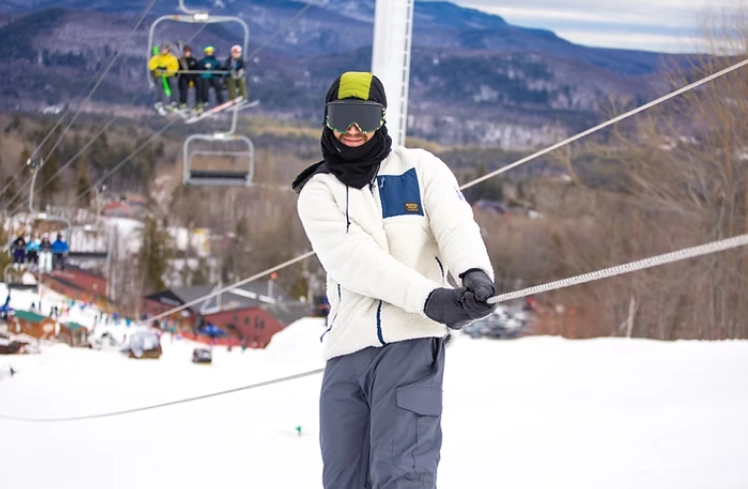
T-Bar and J-Bar Lifts
These are a step up in comfort. Instead of a rope, you have a moving cable from which T-shaped or J-shaped bars dangle. You stand next to a partner (or alone on a J-bar), the attendant swings the bar behind you, and you sit slightly on the horizontal part as it pulls you up. It's more stable than holding a rope. The T-bar is for two people, the J-bar is for one. The pressure is on your rear, not your arms. Much easier for longer rides.
Platter Lift (Button Lift or Poma)
This one confuses everyone the first time. A fixed pole has a round platter (the "button") on the end. As the cable cycles, you position yourself, place the platter between your legs, and let it push you up the hill. It's crucial to keep the pole between your legs and not let it swing out to the side. It feels awkward initially, but it's very efficient. The name "Poma" comes from a major manufacturer, Pomagalski, and is often used generically, like Kleenex for tissues. You can learn more about their design and history on the official Poma website.
How to Use a Ski Rope Tow: A Step-by-Step Walkthrough
Let's get practical. Here’s how to approach a standard, handle-less rope tow on skis. The principles are similar for snowboards, but we'll note the differences.
Step 1: Preparation is Key. Before you even get in line, make sure your gloves are on and secured. Loose gloves will be ripped off. Ensure your ski poles are securely looped around your wrists. I once watched a pole get sucked into the machinery because someone wasn't holding it properly—it's not pretty. Mentally pick your spot in line where the rope runs smoothly.
Step 2: The Stance and Grab. As you move to the loading area, keep your skis pointed straight uphill, parallel to the rope's path. Don't try to grab it while facing sideways. As the rope comes by, reach out with one hand (usually your stronger hand) and grab it firmly. Don't snatch at it; let it slide into your grip. Immediately bring your other hand up and grip below the first hand. Your arms should be slightly bent, not locked straight.
Step 3: The Initial Pull. This is the trickiest part. The rope will immediately try to pull you forward. Resist the urge to lean back and fight it. Instead, let it pull you into a gentle, forward lean. Keep your weight centered over your skis. Your job is not to hold your entire body weight with your arms—your skis should be sliding on the snow. The rope just provides the forward motion.
Step 4: The Ride Up. Once you're moving, relax your grip a little. Keep your skis straight and parallel. Look ahead at the path, not down at your feet. If you feel yourself starting to veer off course, make subtle adjustments by shifting your weight slightly on your skis, not by yanking the rope sideways. The rope tow is pulling in a straight line; you need to follow.
Step 5: The Dismount (The Most Important Part!). As you approach the top, start looking for the dismount zone—usually marked or where the rope goes over a large wheel. The snow here is often groomed flat. Plan your exit to one side. As you hit the flat area, simply let go of the rope with both hands. Do not throw it. Just open your hands. Keep your skis straight and glide to a stop. Then, immediately clear the area for the person behind you.
For snowboarders, the main difference is stance. You'll typically approach with your front foot strapped in and your back foot out (like on a chairlift). Grab the rope in the same way, but you'll be in a sideways stance. It requires more core engagement to keep the board straight. Some riders prefer to hold the rope with both hands in front of their body, almost like holding a handlebar.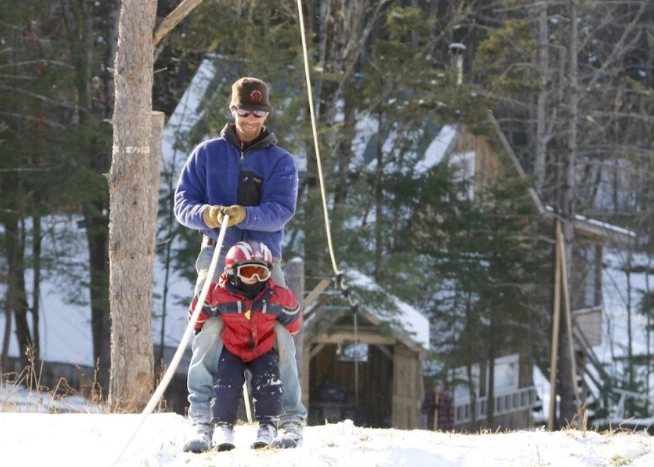
Ski Rope Tow vs. Other Lifts: A Quick Comparison
Why would a resort choose a rope tow over a magic carpet or a chairlift? Here’s a simple table to break it down.
| Lift Type | Best For | Skill Level Required | Key Advantage | Key Disadvantage |
|---|---|---|---|---|
| Ski Rope Tow | Short, steep slopes; Terrain park access; Low-cost operation | Beginner to Intermediate (with instruction) | Inexpensive; Can access steeper grades than carpets | Requires physical effort/technique; Can be intimidating |
| Magic Carpet | Absolute beginners; Very gentle, short slopes | First-Timer | Zero skill needed; Just stand and ride | Only works on very gentle slopes; Slow |
| Chairlift | Long distances; Major vertical gain; All-mountain access | Intermediate to Expert (must be able to load/unload and control speed) | High capacity; Comfortable; Scenic | Expensive to build/run; Requires more skill to load |
As you can see, the ski rope tow occupies a specific niche. It's the bridge between the completely passive magic carpet and the more complex chairlift.
Common Mistakes and How to Avoid Them
We all make mistakes. Here are the classic errors I've made and seen a hundred times, and how to fix them.
- Leaning Back: This is the number one mistake. You feel the pull and instinctively lean back like you're in a tug-of-war. This puts all your weight on your arms, tires you out instantly, and makes your skis slip out from under you. Solution: Lean into the pull. Let the rope support some of your forward momentum.
- Looking Down: Your body follows your eyes. If you stare at your ski tips or the rope in your hands, you'll start to wobble and fall. Solution: Look up the hill at where you're going. Pick a spot at the top and aim for it.
- Gripping Too Tight: White-knuckling the rope creates tension through your whole body. It's exhausting. Solution: Hold firmly enough to not drop it, but keep your shoulders and arms relaxed. Imagine you're just guiding the rope, not fighting it.
- Poor Dismount Timing: Letting go too late or too early. Too late, and you get pulled into the machinery or a steep drop. Too early, and you don't make it to the flat top and have to herringbone up. Solution: Watch the person in front of you. See where they let go. That's your cue.
Safety First: Non-Negotiable Rules for the Rope Tow
This can't be stressed enough. A rope tow is a piece of machinery with powerful moving parts. Respect it.
- Let Go If You Fall: This is rule number one, two, and three. The moment you start to lose balance and go down, open your hands. Don't try to save it. Just let go and scramble out of the way. The lift will keep going, and that's okay.
- Clear the Dismount Area: Once you're off, ski or board away quickly. Don't stop to adjust your gear right in the landing zone. You're a hazard for the next person coming up.
- Mind Your Equipment: Keep poles, clothing, and long hair clear of the rope and machinery. Loose scarves are a major hazard.
- Don't Jump On or Off: Wait for the rope or bar to come to you at the bottom. At the top, just let go and glide. No acrobatics.
- Follow the Attendant's Instructions: If there's a lifty running the tow, they know its quirks. Listen to them.
Many ski resorts, especially those with a focus on family safety like some Vail Resorts properties, have clear signage and sometimes even practice areas for their beginner rope tows. It's worth checking the specific resort's website for their safety guidelines.
Answers to Your Burning Ski Rope Tow Questions (FAQ)
Is a ski rope tow harder for snowboarders?
It can be, initially. The sideways stance is less natural for being pulled straight uphill. It requires more active engagement of your core and front leg to keep the board from fishtailing. Many boarders find T-bars or platter lifts easier than a plain rope. The key is to really focus on keeping that front edge slightly engaged to track straight.
What if the rope breaks or stops?
This is incredibly rare with modern, maintained lifts. The systems have multiple safety brakes and monitors. If it does stop, just stay where you are and wait for instructions from the ski patrol or lift attendants. Do not try to climb down or unhook yourself unless explicitly told to do so for safety reasons.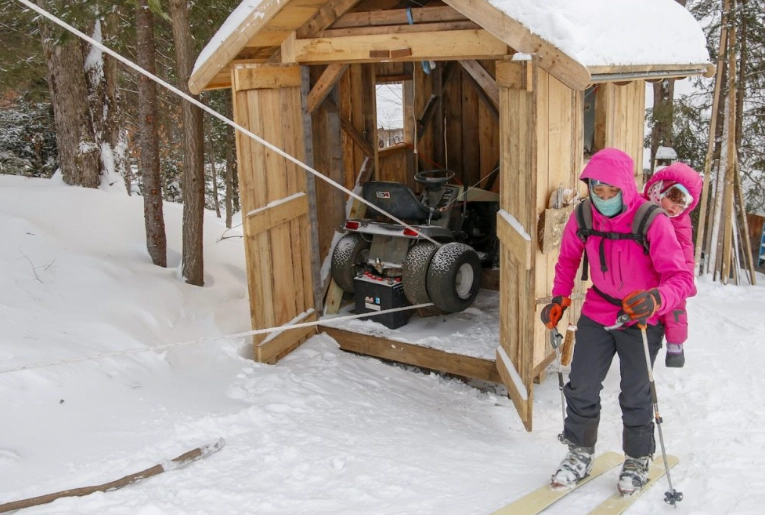
Can little kids use a rope tow?
It depends on the child's strength and coordination. Many small beginner areas have very slow, low-tension rope tows designed for kids. Always have an adult assist them with the grab and ride right next to them, or consider a magic carpet for the very young. The Learn to Ski and Snowboard initiative often recommends starting with carpet lifts before moving to rope tows.
Why do my hands hurt so much after using one?
Friction and grip strength. You're likely gripping too tight with poor gloves. Invest in a pair of sturdy, well-fitting ski gloves with leather palms. Don't use thin knit gloves—they'll shred and give you blisters. Also, try to relax your grip during the ride.
Are rope tows bad for the environment?
Compared to a high-speed detachable chairlift, they have a much smaller footprint. They use less energy, require less steel and concrete for towers, and disturb less terrain. For a small, local hill, a rope tow can be a relatively low-impact way to provide lift service. Some backcountry clubs use portable rope tows powered by snowmobiles to access specific zones, which is a topic of debate in conservation circles.
Finding the Groove: From Survival to Skill
Mastering the ski rope tow isn't just about surviving the ride. It's about making it effortless. When you stop thinking about it, that's when you know you've got it. You'll be able to hop on without a second thought, use the ride up to chat with a friend or plan your line down, and dismount smoothly.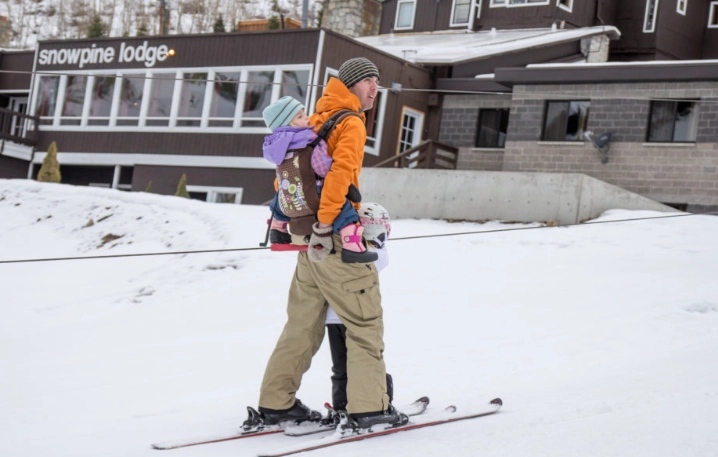
It connects you to a older, simpler era of skiing. Before mega-passes and high-speed quads, these were the lifts that built the sport. There's a charming, no-frills efficiency to them. They remind you that skiing, at its heart, is about sliding on snow—and a rope tow is just a clever tool to get you more slides per day.
So next time you see one, don't avoid it. Give it a try. Watch a few people, remember to lean in, keep your skis straight, and let go cleanly at the top. You might just find it becomes your favorite way to lap a short, sweet slope.
And if you eat it on your first try? Welcome to the club. We've all been there. Just brush the snow off, laugh it off, and get back in line. The ski rope tow is a patient teacher, as long as you respect it.