Quick Navigation
- Breaking Down Medicare: Which Part *MIGHT* Cover What?
- The "Medically Necessary" Mountain: What Does That Even Mean?
- The Step-by-Step Process if You Try a Medicare Claim
- What to Do When Medicare Says No (Your Practical Action Plan)
- Answers to Your Burning Questions (FAQ)
- Wrapping It Up: Your Next Steps
Let's cut to the chase. You or a loved one is struggling with the stairs, and that chairlift quote is staring you in the face. The first question that pops into your head is the big one: does Medicare pay for a chairlift? You're hoping for a simple "yes," but the real world of Medicare coverage is rarely that straightforward. I've been down this research rabbit hole myself, helping family members navigate the maze, and let me tell you, the official rules can feel like they're written in another language.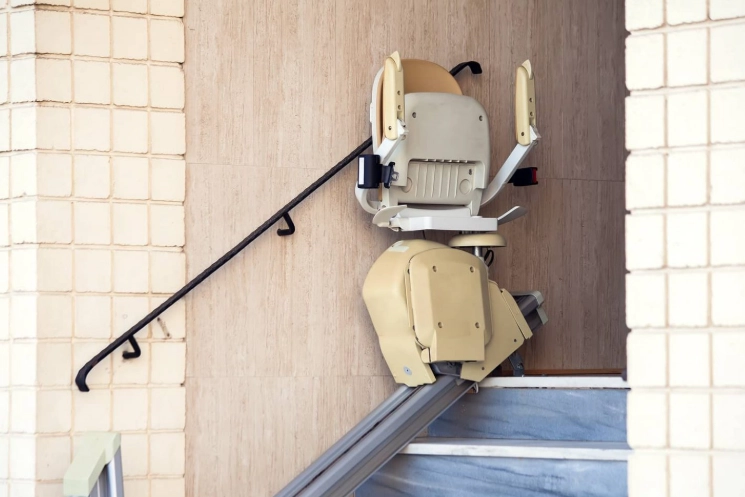
The short, and often disappointing, answer is that traditional Medicare (Parts A & B) very rarely pays for a stairlift chair for use in your home. It's not completely impossible, but the hurdles are high—think Olympic-level high. Most people get a denial. But that "no" isn't the end of the story, it's just the beginning of figuring out your real options. This guide isn't just about that initial yes or no. We're going to dig into the exact "why" behind Medicare's rules, what tiny loophole might exist, and, more importantly, what you can actually do to get financial help when Medicare says no. We'll cover state programs, veteran benefits, creative financing, and even some little-known non-profits that might lend a hand.
The Core Issue: Medicare primarily covers Durable Medical Equipment (DME) that is deemed "medically necessary" for use inside the home. A stairlift, in the eyes of Medicare, is often seen as a home modification or a convenience item to access different levels of the home, not a piece of medical equipment for daily living within a single-level living space. That distinction is everything.
Breaking Down Medicare: Which Part *MIGHT* Cover What?
Medicare isn't one thing. It's a bunch of parts that work (or sometimes don't work) together. To understand if Medicare pays for a chairlift, you have to look at each piece of the puzzle. People often hear "Medicare covers medical equipment" and get their hopes up, not realizing that statement comes with a suitcase full of fine print.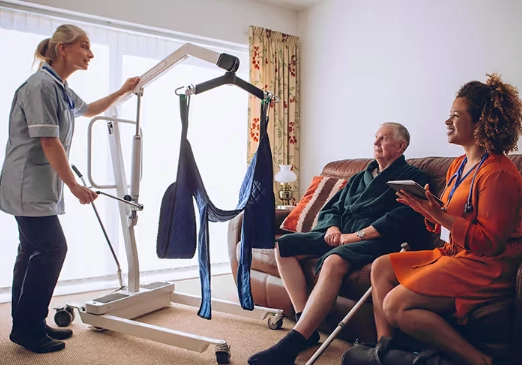
Medicare Part A (Hospital Insurance)
Forget about it. Part A covers inpatient hospital stays, skilled nursing facility care, hospice, and some limited home health care. It has nothing to do with purchasing equipment for your house. If someone tells you Part A will buy your stairlift, they're misinformed. Moving on.
Medicare Part B (Medical Insurance) – The Only Real Contender
This is the part that could, in a specific and narrow scenario, be involved. Part B covers doctor's services, outpatient care, preventive services, and crucially, Durable Medical Equipment (DME).
So, what's the magic phrase? "Medically Necessary DME." For Medicare Part B to even consider a chairlift, your doctor must document that it is an absolute medical necessity for you to function within your home due to a severe, permanent medical condition. And here's the kicker—the need must be primarily for moving around on a single floor of your home, not just to get up the stairs.
Imagine this: You are completely unable to climb stairs due to a condition like severe heart failure, advanced COPD, or a debilitating neurological disease. Your bedroom, bathroom, and kitchen are all on the second floor. You are essentially trapped. In this extreme case, a doctor might argue that the stairlift is necessary to create a usable living space, making the second floor an extension of your "single-level" home environment. But this is an uphill battle (no pun intended). Medicare will heavily scrutinize this. They'll want to know why moving your bedroom downstairs isn't a simpler, cheaper alternative.
Even if you jump this insane hurdle, you're not getting a free chairlift. Part B typically covers 80% of the Medicare-approved amount for DME after you meet your annual deductible. You are responsible for the remaining 20%. And the "Medicare-approved amount" might be much lower than the actual retail price of a quality stairlift.
Reality Check: In over a decade of writing about senior care, I've seen only a handful of anecdotal reports of Medicare Part B approving a stairlift claim. The vast, overwhelming majority are denied. The system is simply not set up to cover major home modifications. Relying on a "yes" from traditional Medicare is a recipe for disappointment and financial strain.
Medicare Part C (Medicare Advantage Plans)
Now, here's where things get slightly more interesting. These are private insurance plans that replace your traditional Part A and Part B. They must cover everything Original Medicare covers, but they can (and often do) offer extra benefits.
Some Medicare Advantage plans include benefits for home modifications, safety devices, or supplemental DME coverage that goes beyond Original Medicare's strict rules. I've seen plans that offer a yearly allowance (say, $500-$1500) for safety and accessibility items. It's not enough to cover a full stairlift installation, but it could be a significant chunk of change to put toward one.
The critical step: If you have a Medicare Advantage plan, you must call them directly and ask for a copy of your "Evidence of Coverage" (EOC) document. Search for terms like "home safety," "accessibility," "DME," or "over-the-counter benefits." Don't just ask a customer service rep for a quick yes/no—get it in writing. Plan benefits change every year, so last year's rules don't apply.
Medicare Part D (Prescription Drug Plans)
No. Just no. It's for medications.
| Medicare Part | Covers Stairlifts? | Key Conditions & Notes |
|---|---|---|
| Part A (Hospital) | No | Not applicable. Covers inpatient care. |
| Part B (Medical/DME) | Extremely Rarely | Only if deemed "medically necessary" DME for in-home mobility on a single level. Requires extensive doctor documentation and is often denied. Covers 80% of approved cost after deductible. |
| Part C (Advantage) | Possibly | Depends entirely on your specific private plan. Some may offer supplemental benefits or allowances for home safety modifications. You must check your plan documents. |
| Part D (Drugs) | No | Not applicable. |
So, we've established that getting a straight answer to "does Medicare pay for a chairlift?" is usually "no" from the federal program. That's the hard truth. But your search for help shouldn't stop there.
The "Medically Necessary" Mountain: What Does That Even Mean?
This phrase is the gatekeeper. Medicare defines DME as equipment that: 1) Can withstand repeated use, 2) Is used for a medical reason, 3) Is not usually useful to someone who isn't sick or injured, and 4) Is used in the home.
For a stairlift, the debate centers on points 3 and 4. Is it for a medical reason, or is it to make your home more convenient? Is it for use in the home, or to access different parts of the home? Medicare's default position leans toward the latter. Your doctor's note needs to build an ironclad case for the former. They'd need to detail how your specific medical condition (e.g., "Stage IV congestive heart failure with severe dyspnea on minimal exertion") makes traversing stairs impossible and a direct threat to your health, and how the stairlift is integral to daily medical care and living within your primary living area.
The Step-by-Step Process if You Try a Medicare Claim
If, after talking with your doctor, you decide to attempt a Medicare Part B claim, here's the arduous path ahead. Think of it as a marathon, not a sprint.
- Consult Your Doctor: This is non-negotiable. Have a frank conversation. Ask, "Based on my medical records, can you provide detailed documentation that a stairlift is medically necessary for me to live safely in my home?" If they hesitate, that's your first red flag.
- Get a Prescription and Letter of Medical Necessity (LMN): This isn't just a script that says "chairlift." It needs to be a thorough letter on your doctor's letterhead detailing your diagnosis, prognosis, failed alternative treatments (like physical therapy), the risks of not having the equipment, and a clear statement that the stairlift is medically necessary for daily living within your home. Specifics are your friend.
- Find a Medicare-Enrolled DME Supplier: Not every stairlift company is enrolled with Medicare. You must use one that is. They will know how to submit the claim correctly. You can verify a supplier's enrollment on the Medicare Supplier Directory.
- Submit the Claim: The supplier will typically handle this, using the LMN and prescription.
- Wait for the Determination: This can take weeks. Be prepared for a Initial Determination of denial.
- Appeal if Denied: You have the right to appeal. The first level is a "Redetermination" request filed by you or your supplier. This is where many give up, but if you have a strong LMN, you can push forward through multiple appeal levels.
The paperwork alone is a part-time job. I'm not trying to discourage you, but to set realistic expectations. Most people exhaust themselves at step one or two.
What to Do When Medicare Says No (Your Practical Action Plan)
This is the most important part of this guide. Since the answer to "does Medicare pay for a chairlift?" is usually negative, let's focus on proven alternatives. Don't wallow in the denial—pivot.
1. Look to Medicaid (State-Based Programs)
For individuals with limited income and resources, Medicaid is often a far more likely source of funding for home modifications than Medicare. Medicaid is a joint federal and state program, and benefits vary dramatically by state.
Many states have Home and Community Based Services (HCBS) waivers or programs specifically designed to help people age in place and avoid nursing home care. These waivers (with names like "Aged & Disabled Waiver," "Traumatic Brain Injury Waiver," etc.) frequently cover home modifications like stairlifts, ramp installations, and bathroom grab bars.
How to proceed: Contact your local State Medicaid Agency or Area Agency on Aging. You can find your local Area Agency on Aging through the Eldercare Locator. Ask specifically about "HCBS waivers" and "home modification benefits." Eligibility is based on both financial and functional (need-based) criteria.
2. Veterans Affairs (VA) Benefits
If you or your spouse is a veteran, this can be a golden ticket. The VA offers several grants for modifying homes to accommodate disabilities.
- SAH Grant (Specially Adapted Housing): For veterans with certain severe service-connected disabilities, this grant can help build or modify a home for accessibility.
- SHA Grant (Special Home Adaptation): For veterans with specific service-connected disabilities, this grant can be used for adaptations to a family member's home where the veteran lives.
- HAWR Grant (Home Improvements and Structural Alterations): This is a broader grant available to both service-connected and non-service-connected veterans for necessary home modifications. There are financial limits, but it can cover items like stairlifts. The key is getting a VA clinician to prescribe it as necessary for treatment.
Start by contacting your local VA Medical Center and asking for a Social Worker or the Prosthetics and Sensory Aids Service department. The official VA housing grants page is the best place to understand the programs.
3. Non-Profit and Charitable Organizations
These are often overlooked gems. Some organizations provide grants or low-cost loans for home modifications for seniors or people with disabilities.
- Rebuilding Together: A national non-profit that provides critical home repairs and modifications for low-income homeowners, often at no cost.
- Local Community Foundations and Lions Clubs: Many local civic groups have funds for community support. It never hurts to call your town hall or local United Way (dial 211) and ask about resources for senior home safety.
- Disease-Specific Organizations: Groups like the National Multiple Sclerosis Society or the ALS Association sometimes have assistance programs for equipment that promotes independence.
4. Financing and Payment Plans
Many stairlift companies offer financing plans. While this means taking on debt, it spreads the cost over time. Look for plans with low or zero-interest introductory periods if you're confident you can pay it off quickly. Always read the fine print. Also, check if a home equity line of credit (HELOC) offers a better interest rate.
5. The Rental Option
Need a stairlift for a short-term recovery (like after knee surgery)? Renting is a fantastic and often affordable option. Many DME suppliers rent stairlifts by the month. This is rarely covered by Medicare either, but the out-of-pocket cost is much more manageable for temporary needs.
Pro Tip: Before you buy, ask the stairlift company if they have a "reconditioned" or "used" market. When people move or no longer need their lift, companies often refurbish and resell them at a significant discount, sometimes with a new warranty. It's one of the best-kept secrets in the industry.
Answers to Your Burning Questions (FAQ)
Let's tackle the common questions that swirl around after the initial "does Medicare pay for a chairlift?" search.
Wrapping It Up: Your Next Steps
So, does Medicare pay for a chairlift? For the vast majority of people searching for that phrase, the honest answer is no. Traditional Medicare's structure is not designed for home modifications, no matter how vital they feel.
But that "no" is just a data point. Your action plan is clear:
- Accept the Medicare Reality: Don't bank on it. See it as a remote possibility, not a plan.
- Investigate Medicaid: If income-qualified, this is your strongest bet. Call your Area Agency on Aging today.
- Tap into VA Benefits: If applicable, pursue this avenue aggressively.
- Check Your Medicare Advantage Plan: Dig out that booklet or call for specifics.
- Explore Charitable and Local Resources: A few phone calls to local non-profits could yield surprising help.
- Consider All Payment Options: Weigh rental, financing, reconditioned units, and payment plans.
The journey to a safer home is frustrating when faced with bureaucratic walls and high costs. But by shifting your focus from the unlikely (Medicare) to the possible (Medicaid, VA, local aid), you can find a path forward. Don't let the initial complexity paralyze you. Take it one phone call, one application at a time. The safety and independence are worth the effort.