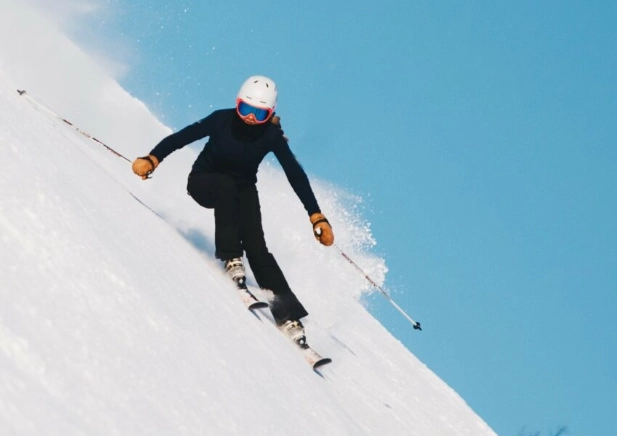
You're cruising down a blue run, feeling good. Then you hit a turn. Your arms flail a bit, your pole swings late, and the whole thing feels jerky instead of smooth. Sound familiar? For years, my skiing plateaued right there. I could get down anything, but it wasn't pretty or efficient. Then a coach introduced me to the horizontal poles drill. It looked silly. It felt awkward. But within an hour, it rewired my understanding of how a turn should initiate.
This isn't just another dry technique lecture. The horizontal poles drill is a physical constraint that forces your body to learn what your brain can't figure out from instructions alone. It's the single most effective tool I've found for fixing the upper body chaos that plagues intermediate skiers trying to master parallel turns.
What's Inside This Guide
What It Is and Why It Works (The "Aha!" Moment)
The drill is simple in concept: you hold both ski poles horizontally across your body, about waist height, parallel to the snow. You then ski making turns while trying not to let the poles tip up, down, or swing wildly.
Here's the magic. In a proper turn, your upper body should remain relatively quiet and facing downhill. The initiation comes from your feet and legs. Most of us, however, initiate turns by rotating our shoulders or stabbing the pole late and erratically. The horizontal poles act as a biofeedback device.
I remember the first time I got it right on a gentle slope. The poles stayed level, and the turn happened almost beneath me. There was no arm swing, just a gentle shift of weight and a subtle knee angulation. The feeling was one of calm control, not frantic effort. That's the feeling you're chasing.
Step-by-Step: How to Do the Drill Correctly
Don't just grab your poles and head for a black diamond. This requires a methodical approach.
1. Find Your Terrain and Stance
Start on a wide, gentle green or easy blue run. You need space and low consequence. Stand across the fall line. Now, hold both poles together in the middle. Grip them firmly but not white-knuckled. Position them horizontally across your hips, parallel to the snow. Your arms should be bent at about 90 degrees, elbows slightly away from your body. This is your starting position. It should feel a bit odd—that's normal.
2. The First Traverses (No Turning Yet)
Point your skis slightly downhill and just traverse. Focus on one thing: keeping the poles perfectly level. Feel the pressure on your outside/downhill ski. Your torso should face across the hill, not down it. Do this for 50 meters, then switch direction. This builds the foundational feeling of a stable upper body.
3. Introducing the Turn
Now, from a traverse, gently roll your knees and ankles to steer your skis into a turn. The key here is patience. Don't force it with your upper body. Let the skis come around. Your only job is to keep those poles level. You'll likely make small, rounded turns at first. That's perfect.
4. Linking Turns
Once you can make a single turn without the poles wobbling, try to link two. The transition is where most people fail. As you finish the first turn and start the next, there's a temptation to shove the poles across your body. Resist. The poles should glide smoothly from one side to the other, their height unchanging. Think of your torso as a stable platform, and the poles are just resting on it.
The 3 Most Common Mistakes (And How to Fix Them)
After teaching this for a decade, I see the same three errors every time. Spotting them in yourself is half the battle.
Mistake #1: The Death Grip and Frozen Elbows. People clutch the poles so tight their forearms burn. Their elbows lock to their ribs. This creates tension that travels straight to your skis. Fix: Consciously relax your grip every few turns. Let your elbows float a few inches from your body. This allows your legs to move independently.
Mistake #2: Steering with the Pole Ends. You see the pole tip dip toward the snow at the start of the turn. This means you're leading with your inside shoulder, a classic defensive posture. You're trying to point the skis around with your upper body. Fix: Focus on the outside of your body. Press your shin into the front of your boot on your outside/downhill ski. Imagine driving your outside knee down the hill. This brings your body over the correct ski and automatically lifts the inside pole.
Mistake #3: The "Hula Hoop" Swing. The poles stay level but swing in a wide arc around your body during the turn transition. This means your arms, and thus your shoulders, are still doing too much work. Fix: Narrow the arc. Practice on a very gentle slope where you can make turns almost entirely with ankle and knee movements. The poles should move only a foot or two from side to side, close to your body.
From Drill to Habit: Integrating It Into Normal Skiing
Doing the drill in isolation is one thing. Making it stick is another.
My standard prescription is the 20-Minute Integration Method.
- Minutes 1-5: Warm up with the horizontal poles drill on your first run. Focus on feeling the quiet upper body.
- Minutes 6-15: Ski normally for a run or two. But pick one specific thing to carry over: "keep my hands in front" or "initiate from the feet." Don't try to remember the whole drill.
- Minutes 16-20: Go back to the drill for half a run. The contrast will highlight what you're doing right and what slipped.
After a few days of this cycle, you'll find yourself reaching for your poles normally, but the movement will be calmer, more precise. The pole plant becomes a light touch, not a stabbing motion. That's when you know it's working.
Your Questions Answered
Can the horizontal poles drill help me if I'm a complete beginner?
I'd advise caution. The drill requires basic wedge turns and some edge control. If you're still working on stopping and making consistent wedge turns, focus there first. Adding poles horizontally adds complexity. A better starting point is simply holding your poles out in front while practicing wedge turns. Once you can link turns comfortably, then introduce the horizontal poles drill to refine your technique.
Why do my poles keep hitting the snow when I try this drill on steeper terrain?
This is the most common sign you're leaning into the hill, a classic defensive posture. Your inside shoulder is likely dropping, causing the pole to dip. The fix isn't to lift your arm. Instead, focus on pressing your shin into the front of your ski boot and driving your outside knee down the fall line. This moves your center of mass over the outside ski, automatically lifting your inside shoulder and pole. It feels counterintuitive, but the pole follows the body.
How often should I practice this drill to see real improvement in my parallel turns?
Frequency beats duration. Don't dedicate a whole day to it. Instead, spend the first 3-5 runs of your ski day doing the drill on a familiar, gentle blue run. This warms up the right movement patterns. Then, ski normally but try to maintain that 'quiet upper body' feeling for a run. Alternate between focused drill runs and free skiing. This 20-minute daily practice over a 3-day trip will create more lasting change than a 2-hour slog once a season.
I've seen skiers hold poles behind their back. Is that a better drill?
They target different issues. Holding poles behind your back is excellent for forcing independent leg action and stopping you from 'rowing' with your arms. However, it does nothing for teaching proper pole timing and placement for pole plants. The horizontal poles drill uniquely connects upper body discipline with the initiation of the turn. I use the 'poles behind back' drill for skiers who can't stop their shoulders from rotating. I use the horizontal poles drill for skiers whose turns are jerky and lack flow due to late or wild pole plants.
The horizontal poles drill isn't a magic trick. It's a teacher. It won't give you skills you don't have, but it will expose the flaws in your foundation and give you a clear, physical way to correct them. It's the bridge between struggling with parallel turns and skiing with the effortless flow you see in videos. Grab your poles, find a gentle slope, and give your upper body a lesson in patience. You might be surprised at what your legs already know how to do.