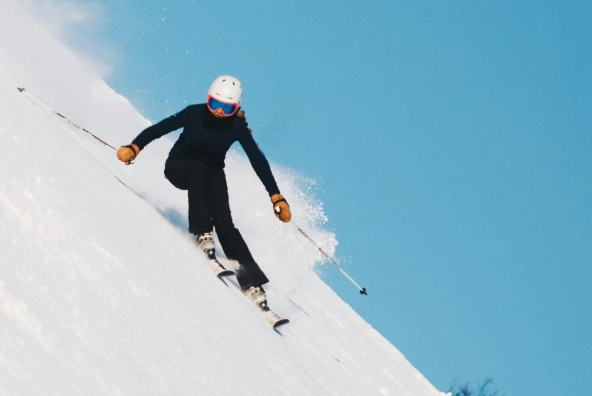
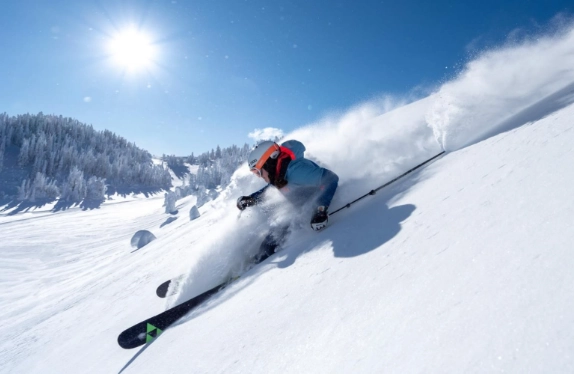
You're staring down a steep pitch, the kind that makes your stomach drop. The snow looks perfect, but your brain is screaming. Sound familiar? Skiing steep terrain is less about brute force and more about a specific set of mental and physical skills. This guide isn't about throwing you off a cliff. It's a step-by-step breakdown of how to build the confidence and technique to ski steep slopes with control and, eventually, real enjoyment.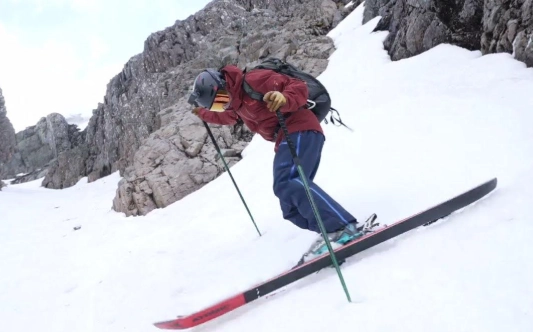
What You'll Learn in This Guide
The Mental Game: Conquering Fear First
Let's be honest. The biggest barrier to skiing steeps isn't your legs; it's the space between your ears. Fear makes you tense up, and tense skiers make bad decisions.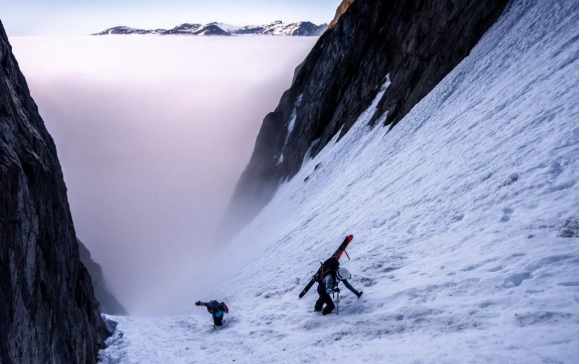
I remember my first real steep run—a chute in the Alps. I froze at the top for a solid ten minutes. What finally got me moving wasn't courage, but a simple trick: I stopped looking at the entire 500-foot face. I picked a spot about 20 feet down, a small patch of softer snow, and told myself, "Just ski to there."
That's the secret. Break the impossible slope into a series of very possible turns.
The #1 Mental Mistake on Steeps
Looking at your skis or the snow right in front of them. Your body follows your eyes. If you're staring at your tips, you're going to end up in the backseat, fighting for balance. You must look ahead to where you want to go—the next turn, the next safe zone.
Your visual focus should be down the hill, scanning for your next two or three turn points. This does two things: it helps you plan a better line, and it tricks your brain into feeling more in control. The slope feels less steep when you're actively navigating it, not just surviving it.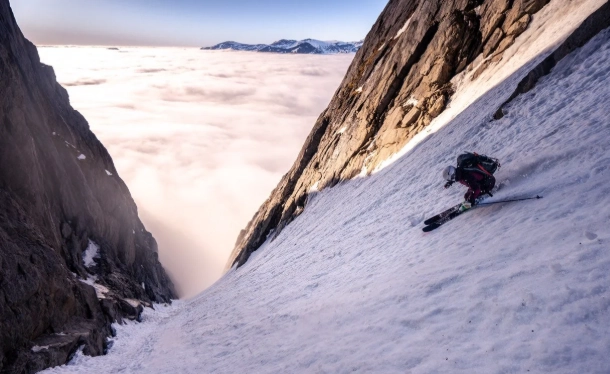
Breathing is your other anchor. When scared, we hold our breath. Force yourself to breathe out as you initiate each turn. A loud exhale can physically release tension in your core.
Gear That Actually Helps on Steeps
You can ski steeps on rental skis, but the right gear makes it significantly easier and safer. It's not about having the most expensive setup, but the most appropriate one.
Ski Selection: Forget ultra-short, super-twin-tip park skis. You want a ski that provides stability. Look for:
- Stiffness underfoot: A stiff ski won't chatter or deflect as easily when you're pressuring it at higher speeds on firm snow.
- Moderate to large turn radius: A ski that naturally wants to make medium to larger turns (say, 17-22 meter radius) will feel more stable and predictable on open steep faces than a quick-turning slalom ski.
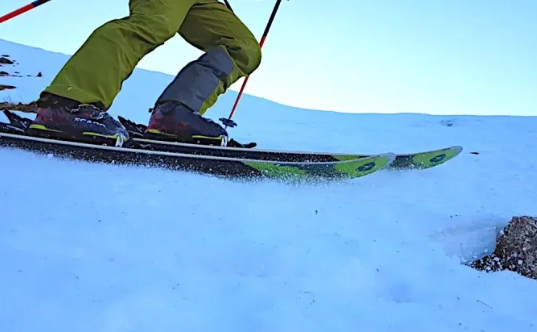
- Width: An all-mountain width (around 90-105mm underfoot) is versatile. Too wide, and edge-to-edge quickness suffers on hardpack; too narrow, and you lose float in steep powder.
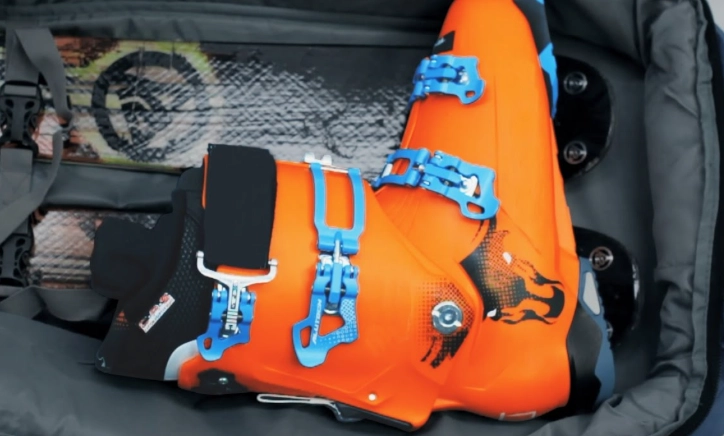
Boots are Non-Negotiable: This is where I see the most skiers under-equip themselves. A boot that's too soft will not transfer your leg movements precisely to the ski, especially when you're trying to pressure the front of the ski to initiate a turn on a steep. Your boot should be snug and supportive. If you're serious about progressing, a custom footbed and professional boot fitting are the best investments you can make, period. Organizations like the PSIA-AASI (Professional Ski Instructors of America & American Association of Snowboard Instructors) consistently emphasize proper boot fit as the foundation of all technical skiing.
Tuning Matters: Dull edges are a liability. On steep, hard snow, you need sharp edges to grip. Get a professional tune and learn to maintain your edges with a diamond stone. A 1-degree side bevel is a good all-mountain standard.
The 3 Fundamental Techniques for Steep Slopes
These aren't just "good ideas"; they're the physical pillars that keep you in control when gravity is pulling hardest.
1. Forward Stance & Ankle Flex (Not Just Bending Knees)
Everyone says "get forward," but what does that actually mean? It's not about leaning your upper body downhill. That's a great way to faceplant.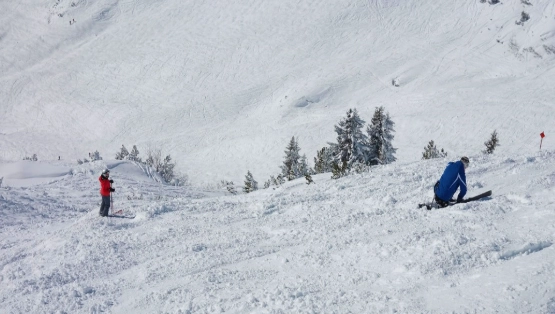
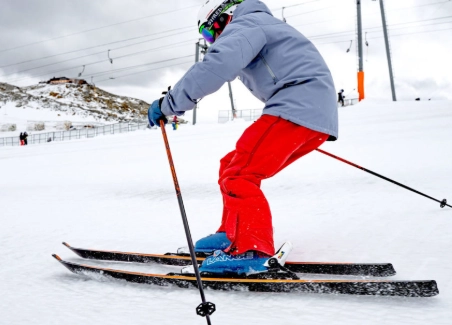
It's about flexing your ankles and driving your shins into the front of your boot cuff. Imagine you're trying to keep constant pressure on the tongue of your boot. This positions your weight over the sweet spot of the ski, giving you immediate steering response. If your weight is back, the ski tips lighten up, and you lose steering authority—a terrifying feeling on a steep.
A quick check: Can you feel the front of your boot against your shin? If not, you're in the backseat.
2. Turn Initiation: The Power of the Toe
On flatter terrain, you can get away with steering or even rotating your skis to start a turn. On steeps, that's too slow. The most effective way to start a turn is to roll your knees and ankles downhill.
Think about pressing your big toe down on the foot that will become your new outside ski. This subtle movement engages the ski's edge from the tip and starts the turn for you. It's faster and requires less upper-body movement than trying to muscle the skis around.
3. Turn Completion & Pressure Management
This is the most common failure point. Skiers initiate a turn but then bail out halfway, letting the skis skid sideways and accelerate.
You must complete the turn. This means guiding your skis all the way across the fall line until they are pointing slightly back uphill. This "finishing" of the turn is what controls your speed. It's not a skid; it's a carved or guided arc that uses the ski's design to slow you down.
Pressure your outside ski consistently throughout the entire turn arc. The feeling at the end of the turn should be that the ski is rebounding, popping you into the next turn. That rebound is your friend—it's energy you can use, not something to fight.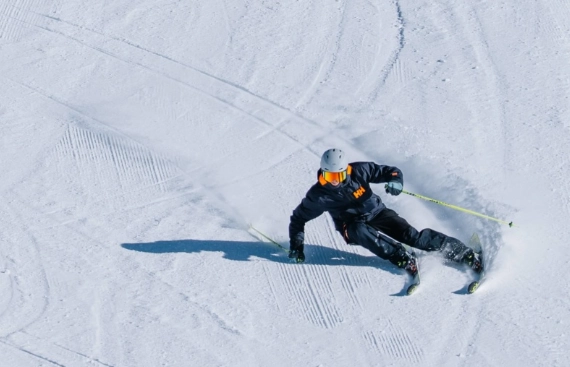
| Common Error | What It Feels Like | The Fix |
|---|---|---|
| Backseat Driving | Feeling like you're constantly trying to pull your feet back under you; quads burning fast. | Focus on ankle flex. Hum "shins to boots" as a mantra. Practice on easy terrain first. |
| Rushed, Incomplete Turns | Accelerating out of control, skidding sideways with no speed check. | Count "one-one-thousand" during the finish of each turn. Focus on bringing skis across the hill. |
| Upper Body Rotation | Your shoulders are swinging around to start the turn; you feel off-balance. | Keep your hands forward and visible. Initiate turns with knees and ankles, not shoulders. |
Putting It All Together: Your First Steep Run
Okay, theory is over. Let's talk about actually doing it.
Find a run that's a clear step up in difficulty from your comfort zone, but not a double-black-diamond nightmare. Look for a blue-black or single-black diamond with good visibility and a consistent pitch.
At the top: Don't just stare. Pick your line. Identify 3-4 "checkpoints"—maybe a distinctive clump of snow, a shadow, a rock. These are where you plan to finish your turns. Take three deep breaths.
The first turn: Look at your first checkpoint. Flex your ankles, feel your shins. Roll your new outside knee and ankle toward the valley, press that toe. Commit to the movement. Don't hesitate—a hesitant turn is a weak turn.
During the run: Your eyes are always on the next checkpoint. Your brain should be working one turn ahead. Your mantra: Look, Flex, Roll, Finish. Breathe out with each turn initiation.
After 4-5 turns, if you need a break, finish a turn strongly and come to a solid stop with your skis across the hill. Look back up at your tracks. See how they're linked S-shapes, not Zs or straight lines? That's control. That's the goal.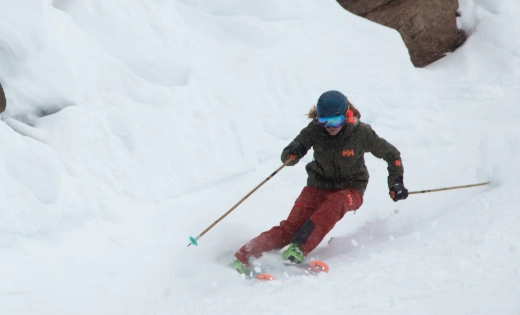
Next-Level Challenges: Bumps, Ice, and Tight Trees
Once open steep faces feel manageable, the real world throws complications at you.
Steep Moguls: This is an athletic, rhythmic dance. The key is absorption and quick edge engagement. You must use your legs like pistons, sucking up the shape of the bump as you ride over it. The turn happens on the top or backside of the bump, not in the deep trough. Your upper body stays quiet and facing downhill. It's exhausting but incredibly rewarding.
Steep & Icy: This is where technique is laid bare. Sharp edges are mandatory. You must be even more precise with your edge angles and pressure. Make smoother, more patient turns. Avoid any sudden, jerky movements. The ice won't forgive a sloppy skid. Sometimes, a series of quick, short hop-turns (stem christies) can be the safest way down a particularly icy section.
Steep Trees: Line choice is survival. Look for the open spaces, not at the trees. Your turns must be quick and decisive. You need to be able to pivot your skis rapidly. This is advanced terrain that requires not just technical skill but excellent slope assessment and risk management. Never ski steep trees alone.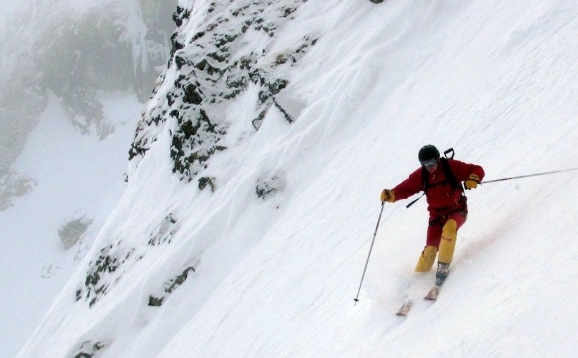
Your Steep Skiing Questions Answered
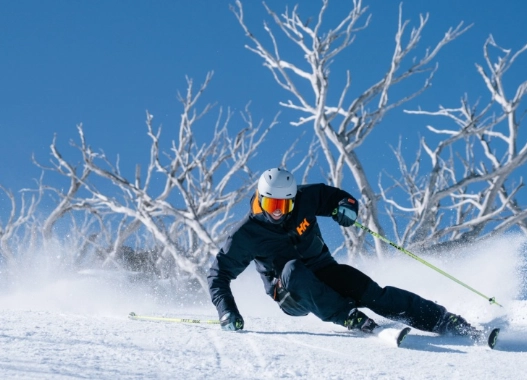
The journey to skiing steeps well is one of the most rewarding in the sport. It transforms mountains from intimidating obstacles into playgrounds of possibility. It starts with managing your mind, refining a few key techniques, and practicing with intention. Forget about conquering the mountain. Focus on executing your next turn well. The confidence, and the fun, will follow.